Seven issues Midlands growers may face in March
Tom Astill assesses current crop growth and provides agronomic insights for March for Midlands growers

Tom Astill assesses current crop growth and provides agronomic insights for March for Midlands growers
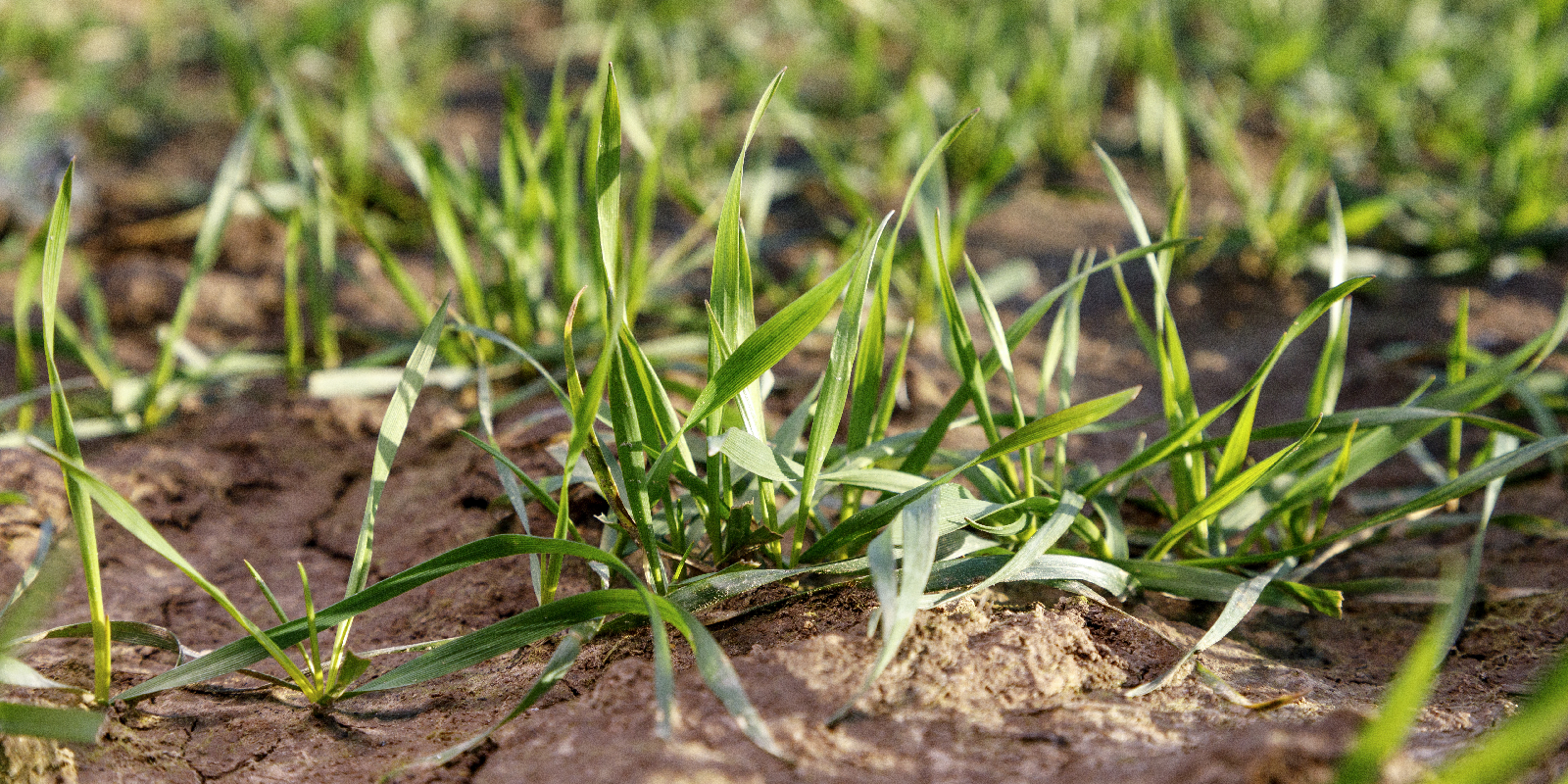
Winter cereals are generally looking pretty good, particularly where they went in early and have good roots down and a decent amount of top growth and biomass. That means there should be plenty of yield potential.
Oilseed rape crops are much more variable, depending on location and drilling date. There are some forward crops, while others have succumbed to larvae and the frosts, which have been a double whammy.
Some growers have taken advantage of good soil conditions in February to drill spring cereals and in a few cases spring beans.
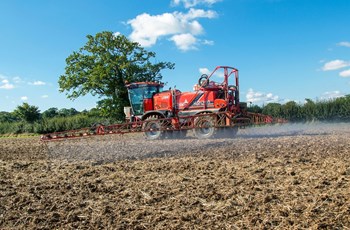
Growers have also been getting out with the sprayer to tackle grassweeds that are actively growing and still fairly small, and there’s been the chance to apply to a dry or drying leaf.
There has been a requirement for spring contact herbicides because looking back to the autumn, particularly September sown crops there was little chance of a stale seedbed because of the dry weather, then dry seedbeds to drill into and a real test for the residual herbicides to work.
For March the priority will be to continue with these applications – it’s better to target small weeds and the crop will start to shield the weeds from the spray the longer you leave it. Larger weeds will also compete more with crop for nutrients, light and water.
Earlier spraying will also avoid having to worry about intervals between spraying mesosulfuron-based products and tebuconazole for T0 fungicides.
Both Atlantis Star (mesosulfuron + iodosulfuron + thiencarbazone) and Pacifica Plus (mesosulfuron + iodosulfuron + amidosulfuron) can be used at a rate providing 15g/ha of mesosulfuron from 1 March, although bear in mind the label states that Pacifica Plus may only be used at the full rate of 0.5 kg/ha where brome is the main grass weed targets.
Timing is extremely important for these products, but also remember application technique – use an appropriate water volume, think about nozzle choice and perhaps angling nozzles, and if you can spray on a sunny day that can also be helpful.
But if grassweed pressure is very high and you’re unlikely to get any beneficial control from these contact herbicides, then take the long term view and use the other contact herbicide, glyphosate, and get a spring crop in.
The severity of light leaf spot in recent Spotcheck assessments of oilseed rape leaves has been low, but there is an increasing incidence being found across the country. It’s mostly in its latent phase currently, but the threat is there.
There’s no threshold for treatment – it’s more spraying it at first sight, so it is important to continue to monitor for it. Spotcheck, which is free and in conjunction with ADAS, can help you do that. Contact me if you’d like a sample kit up until the end of March.
Light leaf spot is a detrimental disease and you especially want to stop it from spreading up the plant. Proline (prothioconazole) at 0.32 L/ha is a good product against light leaf spot, and you can add some tebuconazole for additional activity or growth regulatory effects.
It’s been a mild autumn, and there is mildew and bits of Rhynchosporium and net blotch in winter barley crops. That could make the use of a T0 containing cyprodinil, prothioconazole mixture or folpet around mid-late tillering worthwhile this season to help reduce disease pressure for later treatments.
T1 treatment around GS30/31 – unlike in wheat, nodal stages are more important than leaf emergence in winter barley for timing sprays – is the most critical fungicide timing in winter barley as you’re essentially protecting tiller numbers and therefore subsequent ear numbers to maximise yield potential.
Early onset of diseases, such as mildew, Rhynchosporium and net blotch can encourage the plant to abort tillers so control at this stage is vital. Options at this timing include Ascra (bixafen + fluopyram + prothioconazole) and Siltra (bixafen + prothioconazole).
You can only apply Ascra once in the barley crop, and I think in most cases the best position is to use it at T1 because it shows an improvement over Siltra, although Siltra remains a good product for scenarios that are not as high risk or high pressure. Our minimum dose recommendations would be 0.9 L/ha for Ascra and 0.6 L/ha for Siltra at T1 in winter barley.
The possible exception to using Ascra at T1 is where you perceive a high risk of Ramularia at T2. We’ve seen a benefit from the fluopyram in Ascra at this timing in terms of contributing to Ramularia suppression.
The main target for any T0 sprays in winter wheat is now yellow rust, especially if it is active. It cycles quickly with around a 10 to 14-day latent period. The risk is both variety and location based.
We’ve seen in certain scenarios where you have susceptible varieties without any juvenile yellow rust resistance a high yield response from a T0. It also takes the pressure off at T1.
Tebuconazole is the best eradicant of yellow rust, while mixing it with a strobilurin fungicide will increase persistence, which can be particularly helpful in weaker varieties.
If you have mildew then cyflufenamid and proquinazid are good options, while if there’s neither disease you can argue whether a T0 is needed, although a multi-site fungicide or elicitor can start to lay down some protection against Septoria.
Timing is key – around GS30 – and ideally no more than three weeks before T1s are forecast to be sprayed. That might be just into April.
Ahead of potato planting assess risk from both potato cyst and free-living nematodes. Where risk is low – either through a combination of low egg counts, a wide rotation or the use of biofumigation pre-planting – there is the opportunity to use our liquid nematicide Velum Prime (fluopyram), which has no harvest interval. In higher risk situations it can be used in conjunction with half rate nemathorin.
Velum Prime has useful activity on both species of potato cyst nematodes – Globodera pallida and Globodera rostochiensis. A big practical advantage of Velum is that it is a liquid, low dose application. It can be applied via a broadcast spray and incorporated within 72 hours or it can be applied at planting in-furrow.
It’s also useful in carrots with reduction in free-living nematodes leading to reduced fanging symptoms. It can only be applied using the broadcast spray and incorporation method in carrots.
At the time of writing we don’t know whether the virus yellows model will trigger applications of neonicotinoid seed treatments in sugar beet.
Nonetheless, reaching 12 true leaves when the crop becomes less susceptible to virus yellows transmitted by aphids, as quickly as possible is extremely important.
That means not holding the crop back through weed competition or applications of herbicides in the wrong conditions that knock the crop.
Betanal Tandem (phenmedipham + ethofumesate) is one of the kinder formulations to the beet crop available, and provides good broad spectrum weed control that can be used from expanded cotyledon stage of the crop. It can be applied with a range of contact or residual tank mix partners.
There is a benefit to weed control from using a methylated rapeseed or veg oil with Betanal Tandem, but don’t use it if day time temperatures are going to be above 21C, or where there are large diurnal temperature fluctuations.
If you’ve chosen to grow Conviso Smart varieties, then the key application timing is when the crop reaches between 4-8 TL and when a trigger weed, often fat hen, has 2-4 TL. That’s more likely to be in April but when planting these varieties follow the stewardship guidance – look at bolting rates and judge drilling date accordingly and don’t mix Conviso and conventional varieties in the field. It’s also worth marking varieties in the field to make sure you don’t spray the Conviso One herbicide on the wrong crop.
Bayer is well-known globally for its Dekalb maize varieties, and three new varieties are now available in the UK for biogas or livestock markets.
Two are suitable for both markets, while a third, DKC3204, is just targeted for biogas production. Have a look on our website if you’re growing maize.