Crop progress
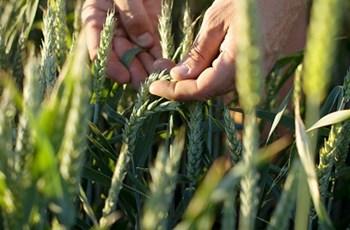
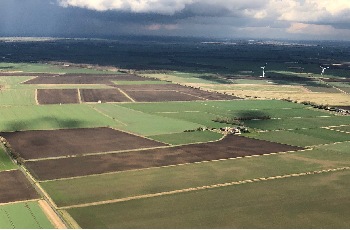
Crops have come out of the winter very well. The winter barley is very forward, with a lot of biomass and winter wheat is a similar story, with the early-drilled fields up and away. Even the later-drilled crops are catching up and have plenty of potential.
Oilseed rape, if it hasn’t been decimated by cabbage stem flea beetle, is showing promise. Flea beetle isn’t a major problem in this part of the world, but we have had some incidences of attack this year, which is a concern.
James’s agronomy tips for March
1. Get out in the field and tackle grassweeds
Brome is the major grassweed headache for growers in the Borders and to the north along with spring germinating annual meadowgrass. Tidying up these weeds as soon as possible should be the number one priority over the coming weeks.
Check pre-emergence performance and remaining grassweed burden on the field by field basis and look to control the grasses with a post-emergence herbicide when they are small. Particularly with bromes, if too big at the point of application plants will grow away from the treatment, so timing is key. You can expect reduced efficacy past GS29 of the weed.
With its inclusion of propoxycarbazone, Monolith (mesosulfuron + propoxycarbazone) will do a great job on bromes. Where annual meadowgrass is the target, 1L/ha Othello (iodosulfuron + mesosulfuron) plus Biopower is a good option. Where broad-leaved weed targets such as cranesbill or poppy are present, add pendimethalin or a pendimethalin-picolinafen mix to cover the gaps in Othello’s control spectrum.
2. Control light leaf spot in oilseed rape
Disease pressure in oilseed rape crops varies, depending on variety and whether a fungicide was applied in the autumn. Untreated crops should be considered high risk. If you are coming into March with disease present in the crop, growers need to ensure they apply 0.3-0.4L/ha of Proline (prothioconazole) during stem extension to protect new growth from light leaf spot infection.
If plants are leafy and large, introducing a secondary azole for plant growth regulation is advised. Choice will depend on how much Plant Growth Regulator (PGR) activity is required, with metconazole provided the greatest PGR activity and tebuconazole provide some PGR effect and some additional protection from light leaf spot.
3. Consider T0 fungicides in winter cereal crops
We are seeing quite a lot of disease in winter barley, particularly mildew, and with the recent warmer weather it will be starting to move. The disease is worth treating where pressure is high to prevent crop stress, with a T0 holding the disease until the first main fungicide timing at GS30/31.
In wheat crops, there are signs of Septoria on leaves. How active that is and how quickly it moves will depend on the weather. If we start to get some rain splash events during March, growers may have to gear up for a robust T0 fungicide to keep on top of the disease. Multi-sites such as chlorothalonil will be important at this timing where Septoria is a threat. A specific mildewicide should also be considered where active mildew is building.