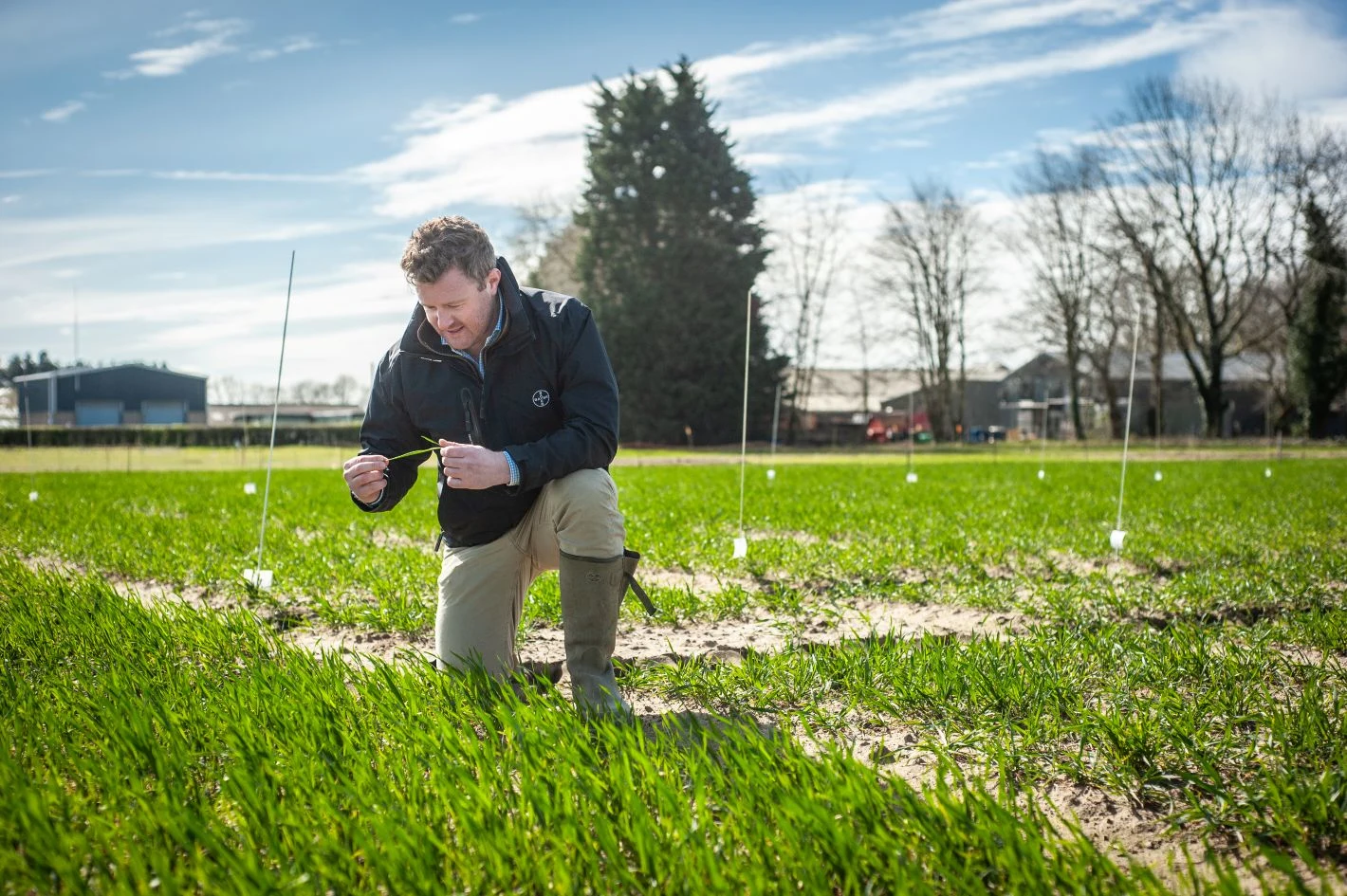
With most crops drilled by mid-September and weed control variable depending on rain, Tom Sowerby reviews pre-emergence programmes and cinmethylin top-ups, the chances of a third spray on bad rye-grass, one-hit options after roots, spring travel and maize for AD.
Author
Tom Sowerby | 29th October 2026Tags
We Highly Recommend:
Herbicides
Alternator Met
Alternator Met is an effective tool for weed control in winter barley and winter wheat. Suitable for use at pre-emergence and as a residual top up.
Read moreHerbicides
Octavian Met
Octavian Met controls grass-weeds and broad-leaf weeds in winter wheat and barley crops. It is suitable for pre-em and early post-em use. Containing three actives, it provides high levels of control.
Read moreHerbicides
Cadou Met
A contact and residual herbicide for pre and post-crop emergence use against a range of annual grasses and broad- leaved weeds in winter wheat and winter barley.
Read moreNovember agronomy insights for the North of England
Drilled, rolled and sprayed
Drilling up here was pretty much all done by the end of September. Everyone started around mid month, and while I wouldn't say conditions were perfect, they were very good all the way through, and to be fair they still are.
Most crops were drilled, rolled and sprayed in quick succession, and some will have been in the ground for nearly a month and a half. This month I want to look back at how the pre-emergence programmes have performed, whether a third spray is realistic, what to do in the last few late-drilled fields.
Pre-emergence – variable, depending on the rain
Weed control has been variable, and it really has come down to whether you caught any rain. Where it was so dry, I think people were slightly disappointed, but where there was a bit of moisture, the residuals seem to have worked pretty well.
Emergence has depended a lot on soil type. On the drier ground crops were a bit slower to come through, and there's been big variability across individual fields, which doesn't make judging the timing of your next pass any easier.
Generally speaking, everybody who drilled early went with something along the lines of Alternator®, Octavian® or Cadou® Met plus Proclus®, or a Liberator®-type product plus Proclus®. Most of that has since been topped up with cinmethylin, which was going on through the middle to end of October.
A third spray – if you can travel
By the time you're reading this, some people might be thinking about a third spray, but looking at the forecast, the weather is changing. I'd be surprised if many manage to get back on with a third spray without making a mess.
If you've got really bad rye-grass, though, and you can get back on, I think people will be going in around the middle of November. Something like Atlantis® OD with a bit more residual is a good option in wheat, but it will always depend on conditions as it's definitely turning cooler and wetter up here now and that might mean we are shutting the gate for the winter.
Late-drilled fields – one hit and done
There'll be a little bit of drilling left to go after potatoes, sugar beet and carrots, but it won't be a massive amount. Where people are going in late, it's probably going to be a one-hit herbicide approach.
If you're in a bad grass weed area, I think people will be going with a cinmethylin product plus Proclus®, at 1.0 L/ha in wheat, “One hit, job done, shut the gate, and we'll see you in March.”
Looking to the spring
Whether that's March or February will completely depend on conditions between now and the new year. In the three years I've been at home on the farm, we couldn't travel until the middle of March. So it's a bit of a wait and see, but be ready for an early spring window in case some of these fields suddenly get a big flush of weeds and we can get onto the land in February. On the disease side, I'm not seeing too much in winter barley so far, and nobody has mentioned any big problems to me other than friends and colleagues in the South where they are considering grazing options to slow winter barley down.
Maize Seed
Maize is a crop I think we'll see more of in the future in the North as the climate changes. There are more pockets of it popping up, and a few people are dabbling in it, mainly for anaerobic digestion (AD) rather than livestock. There are quite a few AD plants popping up around Selby and Cawood, for example. I can't say I've picked up much on seed availability up here, but I'm hearing some varieties are getting tight elsewhere, so if maize is in your plans, it's worth having that conversation with your seed supplier sooner rather than later.
Looking ahead – R&R
It's been a bit of a weird one, really. We could have done with two weeks of rain at the start of September to slow people down, but as soon as we got to around 6 September, the drills were out and everyone just cracked on.
“Everyone's just of the opinion that as soon as it starts raining, it's never going to stop.” It's not quite happened yet, and the fields can still take an awful lot of rain because they're still very dry underneath.
For now, it's that really quiet time of year. Crops are emerging, the top-ups are planned, and most people already know what they're doing. We've got a little bit left to drill at home after carrots, and then it's pretty much job done, gate shut. “Get the skis waxed!”
About Tom Sowerby
Tom Sowerby is a Technical Manager for Yorkshire & North East at Bayer Crop Science, supporting growers and advisers across the North of England. He also farms at home, so he brings a practical, grower's-eye view to grass weed control, drilling decisions and crop planning in the region.
Alternator® Met contains diflufenican, flufenacet and metribuzin. Atlantis® OD contains mesosulfuron-methyl and iodosulfuron-methyl-sodium. Liberator® contains flufenacet and diflufenican. Proclus® contains aclonifen. Cinmethylin is an active substance marketed by other manufacturers. Alternator, Atlantis, Liberator and Proclus are Registered Trademarks of Bayer. All other brand names are Trademarks of their respective manufacturers. Use plant protection products safely. Always read the label and product information before use. For further information, including contact details, visit www.cropscience.bayer.co.uk or call 0808 1969522. © Bayer CropScience Limited 2026.
We Highly Recommend:
Herbicides
Alternator Met
Alternator Met is an effective tool for weed control in winter barley and winter wheat. Suitable for use at pre-emergence and as a residual top up.
Read moreHerbicides
Octavian Met
Octavian Met controls grass-weeds and broad-leaf weeds in winter wheat and barley crops. It is suitable for pre-em and early post-em use. Containing three actives, it provides high levels of control.
Read moreHerbicides
Cadou Met
A contact and residual herbicide for pre and post-crop emergence use against a range of annual grasses and broad- leaved weeds in winter wheat and winter barley.
Read more