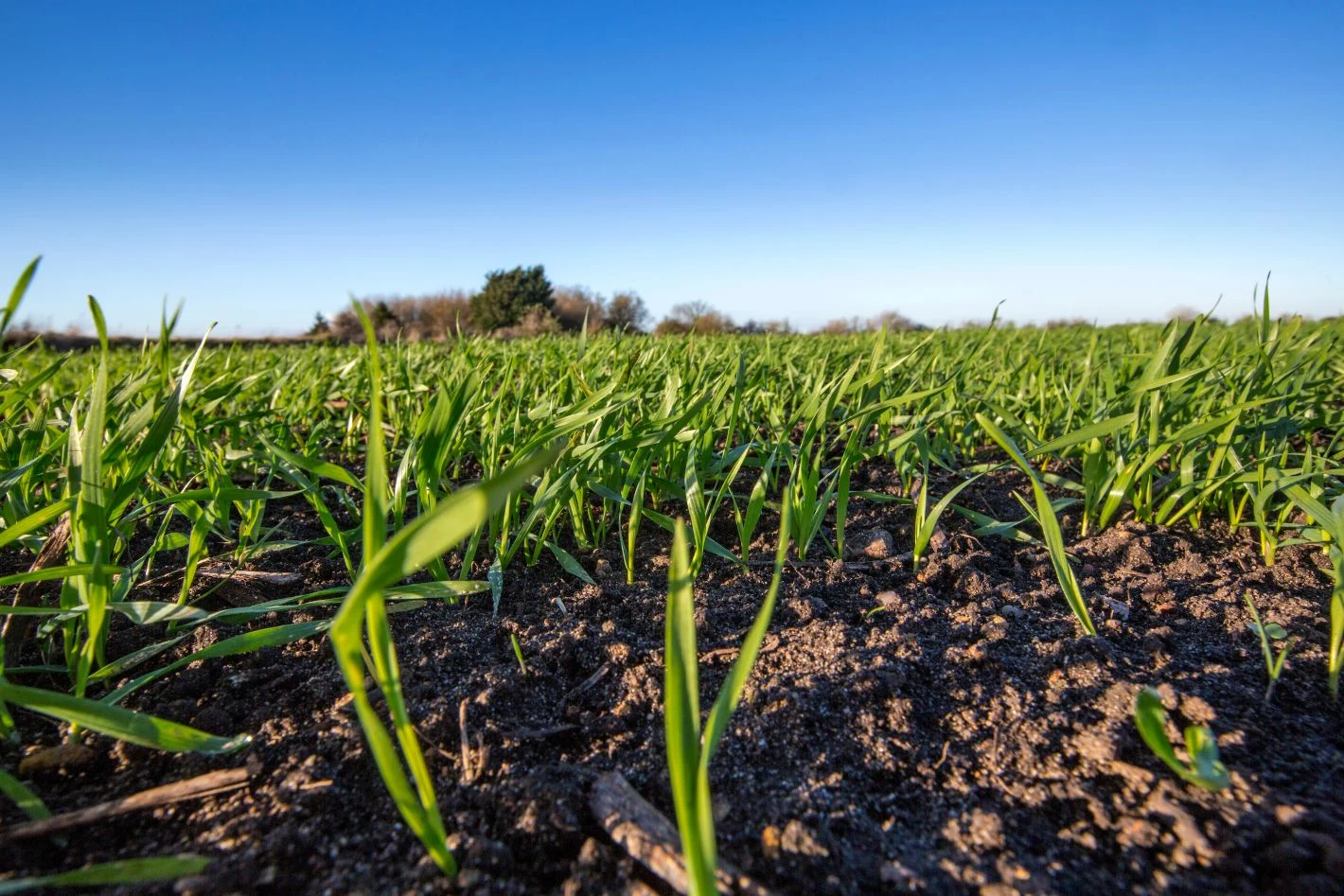
A dry October and warm soils mean grass weeds are only just flushing across the Midlands. Ellie Borthwick-North covers one-hit herbicides after root crops, contact activity on late flushes, the case for a third autumn spray, winter beans, harvest stewardship and a tough year for brassica whitefly.
Author
Ellie Borthwick-North | 29th October 2026Tags
We Highly Recommend:
Herbicides
Alternator Met
Alternator Met is an effective tool for weed control in winter barley and winter wheat. Suitable for use at pre-emergence and as a residual top up.
Read moreHerbicides
Octavian Met
Octavian Met controls grass-weeds and broad-leaf weeds in winter wheat and barley crops. It is suitable for pre-em and early post-em use. Containing three actives, it provides high levels of control.
Read moreHerbicides
Cadou Met
A contact and residual herbicide for pre and post-crop emergence use against a range of annual grasses and broad- leaved weeds in winter wheat and winter barley.
Read moreNovember agronomy insights for the Midlands
Still dry, still warm in the midlands
It's been a real mixed bag this autumn. I'd say around 70–75% of crops across the region were drilled early with maybe 25% at most going in at a more traditional timing over the last week or so, and those are very much the minority.
“It's honestly so dry still up here.” Up to mid-October, some people had 5 mm of rain in a week and others had 20 mm, and soils are still very warm. Grass weeds are growing, so there are a lot of second residuals and post-emergence sprays going on right now.
This month I want to look at one-hit sprays after root crops, contact activity on late flushes, whether a third pass is worth it, winter beans and a bit of harvest stewardship.
Late wheat after roots – a one-hit approach
Root crops are being lifted now, I saw potatoes coming up today and sugar beet too, and there is still time to follow them with a late-drilled wheat. If you're lifting beet or potatoes over the next few weeks into November, you may be looking at a one-hit autumn herbicide, depending on what the weather does.
In that situation, Octavian®, Cadou® or Alternator® Met gives you both residual and contact activity, with the metribuzin in the co-formulation bringing the contact. Emergence is really all over the place at the moment, depending on soil type, moisture availability and drill depth to name a few, so where you've got emerged weeds and a lot of bare soil, you want to guarantee you're getting that contact as well as the residual.
Grass weeds – the big flush is only just starting
There are varying degrees of pressure with regards to black grass and in some instances no obvious populations, so not every field needs cinmethylin as a second spray. But I think dormancy is probably quite low this year, and because we were so short of moisture, we're probably only just entering that big flush of grass weeds.
So, like Rachel said for the South, if the rain arrives and you suddenly get a great flush, you need to be looking at contact activity on it as well. In wheat, that's where something like Atlantis® OD, Hatra® or Horus® with Liberator® could fit.
Is a third spray worth it?
If you're having to go back for a third time, I know some people will look at it and think about all that spend. “But fundamentally, if you're going to be using those types of products, you're actually going to get your best efficacy in the autumn when weeds are smaller.”
We've got a long autumn this year, and the ground is so dry underneath that it will take a lot of rain to stop us travelling. If there's scope for it in the programme and you've got time in this November slot, that's where you'll see your best result.
A wet start to the spring could also mean you don't get back in at all, and an ALS (acetolactate synthase) herbicide that goes on late is far less effective anyway. So, looking at it field by field makes agronomic sense, even if you're keen to keep your spring option.
It all depends on what November does. This week looks a bit more unsettled, but again, it's just so dry, so who knows.
Winter beans – a broader approach
November is often the winter bean timing, but people are already putting them in, some as early as last week. Emerger® is a great pre-emergence option, and depending on your weed populations, you might want to partner it with either a clomazone, pendimethalin or propyzamide product for a broader, all-round approach to weed control
Harvest stewardship/volunteer management – save yourself a job in the spring
With potatoes and sugar beet being lifted after a dry spring which has seen smaller tuber and root sizes, especially where no irrigation, it's worth thinking about stewardship. Setting harvesters up properly and minimising harvest losses really matters, because anything left behind increases the chance of volunteers next year. It's always another piece of the puzzle, isn't it?
If you’re following with a winter cereal, controlling groundkeepers in the autumn, where possible, is best practice. It saves you a job in the spring and helps reduce any impact on future rotations.
Looking ahead – an even longer autumn?
A lot of growers did Proclus® pre-emergence, have cinmethylin in the shed for the post-emergence and think that's it for the autumn. But it's not just that we've had a long autumn. “Potentially, we might have an even longer autumn if it remains mild and soils stay warm for a lot longer.”
Soil temperatures here were still in double figures into October, so things will keep actively growing for a while yet. I wouldn't put the antifreeze in the sprayer just yet; keep it ready for a last-minute opportunity, because if you suddenly get a big flush of grass weeds, particularly meadow brome on headlands, an extra residual pass in November will help.
About Ellie Borthwick North
Ellie Borthwick North is a Technical Manager at Bayer Crop Science, supporting growers and advisers across the East Midlands. She takes a practical, field-by-field approach to grass weed control, root crop rotations and stewardship across cereals, sugar beet, potatoes, pulses and brassicas.
Atlantis® OD, Hatra® and Horus® contain mesosulfuron-methyl and iodosulfuron-methyl-sodium. Emerger® and Proclus® contain aclonifen. Liberator® contains flufenacet and diflufenican. Octavian® Met contains diflufenican, flufenacet and metribuzin. Cinmethylin, clomazone, pendimethalin and propyzamide are active substances marketed by other manufacturers. Atlantis, Emerger, Hatra, Horus, Liberator, Octavian and Proclus are Registered Trademarks of Bayer. All other brand names used are Trademarks of other manufacturers in which proprietary rights may exist. Use plant protection products safely. Always read the label and product information before use. Pay attention to the risk indications and follow the safety precautions on the label. For further information, including contact details, visit www.cropscience.bayer.co.uk or call 0808 1969522. © Bayer CropScience Limited 2026
We Highly Recommend:
Herbicides
Alternator Met
Alternator Met is an effective tool for weed control in winter barley and winter wheat. Suitable for use at pre-emergence and as a residual top up.
Read moreHerbicides
Octavian Met
Octavian Met controls grass-weeds and broad-leaf weeds in winter wheat and barley crops. It is suitable for pre-em and early post-em use. Containing three actives, it provides high levels of control.
Read moreHerbicides
Cadou Met
A contact and residual herbicide for pre and post-crop emergence use against a range of annual grasses and broad- leaved weeds in winter wheat and winter barley.
Read more