6 more agronomy pointers for June in the south
Richard Prankerd looks at six more possible agronomic tasks as we enter June

Posted 5 years ago
28/05/2021
Richard Prankerd looks at six more possible agronomic tasks as we enter June
Last month I talked about needing two weeks of continual rain to change disease pressure, and it didn’t look likely. But that’s exactly what’s happened with lots of rain in the south in May.
Crops look much better for it – greening up almost overnight once we had some rain. Winter barley looks much more uniform now, and is looking half decent after being a bit scruffy a month ago, while spring barley has also benefitted and is well-tillered.
Oilseed rape has had an extended flowering period, so the only downside has really been that little spraying has been possible.
Fortunately the wet weather has come with cooler temperatures, generally not above 15C, which has both slowed growth and also held back disease from cycling quickly. Septoria’s optimum for development, for example, is 15C and above, which is probably why we haven’t bene detecting Septoria further up the canopy in our rapid disease testing sampling.
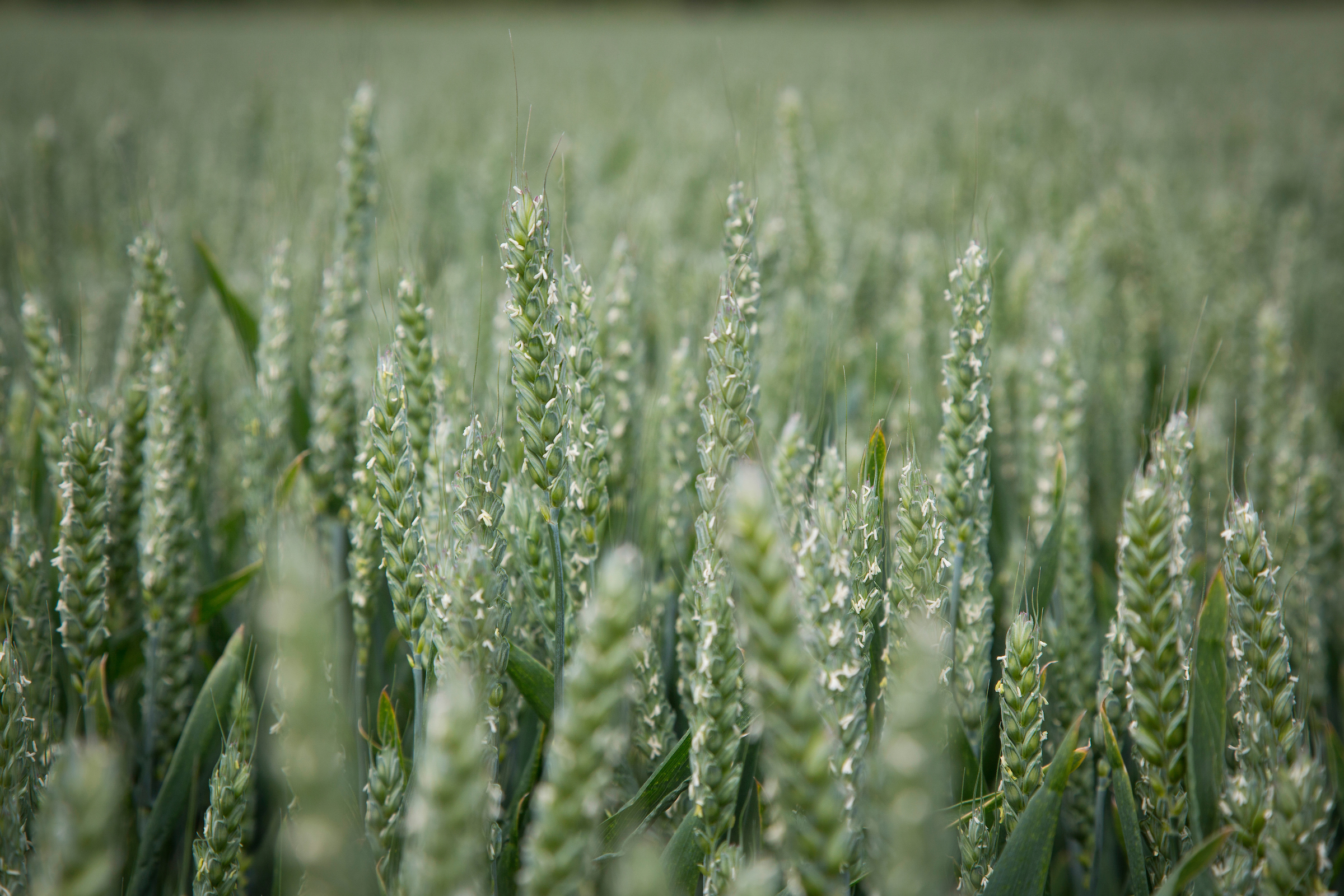
But approaching the end of May growers will be getting twitchy and wanting to apply flag leaf sprays as soon as possible, with gaps being T1 and T2 being extended in some cases.
There will be some different scenarios that growers will face. Those that did a robust T1 and where the interval hasn’t been stretched beyond four weeks, will be able to apply Ascra (bixafen + fluopyram + prothioconazole) at 1.2 L/ha. It’s a good all-round product that wil take care of Septoria, mildew and yellow rust.
Where growers took advantage of perceived lower risk and applied an azole + multisite type T1 or where the interval between sprays has been extended due to weather, then the rate of Ascra could need to be tweaked up to 1.3-1.5 L/ha.
If you’re growing Extase, there could be a case of using its excellent Septoria resistance to help prioritise other more susceptible varieties, especially the likes of Skyfall and Zyatt, although that has to be weighed up against its flag leaf likely to have been exposed the longest.
Ear sprays are likely to follow quickly after flag leaf sprays this season. If you’ve used Ascra at T1 and/or T2 that will help suppress Fusarium infections, but ultimately the biggest driver is the weather around flowering. If it’s wet then timing is critical for control and ear sprays need to be on by mid-flowering.
Proline (prothioconazole) at 0.55 L/ha is the only active to provide control of both Fusarium and Microdochium, and will also give extra Septoria protection, which if the weather warms up in June will likely continue need to be addressed.
If brown rust is a concern, then you could also add tebuconazole. An alternative option could be to use Aviator (bixafen + prothioconazole) at T3, if you haven’t already applied two SDHI-containing fungicides in the programme. Like Proline that will also provide Fusarium control from a dose of 0.75 L/ha, as well as giving added Septoria control and continued green leaf area retention.
Rain has helped make spring barley a more promising crop this season, but the rain will have also increased the threat of diseases such as Rhynchosporium and net blotch.
That probably means a two spray approach is more justified this spring. The first is likely to be going on at the end of May and into early June at GS30, with the second around 14 days later at awns emerging.
The strongest product available on barley disease is Siltra (bixafen + prothioconazole), while at T2 there could be a case for adding folpet for its possible Ramularia control. Just remember folpet is not as good as chlorothalonil was on the disease though.
Using around 0.5 L/ha of Siltra to control Rhynchosporium and net blotch will help keep the crop clean and hopefully stress free, which can be a trigger for Ramularia.
Correctly timing desiccation sprays in oilseed rape is crucial. Go too early and you can limit yield and oil content, as shown by the proportion of red seeds at harvest. But spraying Roundup (glyphosate) makes combining easier and quicker, and the rate of seed loss is less.
To assess when to spray head into the field and take a representative sample of 20 pods. You’re looking for at least two-thirds of the seeds in two-thirds of the pods to have turned brown to be at a stage where you can consider spraying it off. It’s worth doing that two or three times in the field to check the field is ready for desiccation across the whole area.
The cold weather in March and April has slowed development of woolly apple aphid, and usually the first spray would have been applied in mid May. This year it looks more likely to be at the end of May and into June.
But looking at some orchards as the end of May approached, pressure was starting to build in the areas where woolly apple aphids have historically been a problem. With warm, clear weather ahead an application of Batavia (spirotetramat) at 1.75 L/ha will begin to reduce population pressure.
For those of you local enough to consider a trip to Oxford, we’re delighted to say it looks like we will be able to welcome visitors to our Field Days demonstration at Hinton Waldrist, just outside Oxford on the evening of 28 June (5.30pm).
Join us to talk through 41 wheat variety plots, learn more about latent disease testing and new fungicide developments and how to optimise disease control in susceptible and more resistant varieties. You will also be able to discuss weed control with the Bayer team and find out more about our digital platform Climate FieldView, as well as having a bite to eat.