Crop Progress
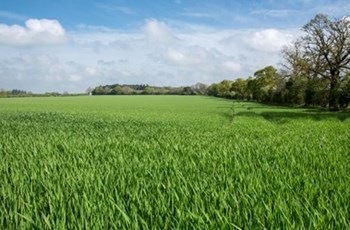
Wheat crops that were established early look decent, but the later drilled crops are struggling with the very wet weather in the west this winter. December was the wettest month I’ve recorded and both December and January were wetter than last year.
So where crops have gone in late they’ve struggled to establish and get roots down. Most will make it, but growers are already considering what to spend on them, with the potential already damaged.
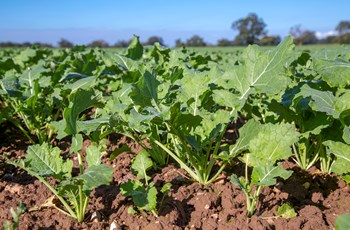
Oilseed rape is generally positive. There has been some cabbage stem flea beetle larval damage as we approach the end of February, but not as bad as last season, and overall the crop is in a better place than last season.
Gareth’sagronomy tips for March
1. Prioritise weed control in cereals
There are more areas untreated with herbicides than you might think because of the area that went in later, so that will be the priority when conditions are right.
Identify, monitor and target where your potential problems are – likely to be grassweeds in the first instance.
It’s important to not delay that application waiting for every weed to emerge to do a one-shot as the chances are the weeds that are emerged now will be too big to control, if you wait.
The key for application is not waiting for soil temperatures to reach a certain temperature – just look for active growth and apply to a dry leaf. Days of high light intensity can also help with efficacy.
If you’re just worried about annual meadowgrass and broadleaved weeds, then Hamlet (mesosulfuron + iodosulfuron + diflufenican) or Othello (mesosulfuron + iodosulfuron + diflufenican) are good options.
For grassweeds, if it is bromes there’s Monolith (mesosulfuron + propoxycarbazone), while Pacifica Plus (mesosulfuron + iodosulfuron + amidosulfuron) is a good allrounder for both grassweeds and broadleaved weeds.
With Pacifica Plus, you can use a higher rate of 500g/ha if you’re targeting bromes from 1 March.
2. Light leaf spot in oilseed rape will need checking
Looking at the latest Spotcheck data – our free service with ADAS to check disease identification and levels in oilseed rape – there is a high incidence of light leaf spot in crops whether they were treated in the autumn or not, so it is looking like those that were treated, the products are running out of steam.
So when you can travel, you will likely need to do something for light leaf spot. Don’t wait for green bud as it will likely be too late. The disease needs to be kept down at the base of the crop, so use something with activity, such as Proline (prothiconazole) as soon as you can travel.
3. Consider whether early disease in barley needs treating
Anyone considering T0s, there’s probably more justification in winter barley as it directly correlates to yield more. Yield is driven by grains / sq m so tiller retention is critical.
So, if you’re thinking you’re going to lose tillers from Rhynchosporium, net blotch or mildew you might need to consider a T0. But don’t jump the gun because as soon as you spray a fungicide you’re in a four-week cycle of spraying and you don’t want to go too early, if you can help it.
If you do need to spray something, you have prothioconazole as an option, but in an ideal situation you might use an alternative such as cyprodinil, which is probably a better anti-resistance strategy and saves the prothioconazole for T1 and T2.
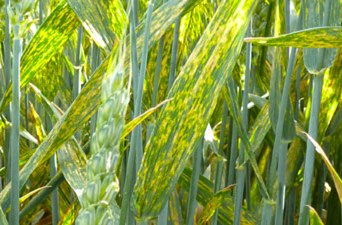
4. Target yellow rust if you’re looking at T0s in wheat
T0s in wheat should be targeted at yellow rust and / or mildew. Now chlorothalonil has gone, whether to use a T0 for Septoria is more difficult to justify with the higher cost of folpet.
Again, consider the gap to T1 and don’t go too early. Even if you have yellow rust in the crop I wouldn’t be treating until middle to end of March if possible. If you go before then you will have too big an interval to your T1.
But the only reason not to do one is if you are 100% sure you won’t be getting yellow rust, and I’m not too sure which varieties that applies to. Remember all the yellow rust resistance ratings are based on adult plant resistance and that might not kick in until ear emergence, in some cases. I wouldn’t be spending a lot of money on it though – my choice would be 100g/ha of tebuconazole.
5. Use application technique best suited to apply Velum Prime in potatoes
With the loss of oxamyl as an option to control potato cyst nematodes, it should be helpful that there are now two methods of application for Velum Prime (fluopyram) – either in-furrow application at planting or broadcast and incorporate before planting.
Choose the method which best suits the system on your farm. It’s really important if you’re broadcasting and incorporating that you do incorporate properly. It has to go on after you de-stone, as it you apply before de-stoning you will put it too deep in the soil profile.
In high pressure situations, Velum on its own won’t give the same levels of control as other nematicides, but it does if you use a full rate of Velum and half dose of nemathorin. In lower pressure you can consider using Velum on its own.