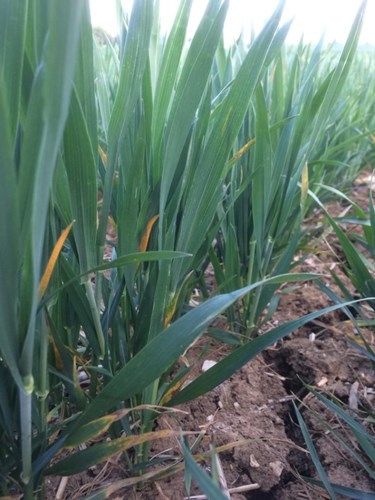
South: 3 tasks to tackle in crops after rain boosts crop growth
Richard Prankerd provides advice on 3 agronomy challenges for crops in May.

Posted 6 years ago
06/05/2020
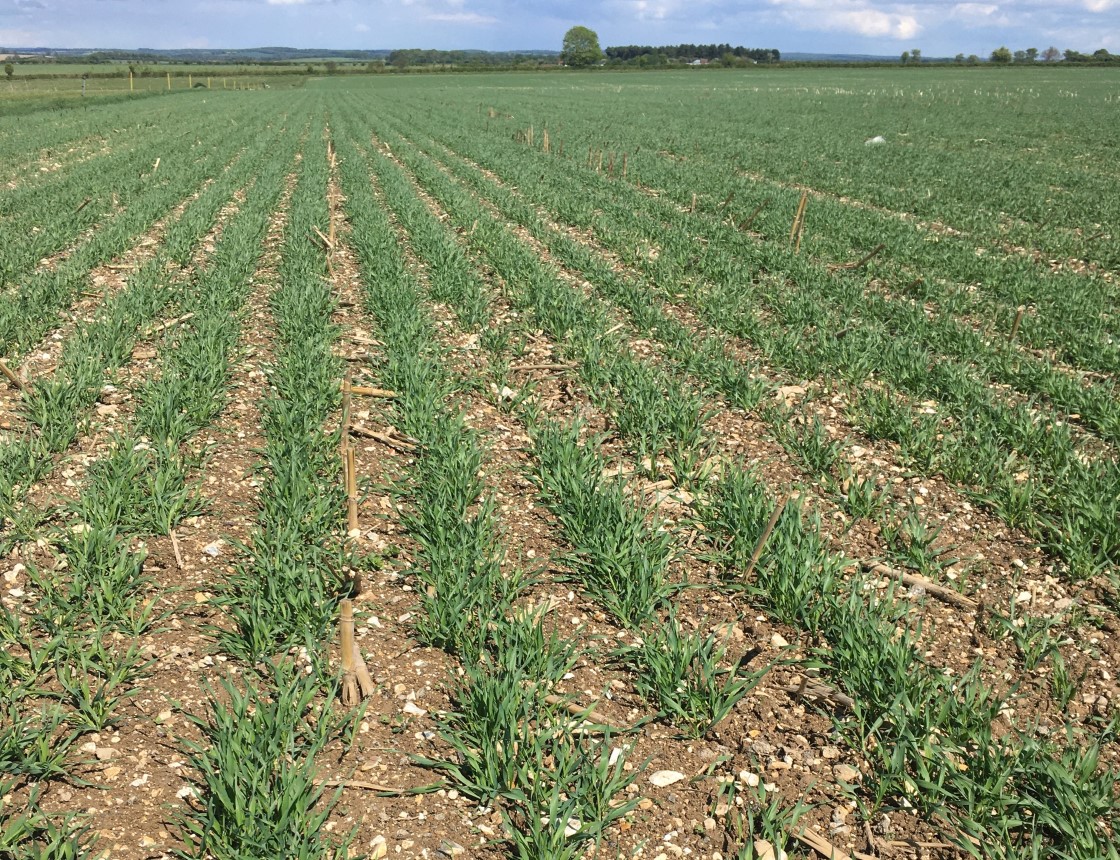
Richard Prankerd provides advice on 3 agronomy challenges for crops in May.
After the warm weather in the middle of April, temperatures are back closer to long-term averages, and we’ve had a really helpful 30-40mm of rain at the end of the month. That really came at the right time to put some belief in the potential of crops.
I saw some Zyatt drilled at the beginning of November with leaf two just poking out, and later drilled crops are not as far behind as you might think.
Diseases pressure in wheat has been low up to beginning of May – Septoria is present at the bottom of the canopy but leaf 4 is clean – but the recent rain will increase pressure and likely only become evident around the time of the T2 spray with the latent period of the disease.
With a lot of growers understandably opting for azole + chlorothalonil at T1, it is likely that a robust T2 will be needed. Ascra (bixafen + fluopyram + prothioconazole) at 1.0-1.2 L/ha fits the bill perfectly, with its all-round strength against Septoria and other key diseases, including yellow rust.
In the south there’s a good chance that all bar the later drilled crops will reach the flag leaf timing before the 20 May cut off for last use of chlorothalonil, which will be worth adding if you have stocks left to use on farm.
Also keep an eye out for mildew – with rapid uptake of nitrogen following the rain, there’s a chance of lush growth creating the warm and damp microclimate that mildew loves.
One spray or two? It will probably depend on how the crop looks after the rain – there’s some in Kent which is very patchy after sitting in dry, hard seed-beds, while other crops are well-tillered and likely to receive T1s by 10 May.
If you’re planning just one spray, then I’d suggest Siltra (bixafen + prothioconazole) at 0.6 L/ha or Fandango (fluoxastrobin + prothiconazole) at 1.0 L/ha. For two sprays you can drop the rates back a little to 0.4 L/ha of Siltra or 0.75 L/ha of Fandango, and at T2 apply no less than you did at T1.
There have been reports of seed-borne net blotch, so make sure you keep the dose of prothioconazole up if that’s showing in crops.
T2s will likely be after the 20 May cut off for CTL use up in spring barley, so it is worth considering at T1. It’s not as effective against Ramularia at that timing as at T2, but trials have shown some benefits at the earlier timing.
Maize drilling started at the back end of April in Hampshire, while was still to start in most of Kent and Sussex. The higher soil temperatures should get it off to a good start, but it is important to get good weed control as the crop is non-competitive with weeds at early growth stages.
Applications of Maister (foramsulfuron + iodosulfuron) + the adjuvant Mero should be made at GS12-16 (2-6 true leaves). Use 150 g/ha of Maister when dealing with challenging grassweed situations, including black-grass while 100 g/ha will give control of a wide spectrum of broadleaved weeds.
Try to apply it when the crop is actively growing and when the crop is not stressed to minimise any crop effects.
Septoria in Wheat