East Anglia: 5 agronomic pointers for May
James Wilkins discusses 5 things for growers to focus on in May

Posted 6 years ago
06/05/2020
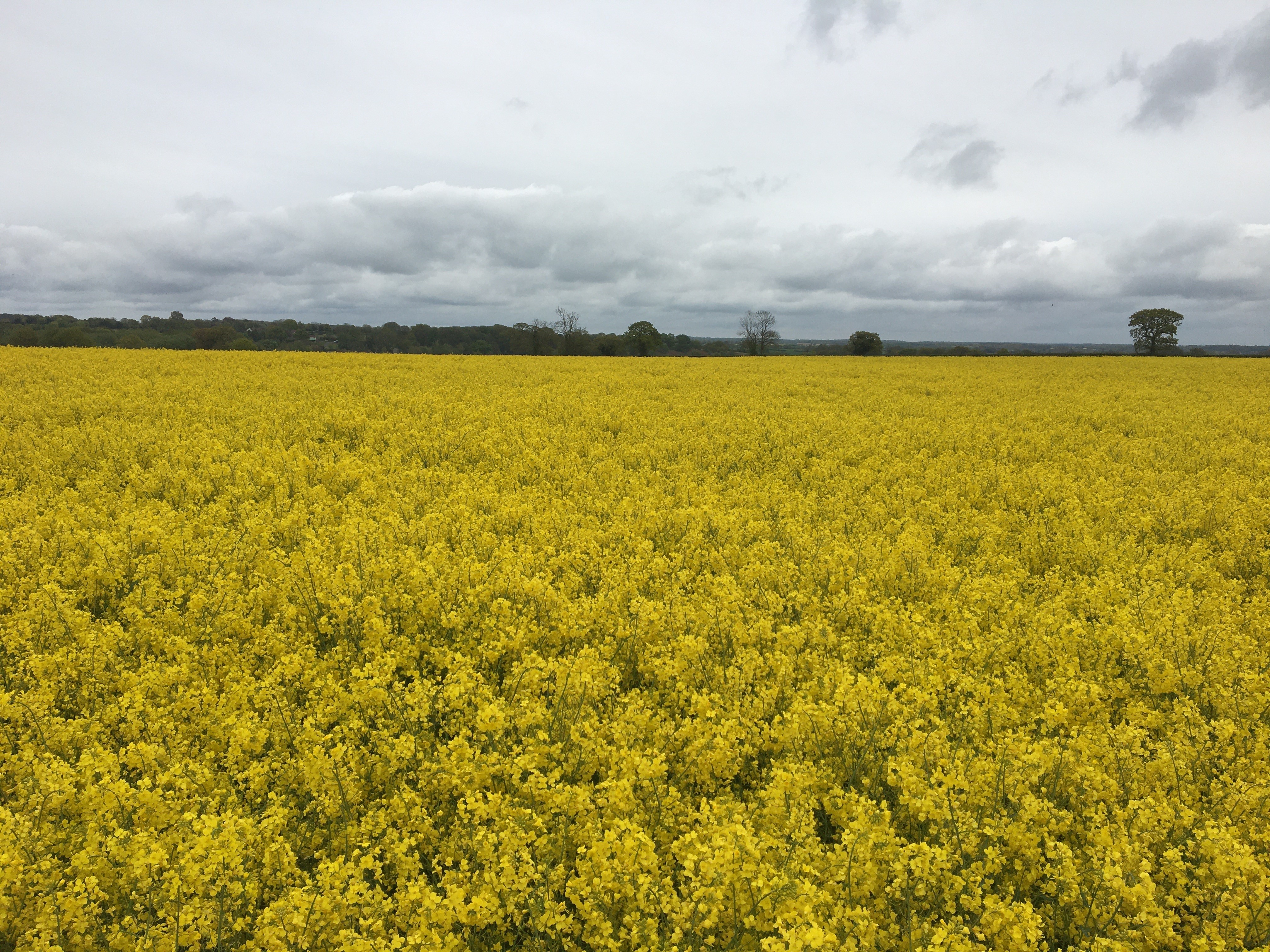
James Wilkins discusses 5 things for growers to focus on in May
Most areas of Norfolk and across East Anglia had some welcome rain at the end of April. For some it was the first since March, so it was definitely needed, and will help boost crop growth at this crucial period, particularly for spring planted crops. But it will also help disease get going in some crops, so that will need watching.
While there’s a huge variability in drilling date of wheat crops across the county and East Anglia more generally, crops are beginning to catch up with each other. While T1s have probably been spread over 2-3 weeks from the earliest to latest drilled crops, the T2 flag leaf sprays are likely to be at a broadly similar timing from around the third week of May.
Don’t let the fact that crops might have been drilled months apart fool you into thinking you have more time than you think between the timings of different field with widely differing drilling dates.
The 20th May has become a key date in this season’s calendar – if you bought chlorothalonil products to use up this season that’s the last day you’re able to use them before you have disposal costs to worry about.
In Norfolk there are a number of options for where to use it before that date – hopefully a good chunk of what’s in store was used at either or both T0 and T1 in wheat – but T2 in wheat and winter barley are perhaps the remaining best options.
In wheat some earlier crops will likely be ready in time, with virtually all winter barley at awns emerging before that cut off, allowing it to be used to treat Ramularia.
Other options product label allowing include T1 in spring barley and in beans.
Yellow rust has been a feature of the early spring, with a lot of varieties infected, even those with higher ratings. But a combination of adult plant resistance kicking in and fungicides applied at T0 and T1 have seen the threat diminish. With the rain at the end of April, and at the time of writing, an unsettled forecast for the next two weeks, it is likely attention will turn to Septoria, with pressure increasing heading into T2 sprays.
At T2, it’s a combination of assessing the threat from the previous couple of weeks, plus protecting what might come in the next month. Last year, rain in June turned what looked like a low disease year into a much higher one, and that’s what you are protecting against with your T2 spray.
Products like Ascra (bixafen + fluopyram + prothioconazole) give you some dose flexibility – ranging from 1.0 – 1.5 L/ha. In most cases 1.0-1.2 L/ha should be sufficient, with 1.5 L/ha only for when you are chasing disease or are very late with the T2 timing.
And if the rain doesn’t materialise, both Ascra and Aviator (bixafen + prothioconazole) provide physiological benefits, such as drought stress tolerance that are useful in protecting yields in drier seasons.
Winter barley crops are likely to reach awns emerging when T2 sprays are typically applied in the first 10 days of May. There have been some reports of net blotch in winter crops, so look to keep prothioconazole rates up, for example Siltra (bixafen + prothioconazole) at 0.4 L/ha if that’s a risk in your crop.
There’s also been some signs of abiotic spotting, which is a concern for potential Ramularia infections – conditions could be perfect for high levels this season. Adding in CTL at T2 in winter crops to protect against the disease will be important, while in spring crops there is a case for using it at T1, given that the T2 timing will fall after the 20 May cutoff.
Net blotch – from seed infections – is also a potential concern in spring crops, so again keep Siltra rates to a minimum of 0.4 L/ha.
T2s in spring barley will fall towards the end of May – keep no more than a four week gap between sprays. Prothiconazole will help against Ramularia, while adding folpet may also bring some additional benefits, although it is no like-for-like CTL replacement.
The mild winter has increased the risk of virus yellows in sugar beet, and we’re already seeing reports of wingless aphids being found in crops. Monitor crops closely for when the threshold of one wingless aphid / 4 plants is breached before the crop reaches 12 true leaves.
There are three potential insecticide options available for growers in an on-label approval for Teppeki (flonicamid), and emergency authorisations for Insyst (acetamiprid) and Biscaya (thiacloprid), although the availability of the latter is challenging because of supply issues.