Ramularia
Ramularia has been established as an economically damaging disease in barley crops in Scotland and nothern England since 1998, and given the right weather conditions has the ability to infect crops throughout the rest of England.
Ramularia has been established as an economically damaging disease in barley crops in Scotland and nothern England since 1998, and given the right weather conditions has the ability to infect crops throughout the rest of England.
Yield losses from Ramularia can be up to 1.0 t/ha in susceptible varieties. Where varietal resistance exists then losses are more typically in the 0.1 - 0.2 t/ha range.
The main source of Ramularia is seed infection, although secondary infections can occur during the season from airborne spores released from infected crops, grasses or volunteers.
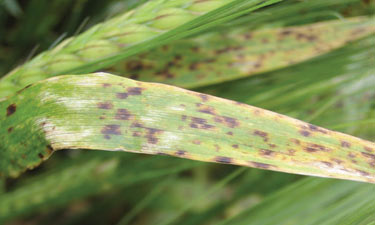
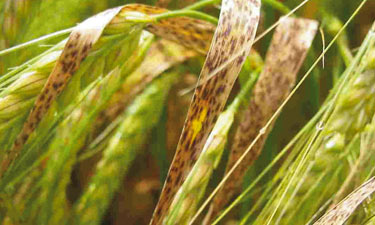
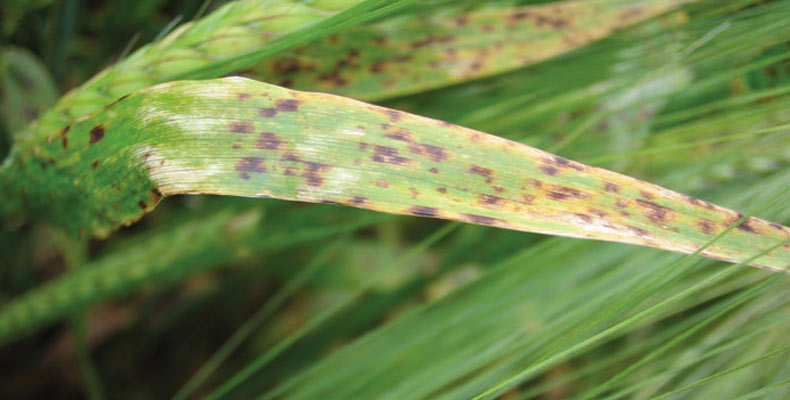
These early 'pepper-pot' like lesions quickly develop into more typical Ramularia lesions which appear as rectangular dark brown lesions 2mm x 0.5mm in size, with straight vertical edges in line with leaf ridges and irregular horizontal edges. These lesions are surrounded with yellow chlorotic leaf tissue giving a halo like appearance.
As the disease progresses these lesions remain visible but the surrounding leaf tissue quickly dies back, initally turning yellow.
Ramularia is of primary concern in spring barley and the main timing for control is at T2. If the focus of the disease control programme is Ramularia at this timing then consider higher rates of Fandango (prothioconazole + fluoxastrobin).
SiltraXpro (prothioconazole + bixafen) has a natrual fit at this timing in spring barley as Ramularia control is one of its key strengths.