Common name:
Wild oat Winter wild oat
Latin name:
Avena fatua Avena sterilis ssp ludoviciana
Ligule:
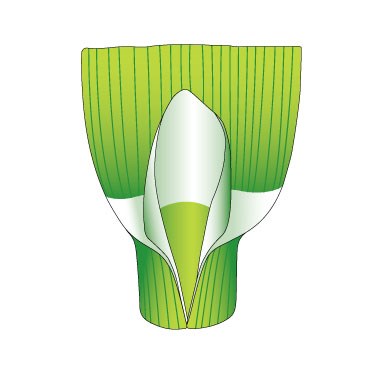
Auricles:
Absent
Leaf blade:
Broad, flat and rough. Viewed from above, there is an anticlockwise twist even apparent in seedlings at 2–3 leaf stage.

Description:
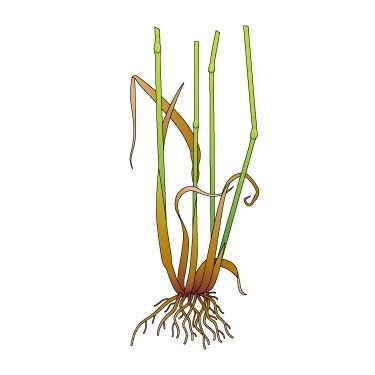
Some of the most familiar weeds, both wild oat and winter wild oat are tall, stout annual grasses similar to the cultivated or ‘tame’ oats. Very similar species, both have a large loose drooping seed head or panicle.
Wild oat is 30–150 cm tall and germinates in both autumn and spring, although most seeds germinate in the spring.
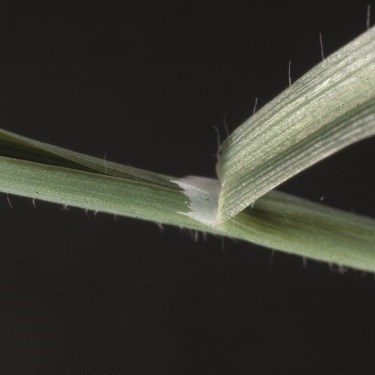
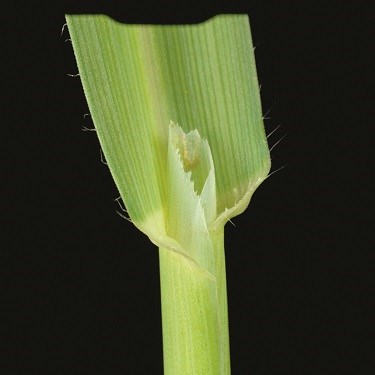
Winter wild oat is a stouter plant 60–180 cm, which germinates in the late autumn and winter. It is very difficult to tell the species apart, but they can be differentiated on the basis of their spikelet characteristics.

Importance:
Wild oat and winter wild oat are among the most competitive of weeds with just 1 plant/m2 reducing yield by 1 %. Seeds can remain viable in the soil for long periods, up to 10 years in undisturbed land and 4–5 years in cultivated soil.
Both species serve as a host for Stem nematode (Ditylenchus dipsaci) and Ergot (Claviceps purpurea).
Herbicide resistance is an issue of serious concern.
Lifecycle:
Both wild oat and winter wild oat germinate only from seed. Most wild oat seeds germinate in the spring though under certain conditions, some will germinate in the autumn and tiller in the early spring.
In contrast, winter wild oat germinates in the late autumn and winter and persists over the winter.
Management
Severe infestations are typically associated with continuous cereal growing, but wild oat is also a serious problem in rotation crops such as beans, sugar beet and peas.
Wild oat is spread in many ways but contaminated seed, straw and combines, together with pigeons, rooks and game birds, constitute the major agents. Once the seeds arrive on a farm an increase in numbers seems inevitable, since their complete eradication is so difficult to achieve in practice.
Control is best achieved in break crops and the use of stale seed beds.