Common name:
Canary-grasses
Latin name:
Phalaris paradoxa Awned canary-grass
Phalaris minor Lesser canary-grass
Ligule:
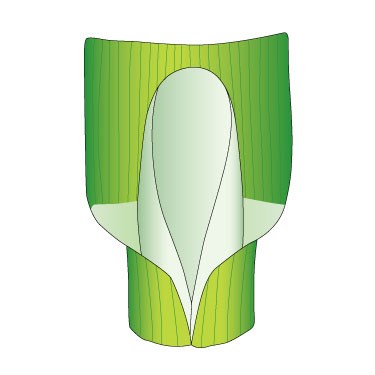
Auricles:
Absent
Leaf blade:
Short, narrow, rough and flat. Rolled.
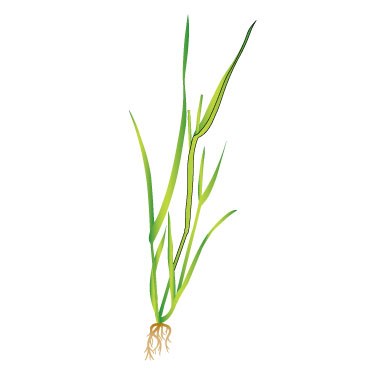
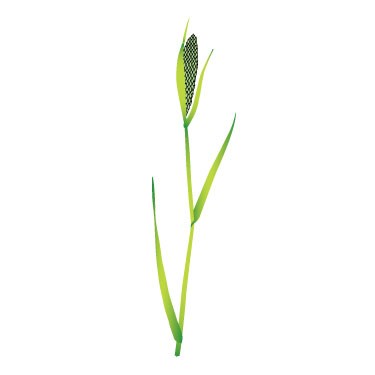
Description:
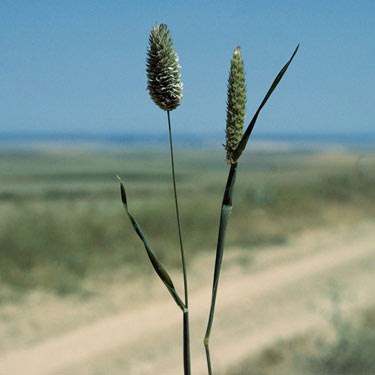
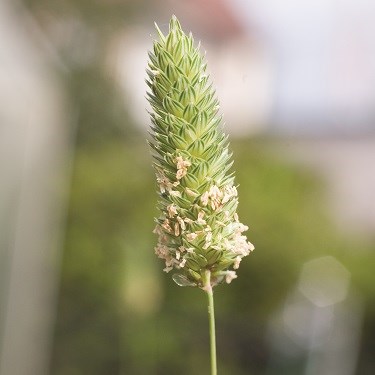
Tall tufted annual 20–100 cm, Awned canary-grass to 150 cm. Uniquely, these species produce lateral or side shoots. Sap is often red. Seed head is long and dense.
Importance:
Uncommon but spreading, these species prefer heavier clay loams of medium to high fertility. Can be very invasive, especially in moist conditions. Very competitive. Awned canary-grass, the spikelets falling as a cluster at maturity (cf. lesser canary-grass) is locally established in several parts of eastern and southern England.
Lesser canary-grass is less frequently encountered on British farms but is developing as a problem in arable situations in southeast Ireland.
Lifecycle:
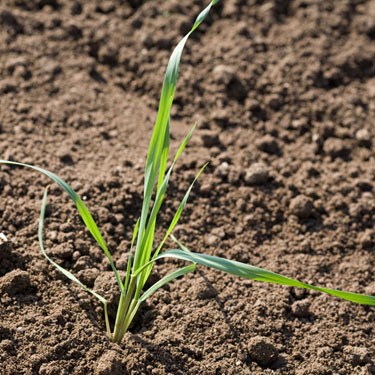
Canary grasses are annual grasses which germinate only from seed in the autumn and winter. It requires mild to warm temperatures, typically between 8 and 20oC.
Management:
Awned canary grass is native to south-west Europe. It has been spread further afield through its inclusion in bird seed mixtures.
Cultural control is best achieved by burying the seed by deep cultivations, but the seed will remain viable for several years. Most seedlings emerge from shallow depths, typically less than 3 cm.