Common name:
Black bent
Latin name:
Agrostis gigantea
Red top
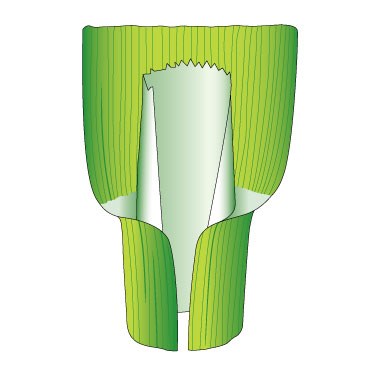
Ligule:
Auricles:
Absent
Leaf blade:
Dull green, flat, broad and tapering to fine point. Rough, ribbed and hairless. Rolled.
Description:
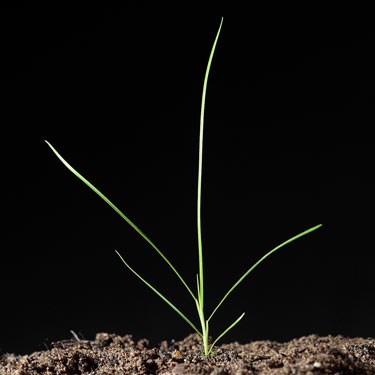
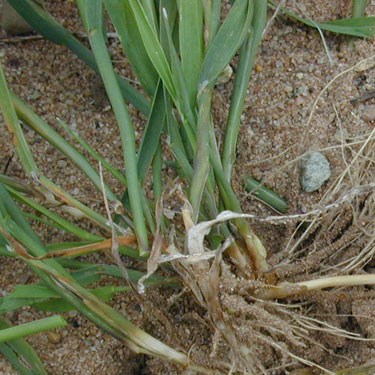
Tall, tufted perennial 30–120 cm. Spreads by tough creeping rhizomes. Distinguished from common couch by long serrated ligule and lack of auricles. Flower head has large, open panicle, often oval and green or frequently purplish in colour. Spikelets are small, narrow, single flowered and awnless.
Importance:
Less frequent than common couch but common in England. Less common in Scotland, Wales, and Ireland. Can be a problem weed in localised patches, particularly on light sandy or gravelly soils.
Lifecycle:
Black bent is a perennial grass and can grow vegetatively from broken fragments of rhizome or from seed. It produces more seed than common couch and most seed germinates in the first autumn after shedding if it remains on the soil surface. Even a thin layer of soil will enforce dormancy and once covered the seed will survive for at least 2 to 3 years.
It can form dense patches within crops which can be problematic and reduce yields through competition.
Management:
Spring cropping presents an opportunity to exhaust the rhizomes of their energy reserves and cultivations on a regular basis, typically every 2 to 3 weeks, will help reduce vigour. The use of a non-selective herbicide on bare land or pre-harvest should be considered alongside rotational and other cultural controls.