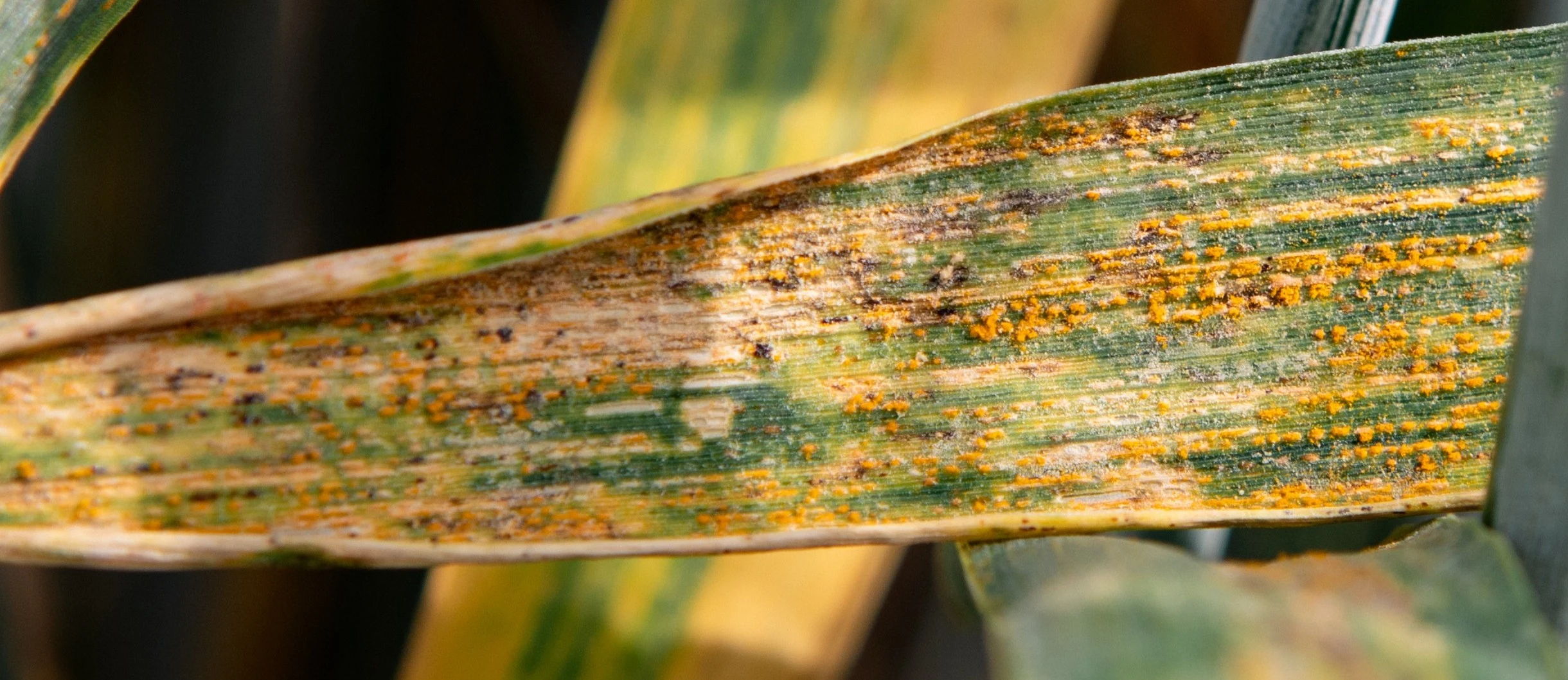
Crops across the West and South have come through a difficult wet winter and are now moving fast. Yellow rust is appearing earlier than expected, Septoria inoculum is high in the lower canopy, and the window for grass weed control is narrowing. Gareth, Technical Manager for the West, shares what he is seeing, what it means for T1 timing decisions, and how to match the right Bayer Crop Science product to the right field situation this April.
Author
Gareth Bubb | 1st April 2026Tags
Cereal disease pressure builds in the West & South
Things are starting to wake up. We have come out of a pretty difficult period of wet weather, and there are still some crops that are recovering from that. But the ground is drying up and generally, I think things are looking pretty good. The challenge is what comes next, April is going to be compressed. Take your opportunities when they come.
Watchout #1: Yellow rust - do you really need to go early?
We are already seeing yellow rust in crops over here, which is unusual for us to see so early, and in varieties you maybe would not expect, things like Bamford. I do worry about that reservoir building on the lower leaves. But timing is everything.
The decision in plain terms
Unless pressure is clearly escalating, hold your nerve. Work backwards from your T1 date. That discipline protects your chemistry options.
Watchout #2: Septoria - the programme starts at T1, not before
Leaves four, five and six are going to look bad after the wet winter. It is what it is. Do not let what the lower canopy looks like now push you into spending chemistry before it is going to repay you. The septoria programme starts at T1 when leaf three has emerged from the main tiller.
Matching your T1 product to the field
2024 was very wet. 2025 was extremely dry. You do not always know what is coming - which is exactly why product choice needs to reflect the risk in front of you, not a generic default.
Score your fields before T1
Drilled before 1 October? (Higher risk)
Variety Septoria rating 6 or below? (Higher risk)
Canopy dense and lush? (Higher risk)
Yellow rust visible already? (Risk escalating)
Mostly lower risk: Ascra® Xpro® is your T1.
Two or more higher-risk factors: Plaxium® for protection against key diseases at T1, and with the Iblon® restriction now lifted, it can be used on successive crops in successive fields - so programme planning is more flexible than it has been.
Watchout #3: Do not let barley, OSR and herbicides slip
When I think about April, I get extremely focused on wheat, but barley and oilseed rape do not wait.
Winter barley The big learning every year: barley goes through growth stages faster than you expect. Do not wait until GS 31 or GS 32. T1 goes on at GS 30. Walk your crops now and book the window. Ascra® Xpro® at 0.9 L/ha is the proven starting point for barley T1 in this region.
Spring barley First spray goes on at late tillering - not at GS 30. If you have early spring barley, check it now. It may be closer than you think. Ascra® Xpro® at 0.7 L/ha or Siltra® Xpro® at 0.4 L/ha are great options for spring barley in the west.
Oilseed rape The flowering spray timing is not far away as I write this, so it is important to remember that a flowering spray that keeps disease out and extends green area retention is where yield is protected. Aviator® Xpro® 0.75 L/Ha is worth having in your plan for that timing.
Grass weed herbicide - winter wheat. If programmes are unfinished, this window is closing so if you are taking one last strike at Black grass, bromes, rye-grass or annual meadow-grass and broad-leaved weeds then Pacifica® Plus at 0.4-.5 kg/Ha and Atlantis® Star 0.333 kg/Ha are still strong options. If you have a dry leaf and sunshine, then get moving. But check the growth stage of the crop and the target weed, if the grass weed is in stem extension, then you are too late. It’s also important to note that if you have applied any liquid fertiliser or tebuconazole containing products before a mesosulfuron containing herbicide then we recommend a 14-day interval between applications. If the Meso went on first, then a minimum of 7 days should pass until following with fertilizer or tebuconazole containing products.
Your 2–4-week action plan
Complete grass weed herbicide in winter wheat.
Walk winter barley - confirm GS 30 and book T1 window.
Walk spring barley - at late tillering? First spray is due.
Score wheat fields for Septoria risk (drilling date, variety rating, canopy)
Allocate fields: Ascra® Xpro® for most situations, Plaxium® where risk is highest.
Set T1 wheat date - work back to decide on optimum T0 timing.
Plan oilseed rape flowering spray before the workload peaks.
I am on the ground across the South and West every season - the good ones and the difficult ones. If you are weighing up your T1 programme and want to talk it through, get in touch.
Numbers that matter.
Ascra® XPro® contains bixafen, fluopyram and prothioconazole. Plaxium® contains isoflucypram, fluopyram and prothioconazole. Iblon® is the commonly used name of isoflucypram active substance. Aviator® XPro® contains bixafen and prothioconazole. Siltra® XPro® contains bixafen and prothioconazole. Pacifica® Plus contains amidosulfuron, iodosulfuron-methyl-sodium and mesosulfuron-methyl. Ascra, XPro, Plaxium, Iblon, Siltra, Xpro, Pacifica and Aviator are registered trademarks of Bayer. All other brand names used are Trademarks of other manufacturers in which proprietary rights may exist.Use plant protection products safely. Always read the label and product information before use. Pay attention to the risk indications and follow the safety precautions on the label. For further information, including contact details, visit www.cropscience.bayer.co.uk or call 0808 1969522. © Bayer CropScience Limited 2026