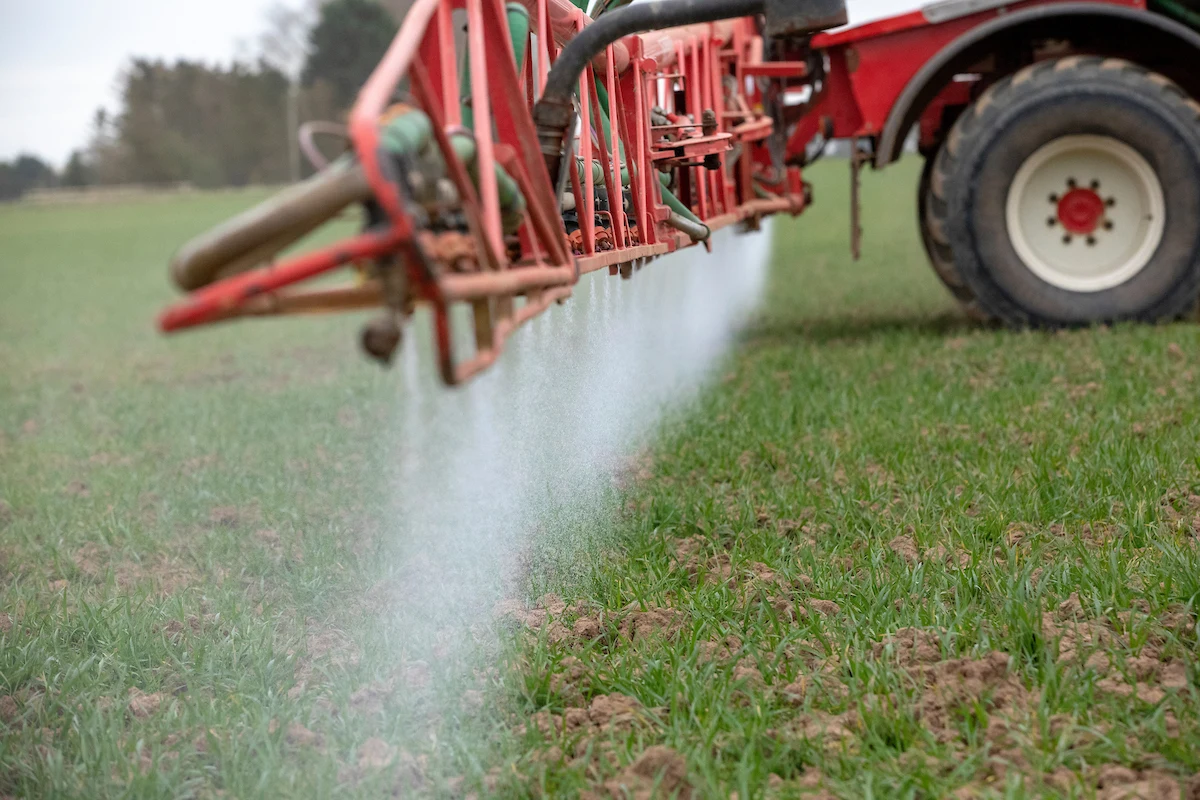
Northern and Scottish cereals are appearing from an exceptionally wet winter with huge variation between fields. This month, agronomists are deciding where limited spray days and constrained budgets will make the greatest difference in winter wheat, particularly on grass weeds and early yellow rust while there is plenty of disease pressure in thick, forward winter barley.
Author
Edward Scaman | 27th February 2026Tags
We Highly Recommend:
Herbicides
Atlantis Star
A highly-effective herbicide for control of grass-weeds and broad-leaf weeds in winter wheat. Atlantis Star is a coformulation of three ALS-Inhibitors (HRAC Group 2) with foliar and some root activity
Read moreHerbicides
Pacifica Plus
A highly active herbicide (a combination of three sulfonylurea herbicides) with foliar and some root activity.
Read moreHerbicides
Monolith
Monolith is a post-emergence herbicide for control of black grass and brome species in winter cereals when applied in the spring. It is a specialist solution offering strong control of brome populations.
Read moreCereal disease and grass weed decisions in the North this March
Across the North and Scotland, agronomists are walking into a mixed picture this March. Some fields look overwhelmed from carrying three to four times their usual winter rainfall; others look surprisingly close to “normal.” With such variability, the challenge isn’t finding the problems, it’s deciding where limited spray days and budgets will have the most meaningful impact.
From recent field walks and discussions, three decisions dominate agronomist thinking this month:
How hard to push early grass weed control in winter wheat.
When early yellow rust justifies a true T0 rather than waiting for T1
How to protect thick, forward winter barley and oats
1) Grass weed control in winter wheat: which fields genuinely need an early hit?
In heavier northern and Scottish soils that remained saturated for weeks, clods have broken down and residuals have weakened. Bromes and rye-grass are now beginning to appear. Agronomists are asking: “Where is an early post-em. essential—and where can I safely hold back?”
What’s at risk if action is delayed
In open crops or wet headlands, actively growing bromes and rye-grass can move fast once soils warm.
Missing the window now often means more expensive and less effective late-season clean-up.
Allowing escapees now, contributes to higher seed return in already challenging rotations.
Factors influencing the decision to act
Whether weeds are visibly “alive and moving”, new tillers, fresh leaves.
Spray-day reality: there have been very few settled weather opportunities.
Resistance history and rotation, which may justify a more robust early approach.
Practical guidance for March
Prioritise open, forward wheat on lighter or well‑drained ground where weeds are actively growing.
Aim for a settled, bright day with a stable night to support uptake.
Use field counts and photos to distinguish “must treat now” fields from those that can genuinely wait.
Where Bayer solutions fit, after you judge an input is warranted
Atlantis® Star (mesosulfuron-methyl + iodosulfuron-methyl-sodium + thiencarbazone) is still a key spring herbicide for mixed grass weed and broadleaf weed populations.
Pacifica® Plus (amidosulfuron + iodosulfuron-methyl-sodium + mesosulfuron-methyl) offers a full‑rate March option for small, actively growing bromes grass weeds and broadleaf weeds.
Monolith® (mesosulfuron-methyl + propoxycarbazone-sodium) gives another flexible choice where resistance status and label guidance permit.
Simple Justification
We can find plenty of examples from previous “wet springs” where early decisions avoided late firefighting.
The simple economics: one prompt, full-rate pass in the right field often costs less than repeated half‑measures in fields that might not need them.
2) Early yellow rust in winter wheat: when does a T0 genuinely earn its place?
Most wheat fields still carry strong plant stands and look resilient despite winter conditions. But early yellow rust is still a risk—especially in varieties with weakened resistance.
What’s at risk if we misjudge the timing?
In susceptible varieties, unchecked early rust thins foliage and weakens canopy structure before stem extension.
Conversely, treating too early can leave too long an interval requiring a further treatment and then squeezing budget needed for decisive T1 and T2 timings.
Factors influencing T0 decisions
Variety rating and local history known “rusty” types often call for earlier intervention.
Current canopy condition: robust crops may be able to withstand small rust patches which stressed and hungry crops cannot.
Spray‑day confidence: T0 will be justified more than ever this year so it is important to have machinery and product ready and waiting to make the most of any weather window.
Practical watchouts
Prioritise T0 for clearly infected, high‑risk situations—avoid routine “comfort sprays.”
Be realistic about how long an early triazole will carry crops in a fast‑moving season.
Where Bayer solutions fit, when T0 protection is justified
Cello® (prothioconazole + spiroxamine + tebuconazole) offers strong rust and mildew activity.
Kestrel® (prothioconazole + tebuconazole) provides a flexible T0 option.
Folicur® (tebuconazole) remains a straightforward triazole choice for rust-focused T0s.
3) Winter barley and oats: thick, green and quietly at risk
Despite heavy rainfall, many northern winter barley crops are lush and clean at first glance. However, thick early canopies can hide base disease.
What can be lost by underestimating early disease?
Rhynchosporium, net blotch and mildew can sit low in the canopy, out of sight.
Early tiller loss directly affects yield, and later sprays cannot fully recover this potential.
Key considerations
Whether a pre‑T1 clean‑up pass would help retain tillers in the thickest crops.
How to balance barley spend against competing wheat and spring crop priorities.
Giving Oats an early check-up.
Practical pointers
Walk into barley crops and get right into them, don’t rely on the clean top canopy to tell the whole story.
Assess lower leaves for Rhynchosporium and net blotch.
In winter oats, watch for mildew in more sheltered, lush stands.
Where Bayer solutions fit, if early protection is chosen
Cello® provides broad-spectrum control for barley diseases including net blotch and mildew.
Helix® (prothioconazole + spiroxamine) offers strong mildew and early-disease activity.
Similar principles apply in winter oats where disease pressure and markets justify treatment.
Spray days, budgets and bandwidth
Agronomists and growers are juggling multiple pressures simultaneously:
Completing soil and potato cyst nematode (PCN) sampling for spring planning
Managing liming, drilling slots and fertiliser deliveries
Navigating limited spray windows
Tight budgets.
Feeling the squeeze
Spray windows clashing with drilling and fertiliser work.
The ongoing mental load of prioritising field by field
Ed’s Top 3 Tips for March
1. Focus on the fields where action genuinely makes a difference
Use early spray windows for the right fields, those with actively growing grass weeds or rust‑susceptible wheats. Not every field needs an early pass, and prioritising correctly helps budgets stretch further and reduces firefighting later in the season.
2. Make T0 a strategic decision, not a habit
Prioritising T0 for high‑risk situations; infected varieties, rust history, or limited spray opportunities before T1. A well‑judged T0 protects canopy and reduces pressure on T1, but unnecessary early sprays drain budget and flexibility.
3. Walk winter barley crops properly, don’t trust the clean top canopy
Thick, forward crops often hide rhynchosporium, net blotch or mildew lower down. Early identification helps protect tillers and ensures crops carry their strong potential into T1 and beyond.
Atlantis® Star contains iodosulfuron-methyl-sodium, mesosulfuron-methyl and thiencarbazone-methyl. Pacifica® Plus contains amidosulfuron, iodosulfuron-methyl-sodium and mesosulfuron-methyl. Monolith® contains mesosulfuron-methyl and propoxycarbozone-sodium. Cello® contains prothioconazole, spiroxamine and tebuconazole. Helix® contains prothioconazole and spiroxamine. Folicur® contains tebuconazole. Kestrel® contains prothioconazole and tebuconazole. Atlantis, Pacifica, Monolith, Cello, Helix, Folicur and Kestrel are registered trademarks of Bayer. All other brand names are trademarks of other manufacturers in which proprietary rights may exist. Use plant protection products safely. Always read the label and product information before use. Pay attention to risk indications and follow safety precautions on the label. Visit www.cropscience.bayer.co.uk or call 0808 1969522 for further information. © Bayer CropScience Limited 2026.
We Highly Recommend:
Herbicides
Atlantis Star
A highly-effective herbicide for control of grass-weeds and broad-leaf weeds in winter wheat. Atlantis Star is a coformulation of three ALS-Inhibitors (HRAC Group 2) with foliar and some root activity
Read moreHerbicides
Pacifica Plus
A highly active herbicide (a combination of three sulfonylurea herbicides) with foliar and some root activity.
Read moreHerbicides
Monolith
Monolith is a post-emergence herbicide for control of black grass and brome species in winter cereals when applied in the spring. It is a specialist solution offering strong control of brome populations.
Read more