Four possible tasks for Scottish arable growers in March
Grant Reid looks at four possible tasks on arable farms in March as crops start to grow

Grant Reid looks at four possible tasks on arable farms in March as crops start to grow
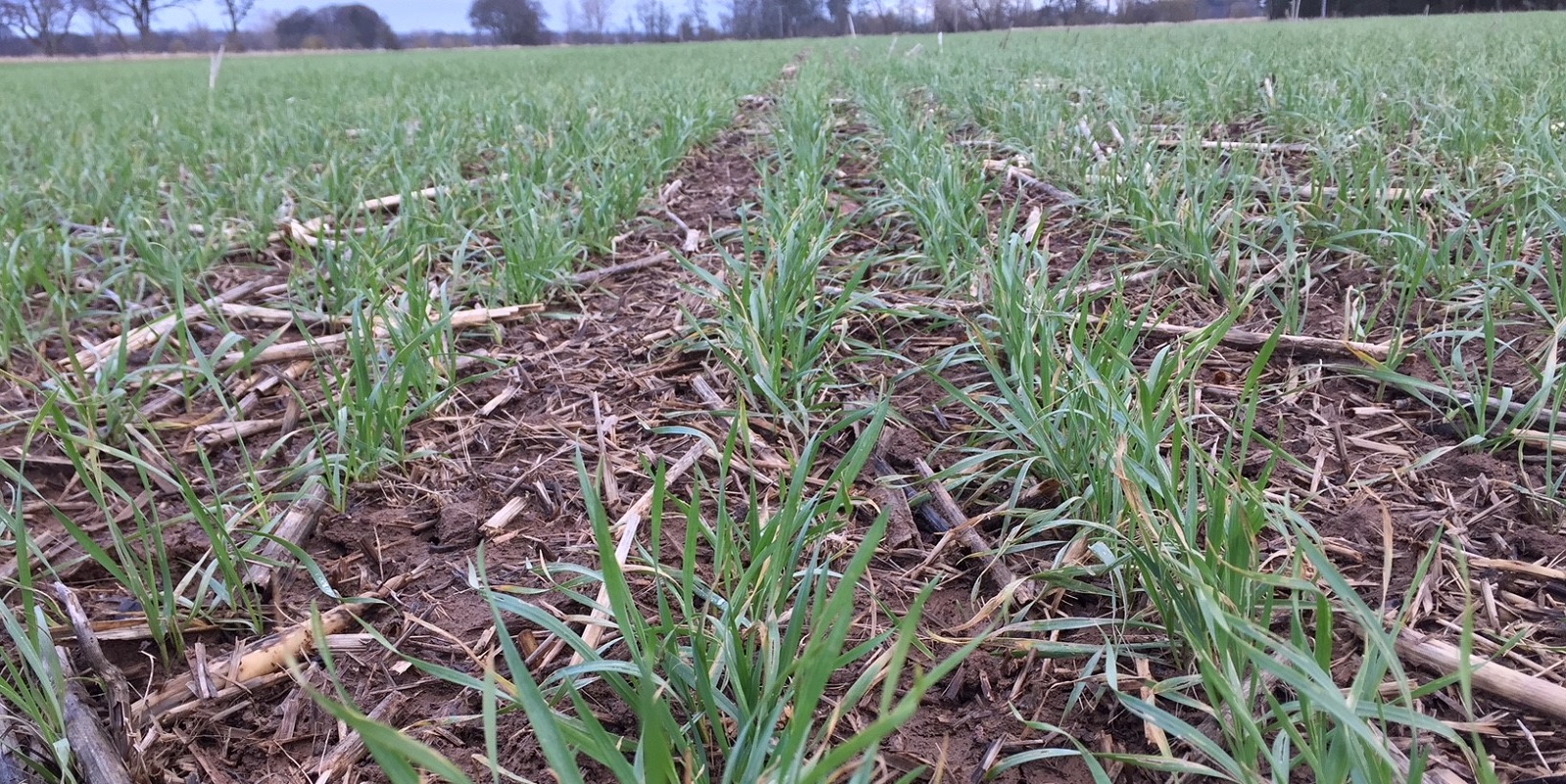
Both cereals and oilseed rape crops are showing signs of moving in Scotland as we approach the end of February. There are some very large flocks of pigeons around, and while I haven’t seen any oilseed rape fields personally that have been annihilated yet, I have heard that some are getting walloped by them.
Unlike perhaps further south in England, there hasn’t been a huge amount of land work happening so far apart from the last of the ploughing where conditions allow.
It’s not until March, generally, that fertiliser will start to be applied as much of Scotland is in a Nitrate Vulnerable Zone, and despite the cold spells, crops are still quite forward so I don’t think there is a huge push to really drive them on with nitrogen.
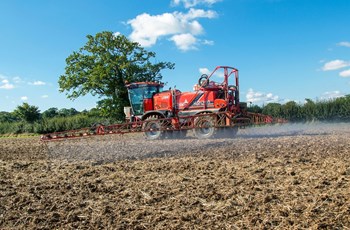
While February is the month for assessing weed burdens coming into spring, March is when weed control can happen, but much depends on the weather.
Application timing is critical and at the weed screen in the past we have seen March applications work very well and April applications less so and vice versa. Basically, you need to keep an eye on the conditions and the growth of the target.
If conditions are cold then it’s not going to do any good spraying. You need to make sure there is a good steady spell of milder weather and signs of active growth before thinking of applying something.
For example, if we’ve had five days of really cold frosts and big swings between day and night temperatures and then there’s two days of really warm weather, don’t go spraying because the chances are the product won’t be metabolised within the weed target. You’re probably going to need at least five days of warmer weather with no big fluctuations between day and night before thinking about spraying.
Where the target is annual meadow grass and broadleaf weeds, 0.8-1.0 L/ha of Othello (mesosulfuron + iodosulfuron + diflufenican) in conjunction with 1.0 L/ha of biopower, depending on size of weed is a good option.
If you’ve got bromes or other more difficult grassweeds, then Pacifica Plus (mesosulfuron + iodosulfuron + amidosulfuron) is a better choice. Make sure you have correctly identified which species of brome you’re targeting as that can affect timing and product choice to some extent.
According to our latest Spotcheck results, there is an abundance of light leaf spot in Scotland in oilseed rape crops, as well as some Phoma. If you want to check leaves from your crop, please contact me for a sample kit – Spotcheck will be available until the end of March.
I’d suggest where light leaf spot is present get on top of it while the crop is in early stem extension because you don’t want the disease creeping up the plant to the flowering parts. Proline (prothioconazole) is available – just remember the 1.26 L/ha maximum total dose in the crop through the season – especially if you used Proline in the autumn.
Growth regulation is going to be critical in both winter barley and winter wheat crops this season given how far forward some crops are. Just be careful not to apply it too soon before or after any herbicide treatments – let the crop recover a bit as you don’t want it to have a sore head.
While walking crops also keep an eye on what diseases are present and at what level, to help fine-tune early season disease control.
It will all depend on the weather, but T0s in winter barley especially more to the south of Scotland could become due in March. In winter barley tiller retention is key to maximising yields, and early disease infections can signal to the plant to abort tillers, while in wheat yellow rust and mildew are the key diseases to keep on top of early.
Before deciding on whether you need a nematicide, it’s obviously important to consider all the cultural controls and other factors from soil sample results, what nematode species are present, are you growing a tolerant and / or resistant variety, to have you grown a biofumigant crop, etc.
If risk is very high, consider whether you can switch fields, although that might be difficult the closer you get to planting.
Where risk is low, you could consider using Velum Prime (fluopyram). It’s not a silver bullet, but it’s a good product with no harvest interval, which can be useful for salad potato crops. In higher pressure situations it can also be used in combination with half rate nemathorin.
Velum can be applied using a couple of different methods – broadcast spray followed by overall incorporation within 72 hours, or as an in-furrow application at planting.
It also has free-living nematode on the label for both potatoes and carrots – only the spray and incorporate application method can be used in carrots.