Five insights into agronomic tasks for growers in the west in March
Gareth Bubb takes a look at some key tasks growers in the west might be doing in March

Gareth Bubb takes a look at some key tasks growers in the west might be doing in March
February has been a very dry month as we approach the last week, but crops are perking up with the longer day lengths and warmer temperatures. The exception is that some oilseed rape crops are going backwards due to cabbage stem flea beetle larvae and the earlier frosts.
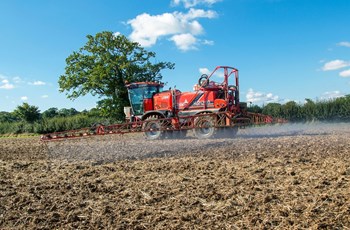
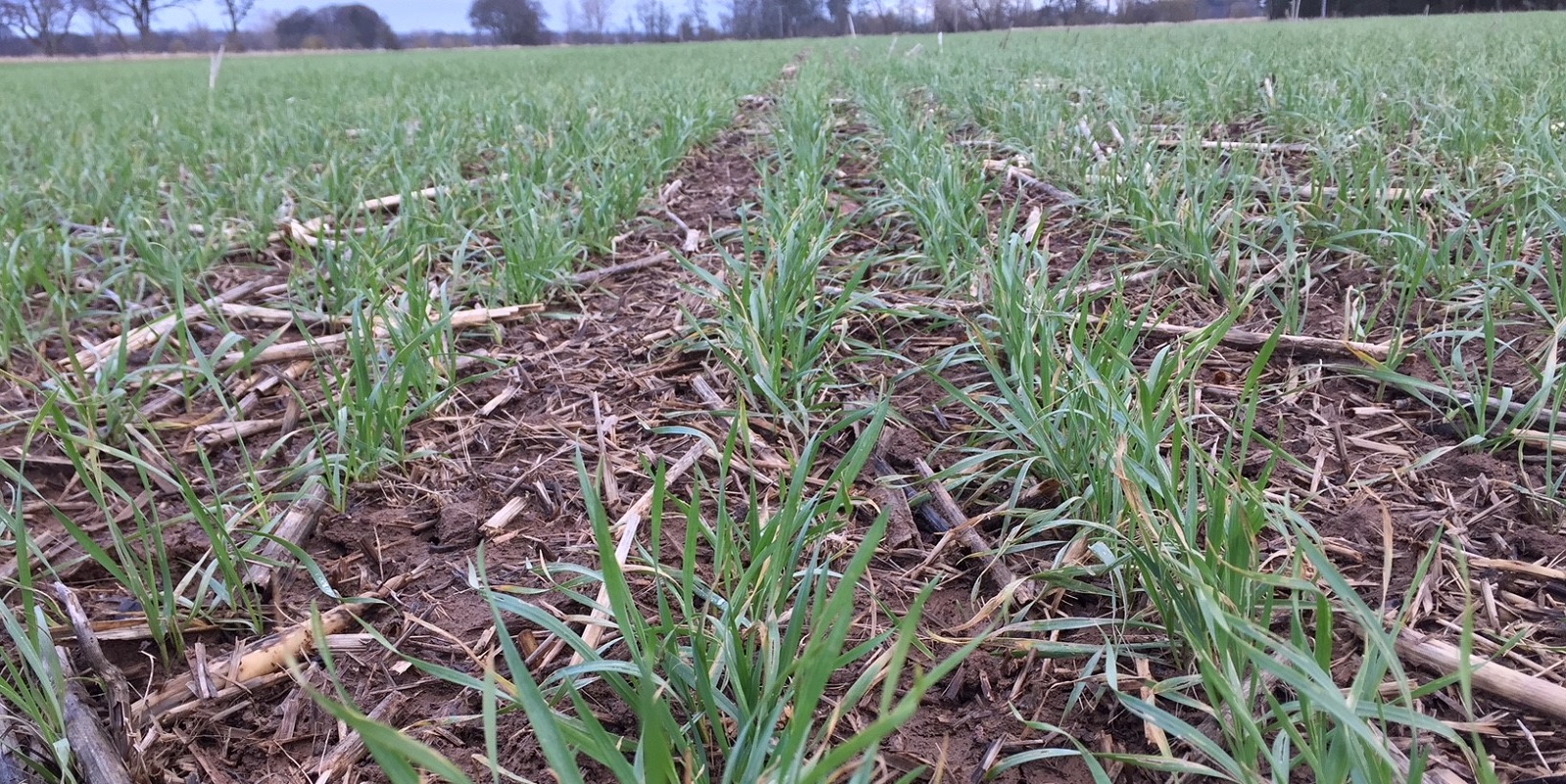
Growers have been making use of a good window for applying grassweed herbicides in wheat, and rightly so. This may be controversial, but I suggest growers ignore soil temperatures when deciding whether it’s right to apply a mesosulfuron-based product.
Instead focus on whether the weeds look healthy and there are signs of active growth. In previous seasons we’ve seen good levels of efficacy from January, February, or early March applications. Unfortunately, it will be hindsight that tells us when the right time was to go. I can’t answer that now, but the only thing I can definitely say is that the weeds will be bigger the longer you leave it.
The other key thing is attention to detail on the application – don’t use complicated tank mixes and use a flat fan nozzle with a fine to medium spray. I know that can be a bit drifty so spraying condition need to be ideal, but you need that to hit the target.
Atlantis Star (mesosulfuron + iodosulfuron + thiencarbazone) and Pacifica Plus (mesosulfuron + iodosulfuron + amidosulfuron) are probably the best two all-round products, while if you just have annual meadow grass and broadleaf weed populations, don’t forget about Othello (mesosulfuron + iodosulfuron + diflufenican).
Our free Spotcheck service in conjunction with ADAS to which you can send oilseed rape leaves for disease diagnosis, is finding increasing incidence of light leaf spot. Growers tend to wait until green bud before applying a fungicide, but I think you will see benefits from spraying as soon as possible. Oilseed rape is changing by the day with the increasing temperatures, so you want to protect that new growth.
Proline (prothioconazole) is probably the best choice for sprays before flowering, although it won’t give you any growth regulatory effect. If you want that add some tebuconazole or there are a range of specific growth regulatory products.
Everybody says winter barley moves quickly through its growth stages meaning there’s not many days between fungicide timings. In my opinion I think growers can leave it too late and miss the timings. For example, if you wait until GS31 or even GS32 for T1s, then there probably will be less than two weeks before the awns come out, but it’s too late – the T1 should be GS30/31 – roughly around the first to second week of April.
Winter barley yield comes from grains / sqm so tiller retention is really important. Early diseases such as net blotch, Rhynchosporium or mildew can cause the plant to abort tillers and reduce yield potential.
That means there can be a real benefit in applying a T0 in winter barley, which should be around 3-4 weeks before the T1 – applied probably around the second week of March. I think there’s probably a more direct response to yield from T0s in winter barley than in winter wheat.
Similarly at T1 tiller retention remains the key, which is why I’d use your best spray at this timing. In winter barley that would be Ascra (bixafen + fluopyram + prothioconazole), which you can only use once in barley. Siltra (bixafen + prothioconazole) remains a really good option too, but in winter barley my preferred choice would be Ascra followed by Siltra at T2.
With the current range of products available I think you’re probably just targeting yellow rust and maybe mildew at T0 in winter wheat. The AHDB Recommended List this year has information on whether varieties are susceptible or resistant at juvenile growth stages to yellow rust, as well as adult plant resistance.
Take a look at that to help inform choices, although a lot will be worth spraying as you don’t really want to leave it until T1. Trying to control any disease in a curative situation is going to be difficult, and you can end up doing it all the way through the season.
If you don’t have a yellow rust risk I’d probably leave a T0 out.
Assess potato cyst nematode risk using soil sampling results, variety tolerance and resistance status and field history and tailor product choice accordingly. If the risk is perceived to be low then you can use Velum Prime (fluopyram) on its own, if it is not, we back mixtures with nemathorin.
There are a couple of different ways to apply Velum Prime – either broadcast and incorporate within 72 hours, or apply at planting in-furrow. The efficacy data suggests there is no difference between the two methods, but personally because of how you incorporate and to what depth, I think it might be better to invest in in-furrow application equipment because there are fewer things to go wrong.