Crop progress
After a prolonged dry period following a generally dry year to date, recent welcome rain alters the outlook of the coming weeks.
Oilseed rape crops are a mixed bag, with the earliest drilled crops looking well, but later drilled crops having struggled to establish in dry conditions and under high adult cabbage stem flea beetle pressure. It remains to be seen whether the recent week of rainy weather at the end of September, whilst temperatures favour good growth, will have arrived in-time for some crops.
Sugar beet harvest has started, and early sugar contents good. The rain will help to ease lifting. With conditions remaining mild, it is worth remembering not to lift too far ahead of delivery into factory and if possible consider clamp location and hygiene in relation to next years’ crop.
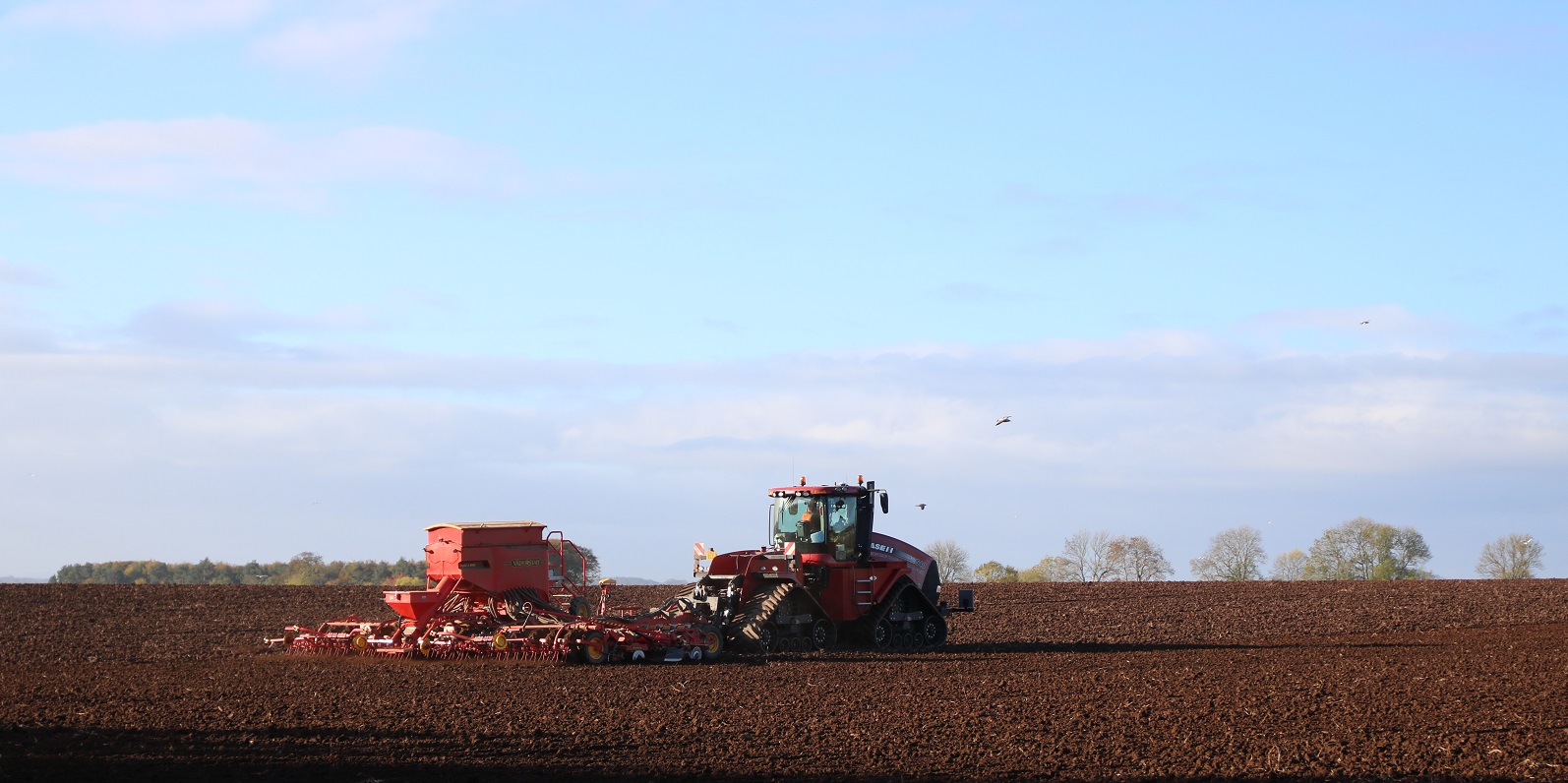
Recent rain has stimulated some cereal drilling of winter barley and oats, but in the main wheat drilling hasn’t really started across the region, rightly waiting until later in October to enable any chance of satisfactory grassweed control. For any crops that have been drilled, be mindful of mild conditions and monitor aphid migration, accurately recording Tsum events to mitigate yield loss from BYDV infection
Sam’s agronomy tips for October
1. Ensure broad-spectrum fungicide treatment applied to OSR
The dry period up to the final days of September is likely to have reduced overall phoma inoculum, however backward crops with low resistance ratings are most at risk and should always be monitored for symptoms. Crops drilled very early will be at greater risk of light leaf spot infection and this will require careful management, so pay attention to varietal rating and proximity to previous oilseed rape crops. Remember the disease is polycyclic, airborne ascospores that establish an infection within the crop will continue to cycle via rain-splash conidia.
It is likely that a one-spray fungicide strategy will be deployed by many growers and to ensure that crops are adequately protected from both diseases, a broad-spectrum fungicide such as Proline (prothioconazole) should be used. The Bayer Spotcheck initiative is up and running again this year and available for use in season to aid disease diagnoses.
2. Be vigilant against Myzus persicae migrating into OSR crops
With mild conditions currently, OSR growers should be aware of the potential impact of turnip yellows virus infection and take action to monitor its aphid vector, Myzus persicae. Keep an eye on AHDB Aphid Bulletins and look for colonising aphids in crops. Consider an application of Biscaya (thiacloprid) where aphids are found. Remember that the potential impact on yield is greater when plants are infected at an early stage, so small or backward crops should be prioritised over large, early-drilled crops.
3. Use appropriate dose of Roundup when creating stale seed-beds
The recent rain will have helped to stimulate a flush of grassweeds ahead of drilling. When using Roundup (glyphosate) on stale seeds, ensure that the dose is appropriate for the size of target grassweed and don’t delay applications between each flush.
4. Despite recent rain, don’t be tempted to drill too soon in grassweed situations
A balance has to be met in terms of drilling date, but where blackgrass or ryegrass are present, don’t be tempted to drill earlier than the third week in October to maximise control. On top of the cultural benefits, we see an average 30% increase in control from residual herbicides when applied at this time. Shorter days, combined with cooler and moister soil conditions being more favourable for residual herbicide efficacy.
Be sure to stack as many cultural techniques as possible and once stale seed-beds prepared, minimise soil disturbance as much as possible during drilling to reap the rewards of diligent stale seedbed management, avoiding stimulating further germination of blackgrass and ryegrass between the rows.
5. Mix up control strategy to stay one step ahead of grassweeds
Recently published shifts in sensitivity to flufenacet highlights the continued need for stewardship of the chemistry, with recent evidence indicating the benefit of formulated mixtures of flufencacet with diflufenican – such as Liberator. Like any battle, it’s important to know your enemy, be it where (i.e. depth within the seedbank) or when it will germinate and importantly its strengths and weaknesses, i.e. its resistance profile – this will help tailor product choice for greatest efficacy on an individual field basis, as well as delay as best possible the emergence of resistance.
It’s also worth remembering that we don’t just, inevitably, see resistance to weeds exposed to herbicides, but importantly, weeds evolve to any cultural practice we pursue too, be it later drilling, type of cultivation etc. so it’s important to have a long-term plan that alternates and mixes up both cultural and chemical strategies to stay on top of grassweeds long term. Keep drilling later with the same cultivation technique and the problem will just look different in a few years’ time!
6. Apply pre-emergence herbicides soon after drilling
When applying pre-emergence herbicides, do apply within 48 hours of drilling for best efficacy. The core foundation recommendation for a crop of winter wheat is 0.6L/ha of Liberator with 2L/ha of Defy (prosulfocarb) or Avadex (triallate). Also, don’t miss the chance to include another dose of Roundup at this time or just ahead of emergence.
7. Cultural methods aren't just about grassweed control
Delayed drilling not only helps manage grassweeds, but also mitigate BYDV infection and reduce pressure of foliar diseases, so that there can be every chance of successful disease management. With this in mind, growers should consider in particular the Septoria tritici resistance rating of their varieties as an important characteristic when deciding on drilling schedules. If a variety has a lower score, consider drilling it last to help manage disease pressure in the spring and protect the fungicide armoury.