Author
Bayer Crop Science | 19th August 2025Tags
Change in mindset needed to tackle brome problems
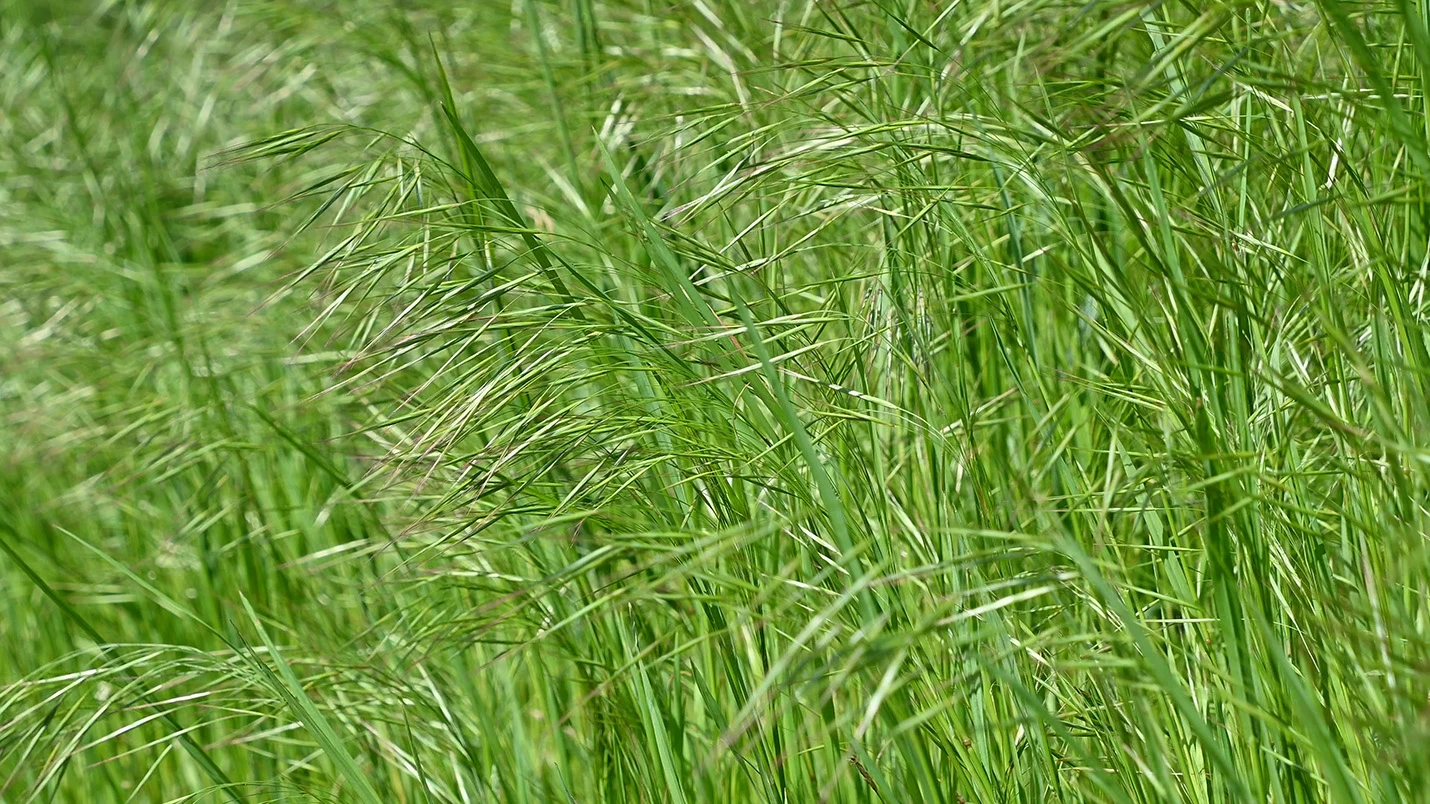
A gradual increase in brome problems mean that weed control strategies need a slight rethink according to Bayer Technical Manager Edward Scaman.
“Brome’s always been around in Scotland but it’s becoming more noticeable. We haven’t been getting on top of it, and we need a stronger approach on herbicides and cultural controls.”
“Rye, meadow and sterile brome are the three species causing problems. It’s very field specific rather than one kind of brome dominating in one specific region. Brome can creep in from field margins and arrive in straw and muck.”
Edward notes cases of imported straw for carrots containing brome seeds can be the start of a problem. Oilseed rape follows carrots; it hides the brome which is then a problem in the following min-tilled wheat crop.
Short rotations with frequent spring barley and systems only using minimum-tillage are also linked with an increase in brome. He recommends looking at the whole system to properly deal with it.
“I’m a big fan of rotations in the widest sense of the word – crops, cultivation strategies and the actives you use in the crop protection programme. Problems often stem from a lack of rotation.”
“Rotational ploughing is very useful, but you have to plough the field uniformly and get proper inversion and seed burial. If the field is an odd shape, you might over or under plough the overlaps. Attention to detail is the key to stopping brome spreading.”
For farms not ploughing, he recommends a shallow cultivation soon after harvest to get a chit of brome and spray off with Roundup® to control freshly-shed seed. For wheat herbicide programmes, he thinks a change in mindset is needed to focus more control at pre-em.
In the past, autumn sprays have been targeted at meadow grass, probably half-rate Liberator. Brome was manged in the spring with a post-em. But the scale of the problem means an autumn residual programme like farmers further south use against black grass and rye-grass is necessary.
“I would start with a full rate of a metribuzin co-form like like Alternator® Met, Cadou® Met or Octavian® Met plus Proclus® and possibly tri-allate. Focus on application technique, keep the boom low and stable and don’t go too fast. You only get one chance so make the pre-em. count.
Spring germination means that post-ems. still have a place. Edward notes that even sterile brome which is typically autumn germinating can have noticeable spring emergence when there is a large population. “For any Atlantis® type spray, plan to go early in the season to deliver more grams of active per gram of weeds. If there is bright sunny weather in February – go for it.”
-----
Alternator® Met contains metribuzin, flufenacet and diflufenican. Cadou® Met contains flufenacet, diflufenican and metribuzin. Liberator® contains flufenacet and diflufenican. Octavian® Met contains metribuzin, flufenacet and diflufenican. Proclus® contains aclonifen. Roundup® contains glyphosate. Alternator®, Cadou®, Liberator®, Octavian®, Proclus® and Roundup® are Registered Trademarks of Bayer. Use plant protection products safely. Always read the label and product information before use. Pay attention to the risk indications and follow the safety precautions on the label. For further information, including contact details, visit www.cropscience.bayer.co.uk or call 0808 1969522. © Bayer Crop Science Limited 2025.