Region: Southwest England Headline: High rainfall, mild weather and forward crops mean agronomists must prioritise carefully. Key decisions centre on nitrogen, grass weed control and early disease management
Author
Matt Siggs | 27th February 2026Tags
We Highly Recommend:
Herbicides
Atlantis Star
A highly-effective herbicide for control of grass-weeds and broad-leaf weeds in winter wheat. Atlantis Star is a coformulation of three ALS-Inhibitors (HRAC Group 2) with foliar and some root activity
Read moreHerbicides
Pacifica Plus
A highly active herbicide (a combination of three sulfonylurea herbicides) with foliar and some root activity.
Read moreFungicides
Folicur
A broad spectrum systemic fungicide for wheat (excluding durum), barley, oats, rye (winter) and oilseed rape, field beans and linseed.
Read moreMarch agronomy priorities: weed control, N timing and early disease
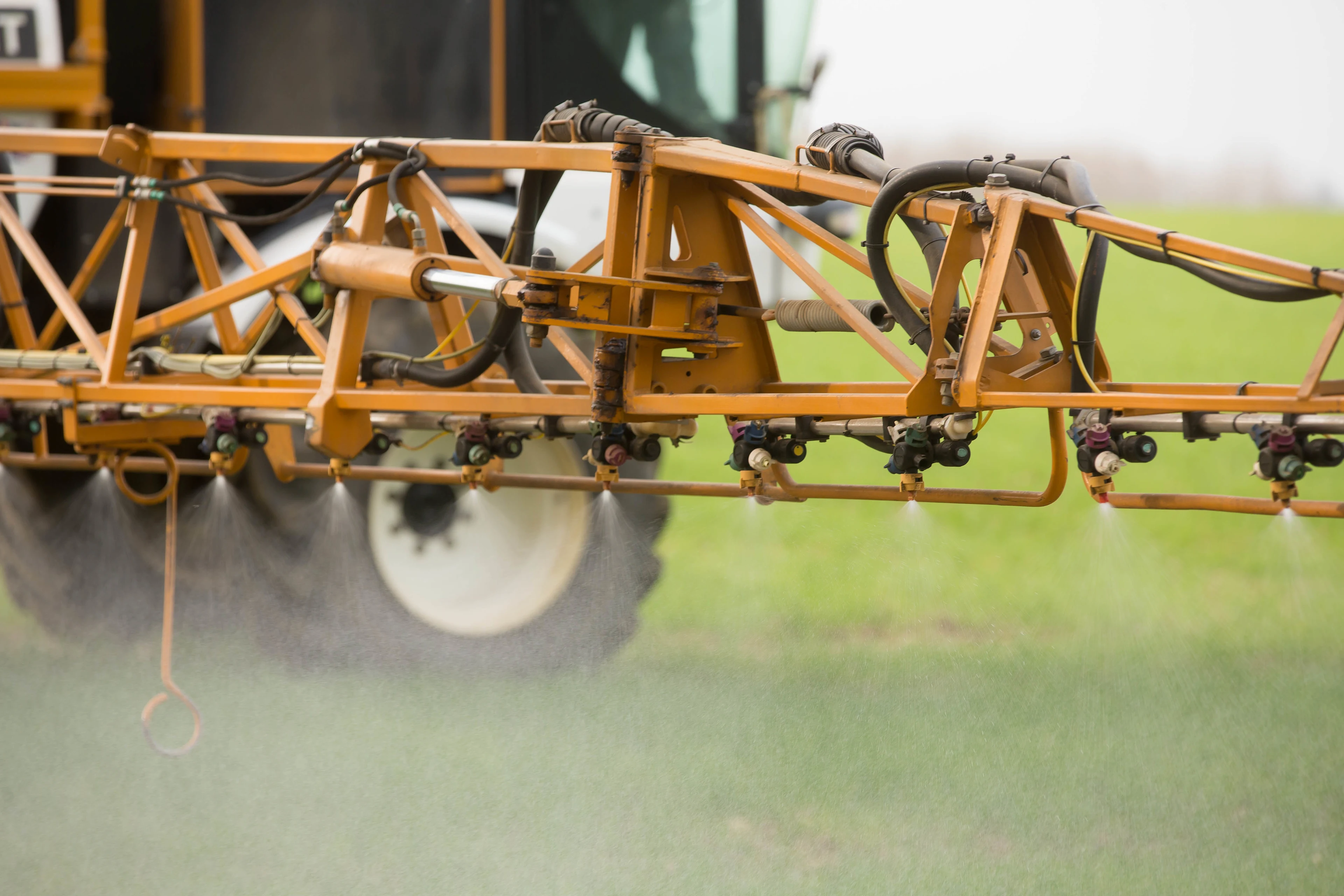
With exceptional rainfall across the South and South West, reports are of many fields that are still saturated, leaving agronomists with few opportunities to complete early spring herbicide sprays. Mild weather, meanwhile, has allowed crops to push on, adding urgency to nutrition and weed management decisions.
Matt: “This is a decision crunch of a month. Crops look hungry and workloads are stacked, but spray windows before now have been almost impossible.”
Agronomists are once again balancing timing, planning and risk, and the order in which jobs are done will directly influence crop potential.
1) Nutrition is the first call: supporting hungry, forward crops
Winter barley is especially quick to show hunger, and forward wheat crops are not far behind.
What agronomists should consider?
The first nitrogen dose is almost certainly the top priority once travel is safe.
Tillers need protecting early; losing them now sets a ceiling on yield.
It is common that farms depend on the same tractor for fertiliser and spraying, compressing timings further.
Practical pointers
Aim to get nitrogen on as soon as a dry window appears.
Leave a suitable interval (around 14 days after liquid N) before applying spring ALS herbicides.
Expect heavier soils in the valleys to take much longer to dry due to high water tables.
Matt: “You get out what you can put in with cereals so taking opportunities early increases your potential.”
2) Grass weeds: March becomes the decisive window
With February spraying opportunities washed out and cereal fields missing pre-ems entirely, early March is the critical moment for brome, black grass and rye-grass control.
Key agronomist decisions
Get into fields early to assess weed size, rye-grass, brome and black grass could well be tillering.
Grass weeds can reach stem extension well before the crop, meaning an application at this stage could prevent control entirely.
In a later window control won’t be about that elusive 100% removal, even 30–40% reductions in surviving plants numbers to harvest time, results in a meaningfully reduced seed return and autumn pressure.
Where spring ALS options fit
Atlantis® Star (0.33 kg/ha) is well suited for all grass weeds and delivers a broad spectrum of broadleaved weed control.
From 1st March, Pacifica® Plus (0.5 kg/ha) for brome control delivers the maximum dose of active for the grass weed as well as highly effective broadleaved weed activity.
Matt: “Even a headland‑only pass can be hugely worthwhile — it’s not always about treating the whole field.”
Workload tip
Short, targeted jobs now, reduce the crushing pressure of trying to fit too much spraying into too little time later in March.
3) Early disease: T0 rust may appear quickly
No major yellow rust reports yet, but the region is primed for rapid change — especially with concerns about YR15 and reduced juvenile resistance.
Decision-making factors
Treat T0 as variety‑specific and risk‑based.
Crop stress from waterlogging and inconsistent nutrition may increase vulnerability.
If T0 action is needed
Familiar tools are still available depending on agronomist judgement:
Tebuconazole (e.g., Folicur®).
Prothioconazole and tebuconazole co-forms such as Kestrel®/ Prosaro®.
Spiroxamine and prothioconazole co‑forms like Helix® (use label‑timing).
Matt: “T0’s are being planned, and it looks like we’ll likely need similar or slightly stronger T1 investments than last year, background disease pressure is simply higher.”
4) Timelines are tight: sequencing prevents stress stacking up
Nitrogen, grass weeds and T0 all want doing at roughly the same point in the month.
Matt’s core sequencing reminders
Leave ~14 days after liquid N or Tebuconazole applications before applying an ALS herbicide. If the herbicide is applied first, then a 7-day interval is needed.
Don’t stack multiple stresses on a crop in the same week if avoidable.
If a dry afternoon appears, act. Perfect week-long weather is unlikely.
Matt: “Doing the right job at the right moment reduces pressure.”
Matt’s Top Three Tips for March
1. Plan ahead Sequence nutrition → recovery → herbicide → recovery → fungicide. Avoid mid‑job kit changes where possible.
2. Prioritise by field Some soils won’t dry for weeks; others will be ready. Address the fields where early intervention removes later pressure.
3. Stay flexible Weather and weed stages will shift quickly. Rigid plans are brittle, responsive ones deliver better outcomes.
Closing Note
Agronomists and farmers are shouldering the major decision-making load this spring under tight budgets and tighter timings. If you want to compare notes on weed stages, crop stress, or local sequencing challenges, your regional Bayer Technical Manager is available for a grounded, practical conversation.
You make the decisions, we’re here with the insight to support them.
Atlantis® Star contains iodosulfuron-methyl-sodium, mesosulfuron-methyl and thiencarbazone-methyl. Pacifica® Plus contains amidosulfuron, iodosulfuron-methyl-sodium and Mesosulfuron-methyl. Folicur® contains tebuconazole. Kestrel® contains prothioconazole and tebuconazole. Prosaro® contain prothioconazole, and tebuconazole. Helix® contains prothioconazole and spiroxamine. Atlantis, Pacifica, Folicur, Kestrel, Prosaro, Helix are registered trademarks of Bayer. All other brand names used are Trademarks of other manufacturers in which proprietary rights may exist. Use plant protection products safely. Always read the label and product information before use. Pay attention to the risk indications and follow the safety precautions on the label. For further information, including contact details, visit www.cropscience.bayer.co.uk or call 0808 1969522. © Bayer CropScience Limited 2026
We Highly Recommend:
Herbicides
Atlantis Star
A highly-effective herbicide for control of grass-weeds and broad-leaf weeds in winter wheat. Atlantis Star is a coformulation of three ALS-Inhibitors (HRAC Group 2) with foliar and some root activity
Read moreHerbicides
Pacifica Plus
A highly active herbicide (a combination of three sulfonylurea herbicides) with foliar and some root activity.
Read moreFungicides
Folicur
A broad spectrum systemic fungicide for wheat (excluding durum), barley, oats, rye (winter) and oilseed rape, field beans and linseed.
Read more