Five insights into weed and disease control for East Anglian growers
Ella Bull assesses options for weed control in cereals and disease control in oilseed rape for East Anglian growers this October

Posted 4 years ago
29/09/2022
Ella Bull assesses options for weed control in cereals and disease control in oilseed rape for East Anglian growers this October
East and central Suffolk has remained dry through most of September, while west Suffolk has had more rain. But with moisture, where it has arrived, only coming from late August, the early August drilling slot for oilseed rape was not there for most growers.
That’s meant most oilseed rape was drilled in later August / early September and at risk from cabbage stem flea beetle attacks, which peaked during this period.
As a result, oilseed rape establishment is extremely variable in East Anglia as we reach the end of September, with some struggling either through cabbage stem flea beetle grazing or lack of moisture.
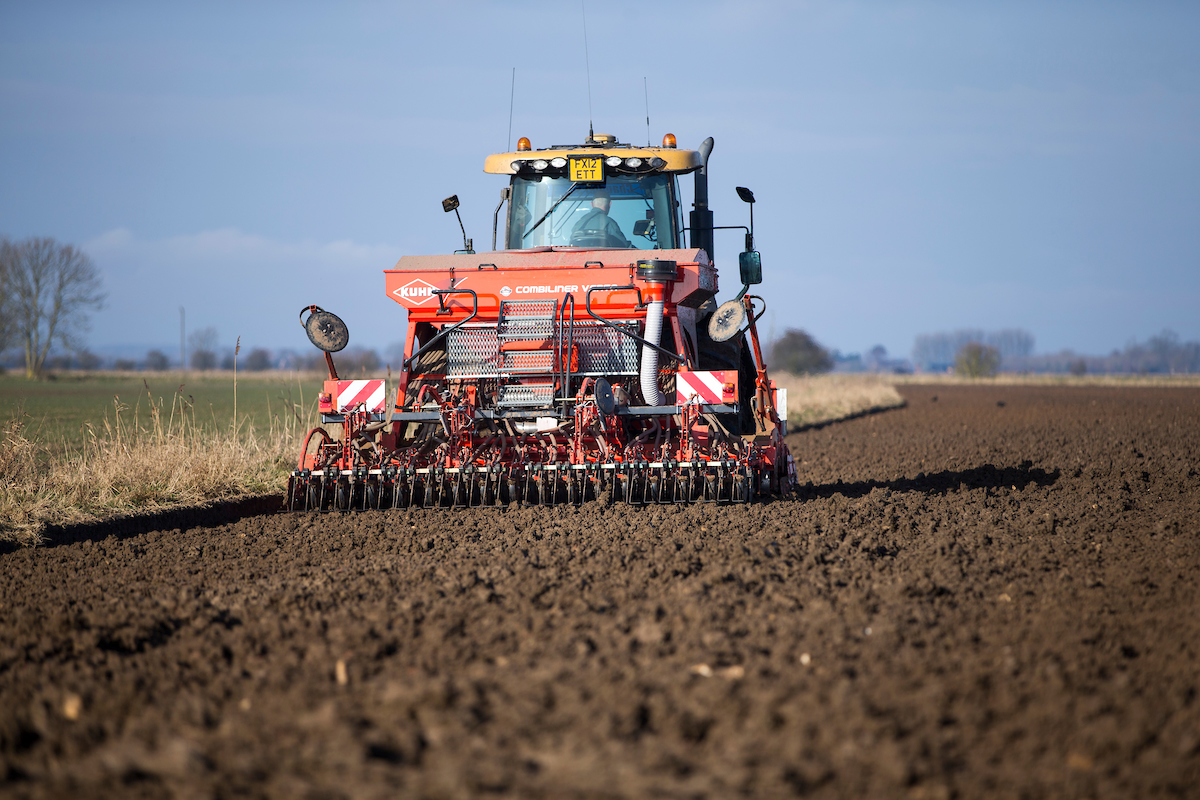
Wheels have definitely been going on cereal drills with both winter barley and winter wheat being drilled. One would hope this is on land with lower grassweed risk, although it’s difficult for growers to forget the autumn from a couple of years ago when heavy rain in October made drilling difficult.
Those who have drilled will have been hoping to get a bit in, then some rain to help the pre-emergence herbicide, and to set the ground up for October drilling. Let’s hope for some decent windows this month.
Stale seedbeds in the east have been quite difficult this year, because of the dry. We haven’t seen so much of a flush of weeds, but it is still worth using glyphosate to take out any emerged weeds prior to drilling.
Dose is key – hopefully you will be able to target 2-3 leaf grassweeds for which we recommend a minimum dose of 540g a.i./ha. If you have weeds that are tillering, increase that to a minimum of 720g a.i./ha.
Just as importantly as rate, be mindful of application practice. It’s the best time to use chemistry that doesn’t have any resistance, so get the best out of it by sticking to 10-12 km/h and correct nozzles for targeting small weeds.
Aside from the obvious cultural controls of stale seedbeds and delaying drilling, all other non-chemical controls that have worked well in combination over the past few years for many growers shouldn’t be forgotten in the rush to get drilled up.
Crop competition is key and when drilling from mid-October onwards it is worth being mindful of variety vigour and seed rate to achieve optimum establishment and yield potential.
Delayed drilling not only helps by giving a greater chance of controlling grassweeds with glyphosate before drilling, but also with soil temperatures dropping means you will get greater persistency from the residual herbicides, with actives staying in the soil for longer.
Later drilling also usually coincides with wetter periods which again will help with residual herbicide efficacy, as all residuals work better with moisture in the soil to activate them.
Not forgetting reduced septoria risk in spring, it adds up to a lot of benefits from leaving the worst fields for grassweeds until mid-October before drilling.
For pre-emergence herbicides, flufenacet should remain the backbone of programmes because it ticks so many boxes – not just black-grass and Italian ryegrass, but also contributing to brome control which is becoming more of a problem weed. However, the use of straight flufenacet alone, of course, is not advised and for best resistance management practice should be used in combination with another active, such as diflufenican, as in Liberator.
The standout mix partner with Liberator we have seen in our trials over the past few years is aclonifen (Proclus), which brings increased efficacy and persistency on black-grass and Italian ryegrass control and a new mode of action into our cereal herbicide armoury.
The mix of Proclus + Liberator is an excellent choice in higher grassweed pressures. In wheat Proclus can be used at 1.4 L/ha, while in winter barley a lower rate of 1.0 L/ha is recommended. Alongside black-grass and ryegrass control, aclonifen is also broadening the weed spectrum to strengthen the control of bromes, cleavers and charlock, in particular.
Winter barley is often less tolerant of large pre-em mixes and so I would not recommend adding any additional herbicides on top of Liberator + Proclus in this crop. But in wheat, one of prosulfocarb, tri-allate or pendimethalin can be added to further boost grassweed control. Prosulfocarb is a good choice for Italian ryegrass, for example.
Be mindful of complex mixes, especially if heavy rain is forecast and make sure seed is covered with at least 32mm of soil, ideally applying pre-emergence treatments within 48hrs of drilling.
We know black-grass and Italian ryegrass can continue to emerge right through the autumn and early winter and so there will be a value in topping up residual herbicides a couple of weeks after the pre em herbicide has been applied, to prolong residual efficacy.
Again there is a balance between weed control and crop safety, as hitting crops just as they are poking through at early peri-emergence is higher risk than allowing these to emerge and the shoots to green up – although the downside is that the weeds will also be emerging and therefore becoming more resilient to the herbicides at the same time.
Using one of the metribuzin-containing products Alternator Met or Octavian Met (flufenacet + diflufenican + metribuzin) will have the added benefit of targeting grassweeds with a level of contact activity from the metribuzin component which we have seen good results from. Metribzuin also helps control cranesbill and groundsel, which are two weeds that can be a struggle to control.
With it being relatively dry the risk from Phoma in oilseed rape has been low, as we approach the end of September, as we need a certain amount of moisture to increase the risk of Phoma pathogen developing.
But the weather can change rapidly in October and oilseed rape has been drilled later this year which will mean the smaller crops are more at risk from Phoma from the spores in lesions getting down into the stems and ultimately causing stem cankers.
So I would advise being mindful of those later drilled crops especially.
Our SpotCheck service is running again this season, which provides a free way of getting crops checked for diseases from October into spring via Adas. If you’re interested in taking samples, contact me or one of the other Bayer team for a sample pack.
Most growers may only get one fungicide spray on the crop in the autumn and so I would always recommend using a product that has activity on both light leaf spot and Phoma, with light leaf spot typically the more damaging disease once we get through into the spring. Aviator (bixafen + Prothioconazole) has a good fit in the autumn for controlling both diseases as well as mildew.
Glasshouse research carried out by University of Nottingham has also shown that Aviator provides physiological benefits of increased rooting. The result of enhanced root development should ultimately be improved water and nutrient uptake.