SpotCheck 2020-21 results demonstrate prevalence of light leaf spot across UK

Posted 5 years ago
06/07/2021
The majority of crop-growing counties across the UK recorded positive results for light leaf spot disease in samples of oilseed rape leaves sent in to Bayer’s SpotCheck service from October 2020 to March 2021, in partnership with ADAS and the Association of Independent Crop Consultants (AICC).
The wet conditions in the autumn and winter drove early infections and despite the extended period of cold weather during late winter and early spring, disease was evident in a significant number of samples. Additionally, the positive samples were received from crops across the UK, not just northern areas where the disease has historically been more prevalent.
Ella Crawford, Bayer’s Commercial Technical Manager describes the key results from the SpotCheck initiative this season, explains the impact of the disease on the crop, and highlights actions to take next season to protect yield and optimise returns.
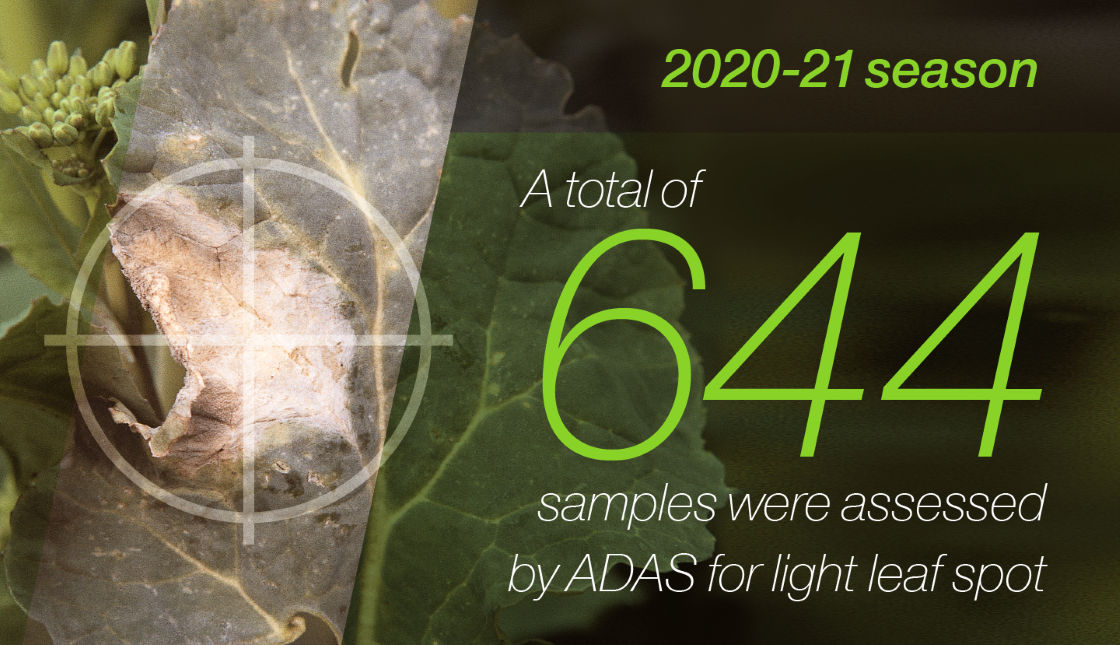
By the end of March 2021 when the SpotCheck initiative closed for the 2020-21 season, 644 samples had been assessed by ADAS.
 |
The percentage of positive samples after incubation increased over the winter and spring, with results in December showing 76% incidence, 68% in January, and 92% in February.
In March, ADAS assessed 163 samples, with 97% showing positive signs of light leaf spot, despite the colder winter weather and many of these crops receiving an autumn fungicide application.
Fungicides only offer protectant activity against light leaf spot, and although this can persist for around three weeks, one application is not always sufficient to gets crops through the high risk period. A top-up in early spring provides additional protection in high-risk crops, particularly where there is a low resistance rating and high disease pressure.
During March we saw a general trend for a high percentage of samples showing light leaf spot infection, and an increasing percentage of infection within fields. Out of the samples showing infection, 60% had levels of light leaf spot incidence above 50%.
 |
The increasing trend for early drilling to mitigate the risks from cabbage stem flea beetle attack on establishing crops has led to an increase in light leaf spot infection risk. Drilling new crops in close proximity to recently combined oilseed rape fields increases the threat from airborne ascospores, which can lead to early infection.
Plant genetics remains one of the best ways to reduce risk of light leaf spot developing in the crop as infection is most evident in susceptible varieties. Look for varieties with a resistance score of seven or higher, to afford some protection and lessen your reliance on chemistry alone. This is particularly important when drilling early.
The severity and incidence of light leaf spot varies from year to year, mainly according to the weather conditions. The disease can develop between 4 and 20°C with wet conditions ideal for disease infection and spread.
This season the very wet late autumn and winter encouraged early infections, which drove disease levels. And, despite the extended cool weather including snow and hard frosts in February and March, infections remained high into April. In fact, thanks to slow crop growth this spring and late stem-extension, we were still seeing infections in crops in May as crops came into flower.
Growers can prepare their strategy to manage light leaf spot next season now, since it will be influenced by variety choice and drilling date.
Choose a variety for early-drilled fields with a light leaf spot resistance rating of seven or more and assume a more robust fungicide programme will be required, to manage the increased risk from extended exposure to the disease.
If possible, select fields for early drilling that are not in close proximity to fields growing oilseed rape this season, to lessen the risk of airborne spore transfer to emerging new-season crop.
Later-drilled crops will still benefit from varieties with robust resistance genes, and DEKALB varieties offer this alongside early vigour to support establishment during the main cabbage stem flea beetle risk period.
Monitoring weather conditions can indicate when there is a high risk of disease, and alongside sampling of leaves, can support and justify fungicide decisions.
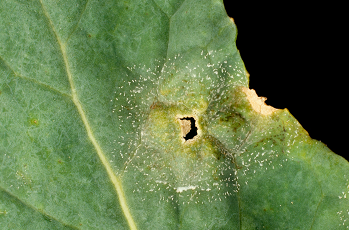
As fungicides only provide protectant activity, walk crops regularly during risk periods, looking for signs of disease. Sugar-like spores can be found on either side of the leaf, but are tiny, and often hard to spot. Incubating leaf samples at room temperature in a plastic bag for three days can encourage disease expression on the leaf surface, making identification easier. From October, send leaf samples to Bayer’s SpotCheck service for help with identification.
Where growers adopt a one-spray strategy for autumn disease control, there may be both Phoma and light leaf spot infections to manage. Using a robust fungicide such as Aviator (bixafen + prothioconazole) or Proline (straight prothioconazole) at the first sign of disease will provide activity against both diseases and protect the crop for up to three weeks.
In the spring, stem-extension is a key timing for light leaf spot infection and control, to prevent spores moving up the step to the pods via rain-splash. Aviator will provide protection as the crop progresses to green and yellow bud stage.