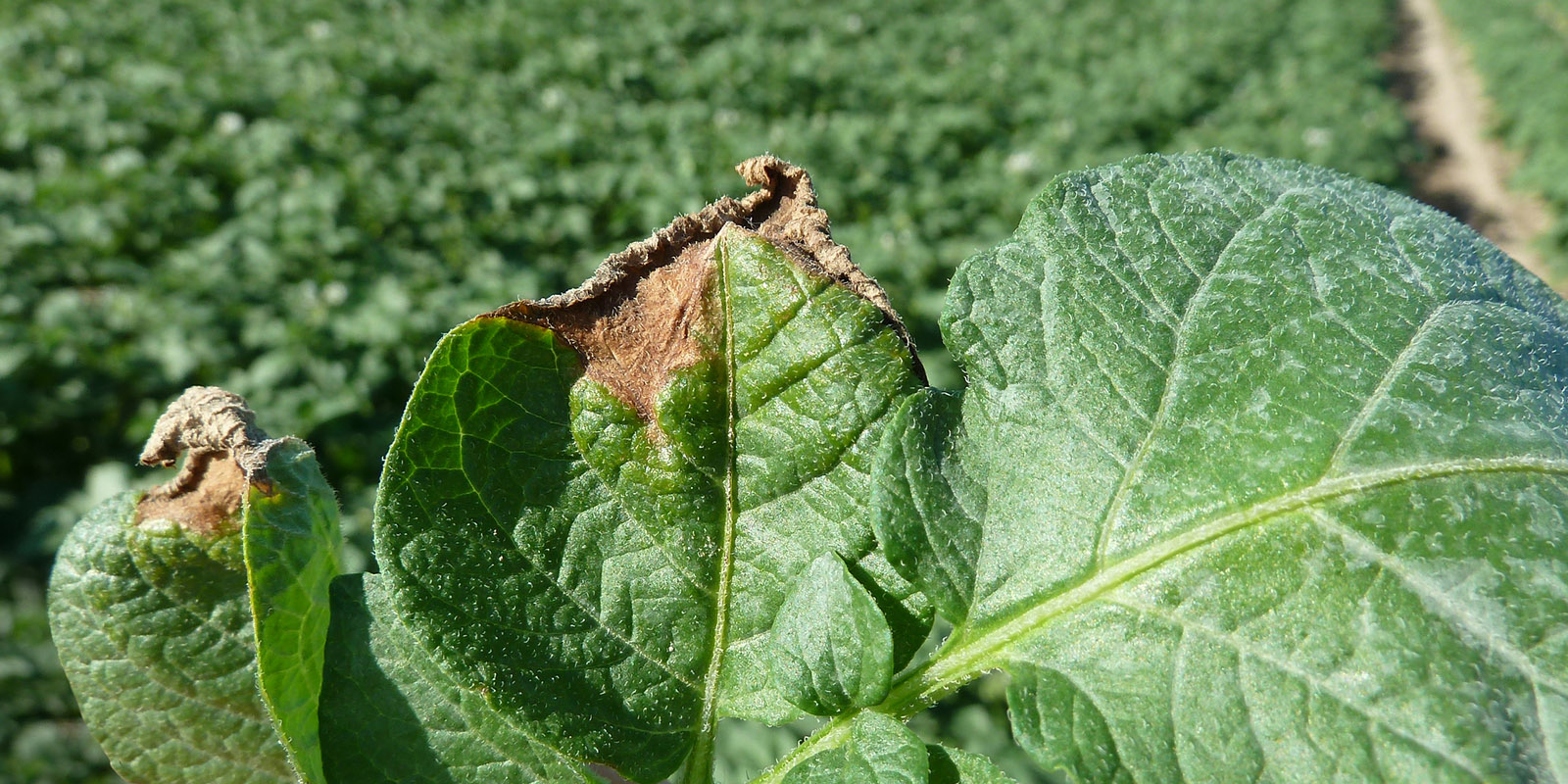
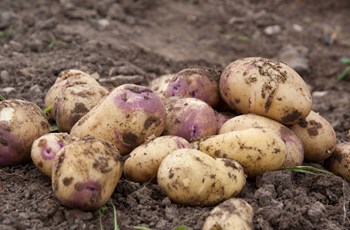
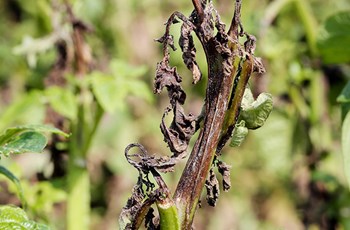
The blight strain 36_A2 accounted for 27% of samples submitted for testing in 2019, demonstrating a level of aggressiveness that sets it apart from other clones; it has spread rapidly since it was first detected in Great Britain in 2017.
Speaking at the AHDB Agronomists’ Conference, Dr Faye Ritchie, ADAS plant pathologist, presented data showing that 36_A2 managed to achieve bigger lesions than other clones when exposed to low concentrations of a range of fungicides.
Since 37_A2 was found to be resistant to fluazinam, these tests have been designed to identify whether there were any changes in sensitivity that meant growers would need to review how they seek to manage the disease in the field.
Dr Ritchie described how there were slight differences observed at concentrations typically reflecting only a fraction of that applied in the field. She was clear, however, that the findings do not suggest a need to change practices.
Time to take resistance management seriously
Watching the presentation was Eric Anderson, senior agronomist with Scottish Agronomy, who said it was time resistance management was taken seriously:
“It is time we listened to the data. Clearly, as growers and advisers we need to manage our use of these products carefully if we are to maintain their effectiveness for the future. For our part we now recommend that single actives such as cyazofamid and amisulbrom are always mixed with a suitable partner belonging to another mode of action.”
The need to be smarter with fungicides is just one observation. Another is understanding why 36_A2 has the potential to make crop protection more difficult.
“Over a week it can produce four-times as many spores as reference late blight strains. The challenge is to prevent it from establishing in the first place,” he says.
You can watch the full recording of the ADHB Agronomists’ Conference 2019 on their YouTube channel here.