Black-Grass Task Force podcast (Cambridgeshire Update 1)

Posted 6 years ago
27/02/2020
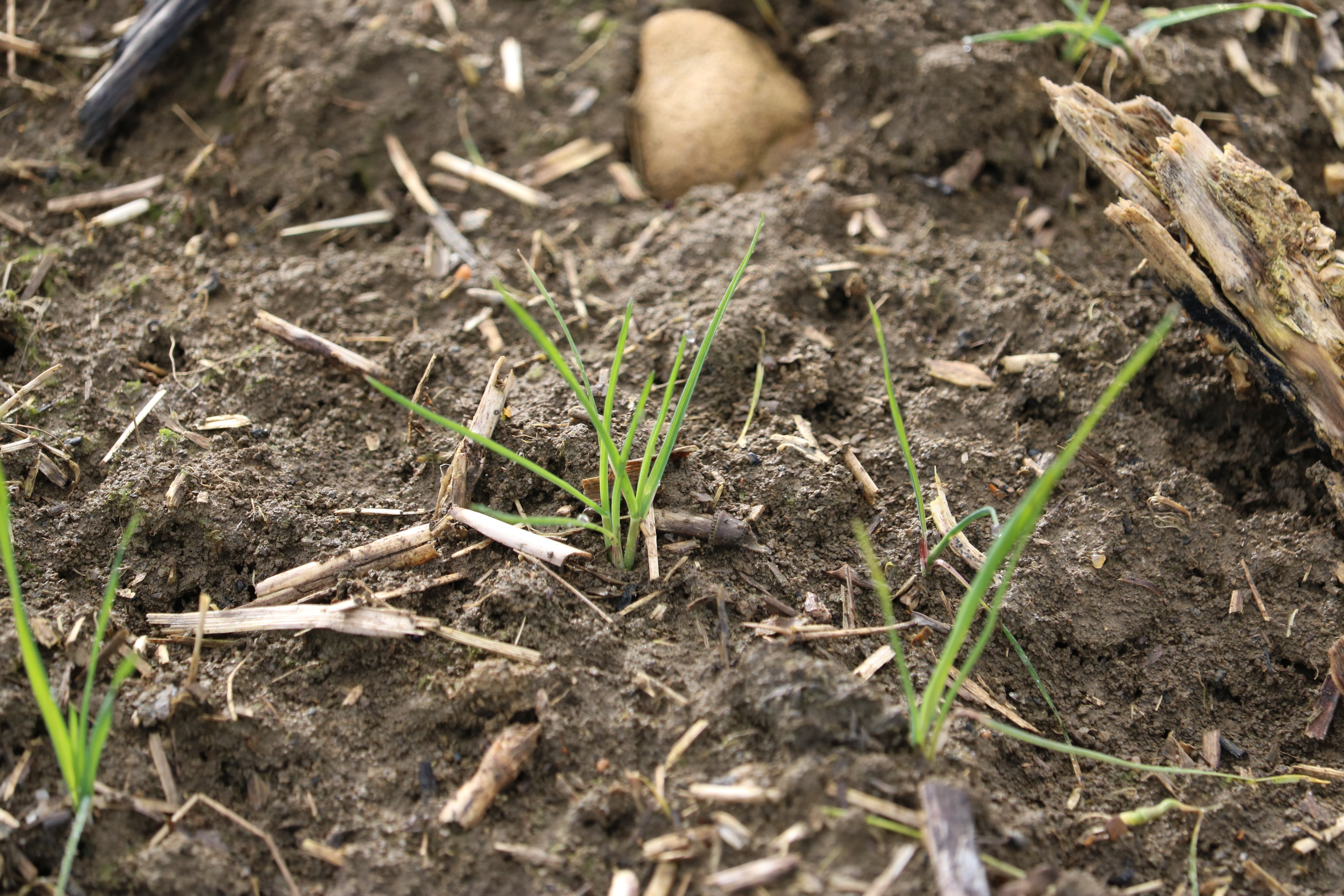
In this podcast, Ben Coombs, our herbicide campaign manager, and Paul Drinkwater, a Black-Grass Task Force (BGTF) farmer, discuss the torrid weather conditions over autumn and how this has impacted winter drilling and weed control strategies in the autumn and spring. They also talk about the progress of the BGTF trial examining how a cover crop could support black-grass control.
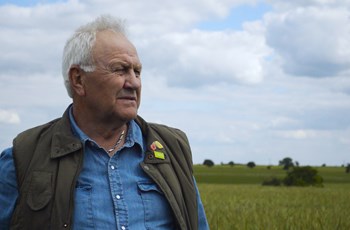
Hello there, this is Ben Coombs here from Bayer and I’m here with Paul Drinkwater from Abbots Ripton Farming Company. Paul, nice to see you again and I think the first question is with some torrid conditions sadly around the country, I just wonder how’s winter wheat drilling gone for you and indeed drilling in general this autumn?
Thank you Ben. I’m pleased to be with you today talking about the autumn that we’ve just had which has been pretty dire to be honest.
We’ve done a lot better than most because of our varied rotation, we’ve got probably 60% of our wheat in already. But we’ve got quite a lot left to drill and the bulk of it is on heavy land at Abbots Ripton, so it’s very challenging and we are really struggling in that area.
I think 60% of wheat - talking to other farmers they’d be pretty envious of that, but it doesn’t surprise me that it’s the bolder clay because that farm is some really heavy land, that it’s the real tough one to get in.
As we’re collaborating with you on the Black-Grass Task Force, there’s been some adjustments to some of the drilling kit and I just wondered if you could give us an outline of what those are and have they had much effect this autumn?
Well obviously, the Black-Grass Task Force field isn’t due to be into spring barley anyway as part of the control strategy. But we have kitted our drill up, we have a Horsch sprinter drill on that farm and we wanted something more low disturbance. So, talking to Phillip Wright, I was introduced to Martin Lishman and there’s some bourgault coulters which are much slimmer than traditional ones and they’re much less disturbance.
We bought a set of those for the drill and we’ve been using them in this autumn when the drill will perform. We drilled the rape with them, and establishment was very good, and we drilled our cover crop as well so it looks as though that will be successful.
That’s interesting and it’s good that you managed to “use it in anger” a little bit even though it’s been a challenging year to get the winter wheat particularly into that Abbots Ripton field.
And dare I ask about how herbicides have gone, because that’s another key component of the black-grass control in the autumn. How have you faired?
We’ve managed, most of the land we’ve drilled has been sprayed with a pre-emergence herbicide. One or two places where we weren’t close enough to the drill and we had some rain we haven’t been able to get back to, but I would have said 80% of what we have drilled has had pre-emergence herbicide on.
The areas we haven’t got yet are beginning to be a bit of a worry and the crops aren’t emerging very quickly anyway, so we’re not really out of time but it is a concern and our black-grass plan is minimal disturbance followed by a pre-emergence later drilling.
We’ve got the later drilling right and we think we’ve got the coulters if we can work it and hopefully we will be there right through into the spring.
Yes absolutely, and I think it is a worry and take it out of just your situation there’s feedback that it has been challenging to get pre-emergence sprays on.
Obviously products like Liberator are so key to black grass control these days, so I think it will make decision making quite challenging in the spring where winter wheat is in but it maybe hasn’t had the pre-emergence that was planned for that field.
But to take it on into a slightly different area and really focus in on the Task Force field, one of the activities was the drilling of a cover crop to examine how that would support in black-grass control. If I remember rightly the principle was to really try and set up the best possible situation for drilling spring barley in that field next year.
Given the autumn that we’ve had how do you feel that’s fairing and what do you think the prospects are for that aim in the spring?
Well we’ve got a four-hectare strip right through the middle of this field. Initially and we drilled it with the new coulters, but it was quite late in August because the harvest was a little late there and it has eventually established quite nicely.
It’s now growing away well; it’s got a good root system and hopefully it will be a success. The plan would be to let this cover crop grow on until probably the end of January maybe a little later depending on how big it is. Then spray it off with glysophate and then hopefully we’ll be able to drill with a new coulter straight through it, and it will leave the ground in a suitable condition to direct drill and in a nice friable condition.
And obviously we’ve got the control of the area around it that’s got no cover crop on but has got volunteer wheat and some black-grass in and we’ll just see how the two sites compare.
In a way while conditions like this aren’t what anyone wishes for, it does at least provide a real stern test for this cover crop principle. Giving it a really good contrast of quite a challenging soil that’s probably lost a bit of structure and bit of what it had going into the autumn. And we would hope that (or the theory would be), that the cover crop area has fared a bit better.
This is a good chance to test that out in action. So then just drawing this into both the Task Force field but maybe into some of your other wheat area, what are the plans for spring weed control? I kind of imagine decisions are going to be a bit tricky and a bit different to the normal approach from recent seasons anyway with the difficult autumn conditions.
Well we can carry on if we get some up to the end of December, we can carry on with the traditional pre-emergence if we can get it on. After that obviously the rates must be reduced but I would imagine we would be drilling through January and February if conditions allow. And we will just carry on with the program but at a lower rate and as for what happens in the spring, we will just have to do what we normally do, we shall water the fields and we’ll have a look and we’ll see what’s there.
Black-grass control must be compromised this year because I would imagine we shall have thinner crops. We know we’ve got very wet fields, some areas aren’t going to be drilled so there will be wet patches within fields, so we’ll be getting no crop growing on those. And obviously experience tells us those gaps are going to be filled with something and it will probably be grass weeds, so that is going to be a real challenge for us.
I think the message and the thoughts from my side would be that. Like I say it’s going to be quite challenging decision making come this spring because of this unusual “infrastructure” of how the crop is growing.
There will be a real need to really inspect fields for what weeds are there and to be really judicious about making sure that black-grass doesn’t get out of hand this year in those thinner crops. It can multiply so quickly that one bad year can set you back several years of good return, so it will be a challenge. I think that it’s something that both at Abbots Ripton, and other farmers right across the country are going to have to be quite alert to, paying close attention to weeds coming in the spring.
I’ve got to agree with all of that, what the upshot of this autumn will be the fact that all of the good stuff we’ve been doing over the past few years such at stale seed beds, spraying off the glyphosate, minimal disturbance has largely gone out the window.
We’ve ploughed where we really want to plough, we’ve deep cultivated where we didn’t really want to do it and we’ve swapped fields about so we can drill something in them. It’s just going to be a real challenge to get everything back on track and I would imagine it’s going to take more than one season to do that.