What’s happening in fields in Yorkshire this June?
Yorkshire’s Adam Tidswell offers some advice on cereal and potato agronomy as summer arrives

Posted 8 years ago
01/06/2018
Yorkshire’s Adam Tidswell offers some advice on cereal and potato agronomy as summer arrives
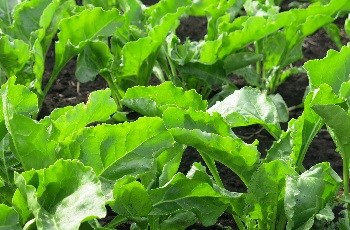
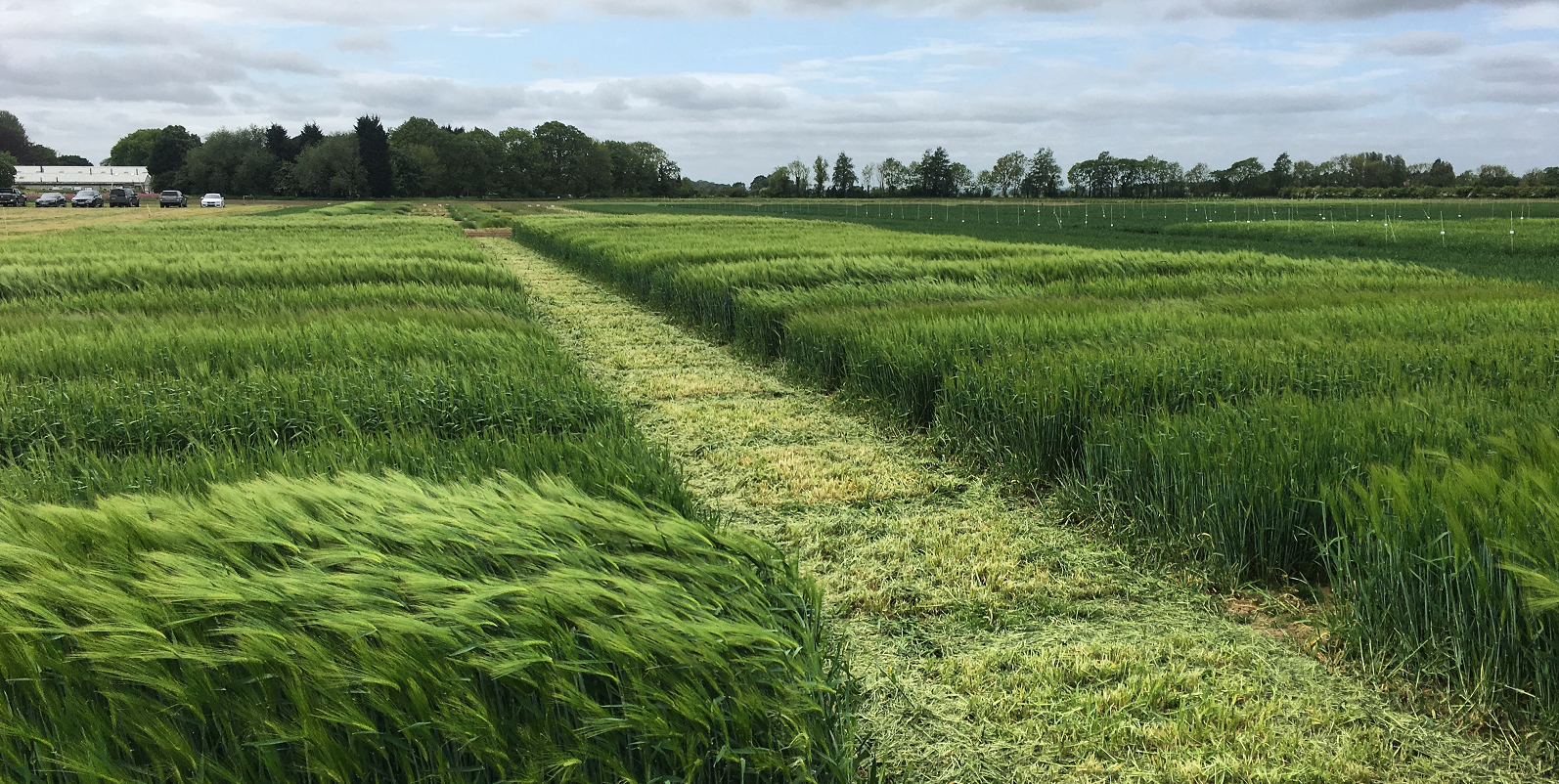
It dried up in Yorkshire over the last month six to eight weeks until the second May bank holiday weekend, when some welcome rain arrived. It was particularly needed for the potatoes and Sugar beet planted in dry conditions during May.
Winter wheat
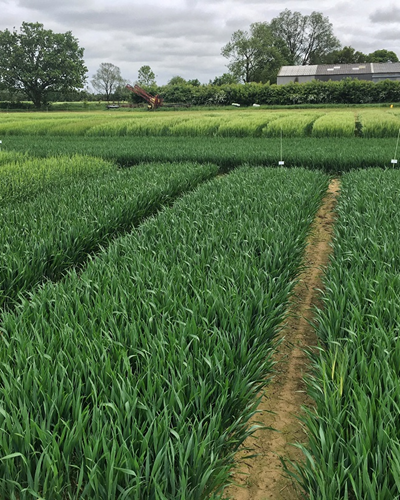
Away from the trial site, crops have raced through growth stages and in most cases, flag leaves are fully emerged. So far, where a full fungicide programme has been applied at the correct timing, plants look relatively clean of diseases such as Septoria.
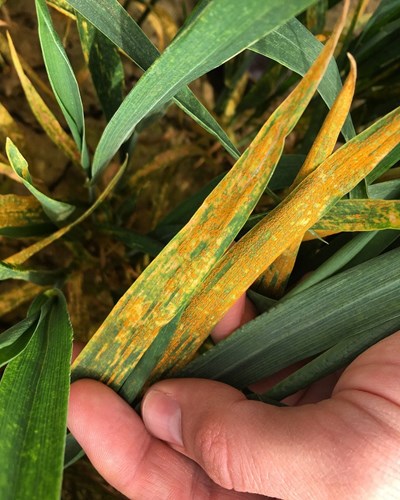
Growers across Yorkshire will have applied, or are about to apply, T2 fungicides, so attention turns to T3 applications as ears emerge. Applications should be based on prothioconazole, with the addition of tebuconazole helping to boost control of Fusarium ear blight. If brown rust is a concern in susceptible varieties such as Crusoe, Firefly (fluoxastrobin + prothioconazole) includes a strobilurin to help on that front. Where T2 sprays were not well-timed, the prothioconazole component is also crucial for topping up Septoria control on the flag leaf.
T3 is all about timing and growers should wait until crops are flowering before applying any fungicide. Parts of Yorkshire, such as the Wolds, are susceptible to orange wheat blossom midge (OWBM) attack, with the high-risk period between GS53-59. Where thresholds are reached in susceptible varieties and a pyrethroid or Biscaya (thiacloprid) application is required, don’t be tempted to combine a spray with an early T3 fungicide and commit to two separate spray passes.
OWBM hatch begins as wheat approaches susceptible growth stages
Barley
Winter barley will have received a full fungicide programme now and crops are looking remarkably clean at Cawood, if not a little thin after suffering from the wet and cold soils earlier in the spring.
Spring barley crops are generally at mid-tillering across the county and weed control looks to have been good, despite the dry conditions. Fungicide applications will start imminently where growers are committed to a two-spray programme. In a high potential crop, 1L/ha of Siltra (bixafen + prothioconazole) split into two applications of 0.6L/ha and 0.4L/ha is a good option. If using just one spray in less promising crops, ensure a high rate is used, ideally 0.8L/ha.
Potatoes
The 10-15mm of rain received before the recent bank holiday has provided some much-needed moisture, allowing growers to apply pre-emergence herbicides in conditions conducive to both weed emergence and good product efficacy.
The earliest crops are out of the ground and focus is now on blight control. Infinito (fluopicolide + propamocarb) controls both foliar and tuber blight and growers should be aware of where it is best used in the programme after recent changes in the blight strain populations. There has been a large increase in fluazinam resistant strain 37_A2 or Dark Green 37 from 3% in 2016 to 24% in population sampled in 2017 so caution is needed.
Also remember that the new Hutton criteria has replaced the old Smith Period to take account of blight strains that are more aggressive. A blight risk period using the Hutton Criteria is when for two consecutive days, temperature is a minimum of 10C and each day relative humidity is 90% or above for at least six hours. This compares with the old Smith Period, when a longer 11 hours of relative humidity at or above 90% was required for a risk alert.