After a wet spring, septoria pressure is high for Herefordshire-based Gareth Bubb. He has also seen light leaf spot infection increase in OSR and urges treatment
Avoid using complex tank mixes with grassweed herbicides in winter wheat
Prioritise a light leaf spot fungicide in oilseed rape crops where not yet applied
Cut back wheat fungicide inputs with caution, as it can be a false economy
It hasn’t stopped raining over the past month, so ground conditions are wet and very little fieldwork has been completed. The fields which received muck in the autumn, or where there has been the opportunity to apply some nitrogen, really stand out and look healthier.
Some spring drilling has been completed on the lightest sand land, but overall very little has been done. Farmers will be starting the ask the question the worth of putting some spring crops in at all now, so dry weather is desperately needed and the next two weeks will be critical.
Oilseed rape
Twelve months ago, OSR crops were flowering, but this year plants are only just starting to move after the winter. Little, if any, has been done in terms of stem extension fungicide applications and growers will wonder whether to apply anything at all now.
I would be concerned about light leaf spot, because although my results SpotCheck sampling in January showed just 7% of leaves infected, by the end of March that had gone up to 56%, so the disease is developing. Still try to apply a fungicide as soon as possible and a prothioconazole-based spray would be the most effective.
However, an application of tebuconazole as a stop gap to hold the disease until the early flowering spray would suffice and offers some PGR effect where canopy manipulation is required.
At early flowering – particularly if no light leaf spot spray has been applied – a three-quarter dose (0.46L/ha) of prothioconazole will help control both sclerotinia and light leaf spot.
Grass-weed herbicides
Winter wheat growth stages are all over the place, with September-drilled crops around GS31, while those drilled in October or later are anywhere from tillering to GS30. Whatever situation the crop is in, weed control should be a priority and mesosulfuron-based products applied at the earliest opportunity. There is a temptation to do all your herbicides, fungicides, PGRs and trace elements in one hit, but any tank mix additions will hot up the mix up, so keep things simple where possible.
Wheat fungicides
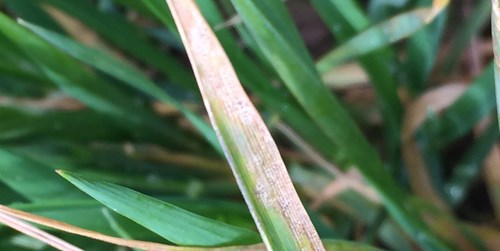
Rust incidence has dropped due to the cold winter, but the recent wet weather means septoria pressure is high and some stem-based browning is now showing in wheat crops. Prioritising grass-weed herbicide applications might impact on fungicide timings and there are discussions among growers and agronomists about missing T0 fungicides in wheat.
My advice would be to apply a T0 up to 7-10 days before the planned T1, as you never know if you will get T1s applied on time. Yellow rust susceptible varieties should receive something and earlier-drilled more septoria-susceptible wheats would also benefit. A late-sown more resistance variety that’s still flat to the floor is where you can miss the T0 out.
Looking ahead, the earliest crops will reach the T1 timing – when leaf three is fully emerged – around St George’s day. More than any other application, timing is critical and plant dissection to ensure you are hitting the right leaf is well worth the effort.
It is easy to be fooled into thinking crops are clean, as older leaves carrying septoria infection have now dropped off in some cases, but new growth will be carrying latent infection. Instead, plan applications based on drill date and a variety’s disease susceptibility and consider if crops have had a T0 or not.
Where nothing has been applied to a more septoria susceptible crop, an SDHI-based T1 is justified. Later-sown, lower risk varieties might take you down the non-SDHI route. Always include multisite chlorothalonil at T1.
It is also worth noting that when backward crops pick up fertiliser and start to grow rapidly, they may become more susceptible to mildew. Where it is a concern, use a specific mildewicide at T0 and from T1 onwards, a prothioconazole-based programme will help keep on top of it.
Winter barley
T1 fungicide applications in winter barley will be imminent and growers should try and get them on at GS30-31 and not slightly later at GS31-32. If left slightly later, there will be a very short interval to the T2 timing as awns emerge. Fungicide choice at T1 should be robust, as it is crucial to maintain tillers and protect yield, with the crop not having the ability to compensate like wheat.
Local technical updates
See all of our latest agronomy advice from across the country
We would like to use optional cookies to better understand your use of this website in order to improve our website. Your consent also covers the transfer of your Personal Data in unsafe third countries, especially the U.S., involving the risk that public authorities may access your Personal Data for surveillance and other purposes without effective remedies. Detailed information about the use of strictly necessary cookies, which are essential to browse this website, and optional cookies, which you can reject or accept below, and how you can manage or withdraw your consent at any time can be found in our Privacy Statement