What’s happening in fields in the North West this March
Assessing disease levels and planning fungicide application in OSR and cereal crops are a priority for Rozzi Martin. Weed control in wheat and spring crops is also discussed
Continue to use SpotCheck tool to diagnose light leaf spot in OSR
Treat light leaf spot with a fungicide immediately where present in crops
Apply post-emergence herbicide in optimum conditions for maximum efficacy
Plan a T0 of CTL in wheat and add in rust-active products where there is risk
Consider pre-emergence herbicide options in spring cereals and potatoes
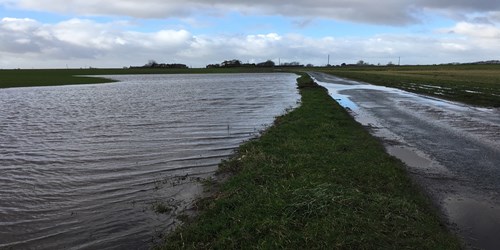
After Lancashire experienced its third wettest year on record in 2017, the recent cold snap has further delayed spring fieldwork. Despite the challenging conditions, winter crops generally look well, with good potential – particularly further South in Cheshire and Shropshire.
Oilseed rape
OSR crops are starting to approach stem extension and it is important to keep an eye on disease and the ADAS-run SpotCheck service can be used to help with light leaf spot diagnosis. Samples must be collected and sent off to ADAS on Monday, Tuesday or Wednesday and results can be expected back within a few days. It is a useful, accurate, free service that will save on space in your airing cupboard. If you would like any sampling kits, please get in touch and I will get them arranged.
Prothioconazole and tebuconazole are the strongest options for light leaf spot treatment, but remember they are protectant, so getting sprays on early is crucial and I advise not waiting to combine it with a stem extension plant growth regulator where disease is visible.
Cereals
Now that the snow has cleared, it will be a good opportunity to assess grassweed levels in winter wheat. A few fields are yet to receive any herbicides following difficult autumn conditions, so these should be prioritised.
Monolith (mesosulfuron + propoxycarbazone) is the new specialist herbicide product to control grassweeds in winter wheat crops from 1 February up to and including crop GS33. You can expect a 10% increase in black-grass control compared to Atlantis WG and best in-class control on both ryegrass and brome.
It is important to ensure that you apply in good conditions to get the best value for money from contact herbicides. This means targeting weeds when they are small, actively growing and when they have a dry leaf. Atlantis (iodosulfuron + mesosulfuron), Pacifica (iodosulfuron + mesosulfuron) and Monolith should all be applied with 1.0L/ha of BioPower. Nozzle choice for best spray coverage is also crucial.
With difficult ryegrass becoming an increasing problem, I have a herbicide matrix trial set up near Liverpool to assess the best combination of autumn residual and post-emergence treatments. Variations in autumn treatments are now becoming visible. If you would like to see the trial, please get in touch with me.
The persistent wet weather has allowed Septoria to develop and can now be found in most wheat crops. Conversely, the lack of dry weather combined with frosts has kept mildew at bay. You should wait until late March/early April before applying a T0 so the interval between T0 and T1 won’t be stretched and base sprays on chlorothalonil. On yellow rust-susceptible varieties, a fast-acting azole such as tebuconazole or cyprconazole should be added. However, the recent cold snap has done a good job of keeping yellow rust out of crops so far.
Having had such a wet back end, some areas of the North West have a good chunk of spring cereals to drill. Liberator (flufenacet + diflufenican) at 0.3L/ha has an EAMU for spring barley and a full recommendation for spring wheat. It is a useful option for annual meadow grass and broad-leaved weed control and you will see the best results when applied at pre-emergence, so I advise to try and get on as soon as possible after drilling.
Potatoes
As we look forward to potato planting, Artist (metribuzin + flufenacet) is a good pre-emergence choice for the control of annual meadow grass and a range of broad-leaved weeds, including cleavers. It can also reduce black-grass and ryegrass (from seed).
Emesto Prime, Bayer’s new potato seed treatment, will also be available for the first time this year. It is an SDHI powder formulation for dry seed treatment containing 20.0g/kg (2%w/w) Penflufen. It is used for the control of black scurf on daughter tubers and some reduction of stem and stolon canker.
We would like to use optional cookies to better understand your use of this website in order to improve our website. Your consent also covers the transfer of your Personal Data in unsafe third countries, especially the U.S., involving the risk that public authorities may access your Personal Data for surveillance and other purposes without effective remedies. Detailed information about the use of strictly necessary cookies, which are essential to browse this website, and optional cookies, which you can reject or accept below, and how you can manage or withdraw your consent at any time can be found in our Privacy Statement