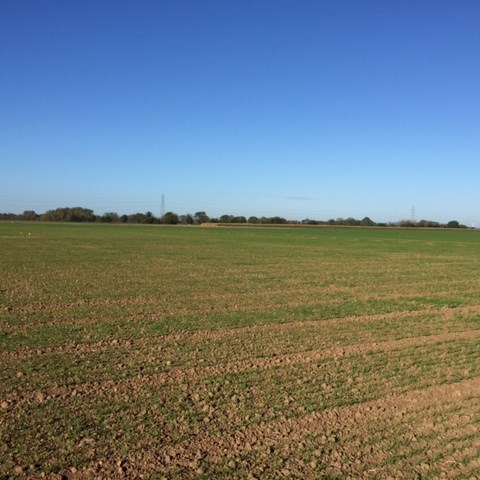
October has been dry in Norfolk, which is fortunate in many ways, as it’s allowed growers to drill wheat behind sugar beet and potatoes into good seed-beds. The flip side is residual herbicide performance might not reach its full potential. As a result, I’ve been asked if the sprayer should wait for additional moisture before pre- or peri-emergence applications.
The active ingredients in Liberator – flufenacet and diflufenican – have a long half-life, so my advice is to get a pre-emergence on if you can and when moisture arrives they will take effect. We have seen from our weed screen at Chisel that if grassweeds get to 1-2 leaf, efficacy of residuals drops off considerably.
Recent conditions have been ideal for applications of Atlantis (mesosulfuron + iodosulfuron) or Hamlet (mesosulfuron + iodosulfuron + diflufenican) and if either is used, it should be applied in the next couple of weeks when grassweeds are small. To maximise efficacy, apply to an actively growing target, ensure leaves are dry and there is no rain forecast for at least two hours, but ideally 2-3 days. If you have blackgrass with enhanced metabolism resistance, do everything you can to control it in the autumn, as it will be much harder in the spring. If you are going through with Atlantis or Hamlet, also take the opportunity to top up residual herbicide activity.
Aphid pressure remains high and is something to be wary of, particularly in hybrid barley crops drilled at low seed rates, as Deter (clothiainidin) seed treatments won’t be as persistent. Keep an eye on suction traps and treat to prevent BYDV spread where necessary. In addition, there are reports of mildew in winter barley and where levels are high a treatment can be included with any insecticide and manganese applications, where required.
Sugar beet
There have been high levels of Cercospora and rust in sugar beet crops this autumn and agronomists are trying to get a handle on varietal susceptibility. Bayer is also carrying out QoI (strobilurin) resistance testing.
Some crops have received a third fungicide, but where crops are still losing green leaf area and pencilled in for late lifting, it may be worth bringing harvest date forward to protect yield.