Leaf Roll
Rhizoctonia solani (PLRV)
Rhizoctonia solani (PLRV)
Virus
Potatoes
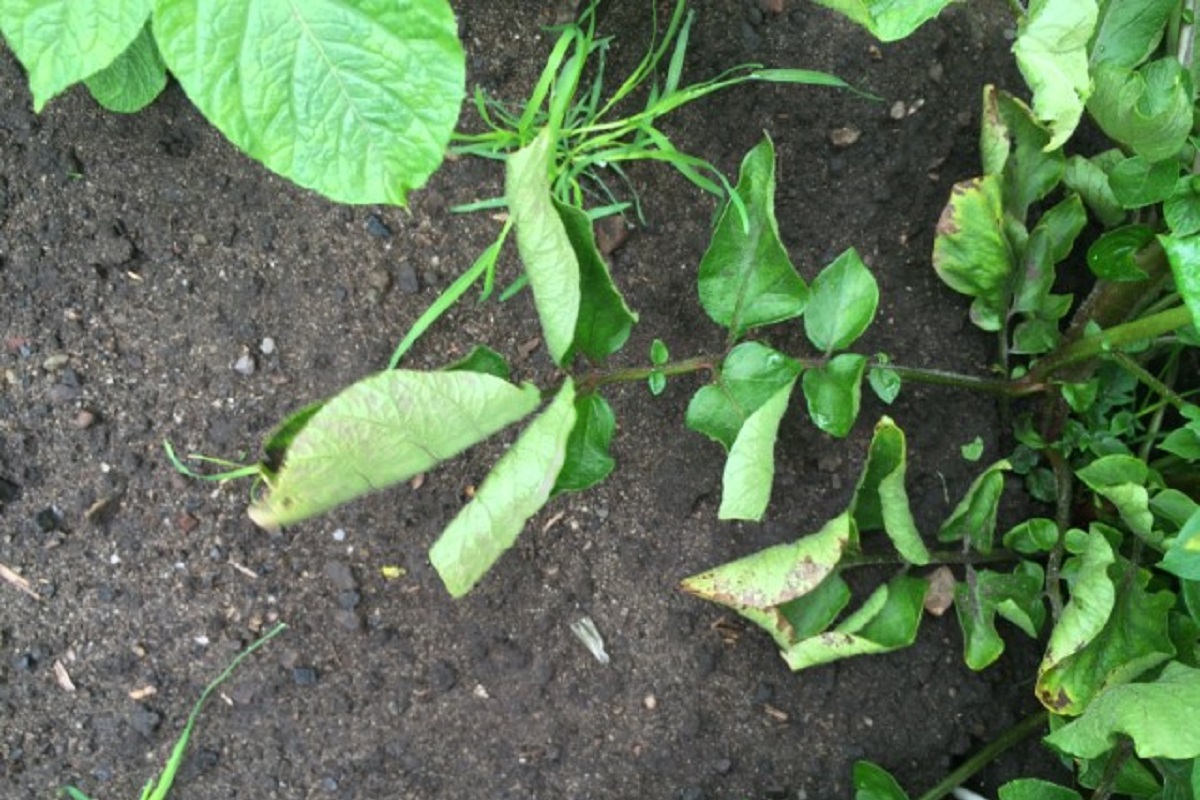
Infection of healthy plants causes slight rolling of the upper leaves. Plants grown from infected seed develop rolled lower leaves, which become crisp and dry.
The virus is principally transmitted by the peach potato aphid (Myzus persicae) which colonises potato crops during July and August. The symptoms appear approximately 6 weeks after infection. Tubers from infected plants show no symptoms but will produce diseased plants when grown as seed. Potato leaf roll virus is a persistent virus and can only be acquired by the aphid feeding on an infected plant for several hours. It then passes through the digestive system until it replicates in the salivary glands. The aphid remains a carrier for the rest of its life.
Favourable Factors
Most prevalent in the South and East of the country, particularly in seasons when winged aphids are numerous.
Globally widespread (possibly the most important virus disease of potatoes) and can cause yield losses of 50-90%. The peach potato aphid is widely resistant to both the MACE and KDR insecticide groups.
Find out more information on the key disease threats to your potato crop. For each disease you will find out the importance of the disease in terms of potential yield penalty, how to identify the disease in its early stages and our advice on the best control strategies.