Why moisture is key to OSR, cover crop establishment and stale seedbed success
Richard Prankerd assesses how moisture preservation is critical for some of the main agronomic tasks in August.

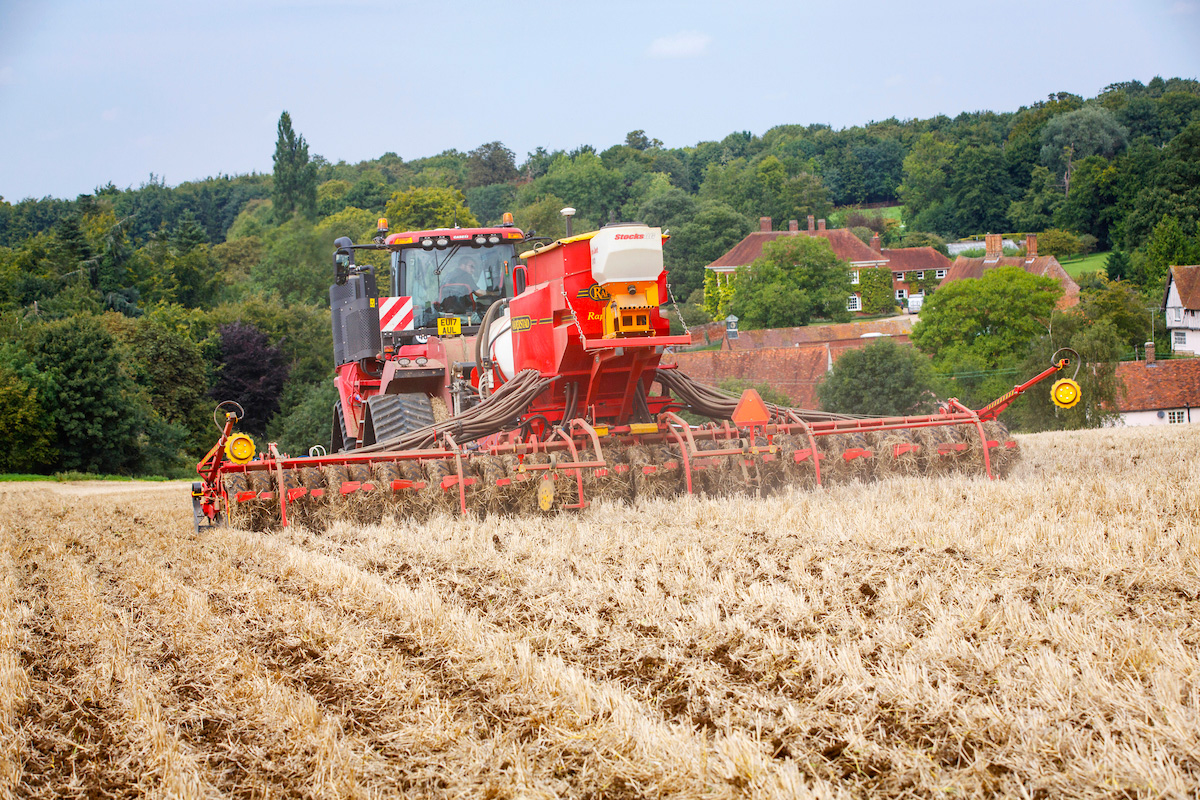
Richard Prankerd assesses how moisture preservation is critical for some of the main agronomic tasks in August.
Winter barley harvest started in early to mid-July in the south, stopped and has been stop-start until the time of writing in mid-late July. Yields, so far, have been mixed with some reports of winter barley reaching 11t/ha, but also down at 6t/ha. More crops than normal were affected by barley yellow dwarf virus (BYDV) this season, so that might account for some of the variability.
The strong winds and rain have contributed to some flat crops of winter and spring barley, oats and oilseed rape, which will impact on yield and quality. Wheat seems to have stood better, apart from the odd corner or overlap.
Oilseed rape establishment success is very moisture dependent, and with the rain in July, I can see why some growers were tempted to try to establish the crop quickly after barley harvest. Most will wait until early August, however, maybe following a disc cultivation to get a flush of volunteers and other weeds in a stale seedbed, before drilling. If you are planning to go very early two DK varieties are perhaps most suitable. DK Exposé is a very slow autumn developer so most suited to very early drilling, while DK Exstar is a good all round variety with slow autumn development and an excellent agronomic package including two 8s for light leaf spot and Phoma.
DK Exstar has performed consistently well in our trials in the south, and is quick to get away after drilling to avoid any issues with cabbage stem flea beetles. But what was most noticeable this year after the cold winter, which really checked lots of crops, was how it bounced back – better than any conventional variety in the trial.
When establishing oilseed rape, obviously try to conserve any soil moisture, while the addition of extra nutrition with the seed has also had a clear benefit for rapid establishment. Finally, keep your eyes peeled for slugs – they caused just as much damage in commercial crops last autumn as cabbage stem flea beetles.
Achieving a successful stale seedbed ahead of autumn-sown cereal crops will also depend to a large extent on moisture availability. If it turns very dry during harvest then it will be sensible to delay any cultivations until there is either moisture or the prospect of it – like crops, grassweeds also need moisture to germinate in any numbers. Leaving weed seeds on the surface in the meantime will mean they are eaten or degraded, reducing viability and population numbers.
However, if it remains a catchy harvest with plenty of seedbed moisture, a light cultivation post-harvest to stimulate germination by improving seed-to-soil contact will help most grassweeds, such as black-grass, Italian ryegrass and sterile brome to flush. The other exception to immediate cultivation is where you have Bromus species – meadow, rye or soft brome – which require a period of around a month on the surface to mature before being cultivated to encourage germination.
Once there has been a sufficient flush, either a cultivation or 540g/ha of Roundup (glyphosate) application can be used to take out 1-2 leaf stage grassweeds. Where grassweeds have started to tiller increase rates of Roundup to 720g/ha.
Pay attention when spraying glyphosate – we’ve seen that both fast forward speeds and high boom heights, or bouncing booms, can have a great effect on the delivery of glyphosate to the target, which poses a threat through suboptimal dosing and increased risk of resistance development. Also monitor after glyphosate applications for survivors and if there are any suspected, taking these out with mechanical destruction is highly recommended to reduce resistance development.
A running theme through this month’s blog is the need for and to conserve moisture – the same applies for cover crop establishment. Cover crops are growing in popularity as growers become more aware of their properties in mopping up nutrients, benefits to soil health and preventing soil erosion. Support in Countryside Stewardship and Sustainable Farming Incentive schemes is also welcome. Cover crop establishment is similar to oilseed rape, with best success when drilling into moisture. To maximise effectiveness, establishing in August, if possible, is key.
Be aware of the impact of any spring-applied sulfonylurea herbicides may have on some cover crop species. Where these have been applied, advice would suggest to cultivate to at least 15cm depth, or even plough, depending on what the label says. That might not be what you want to do, and can have impact on moisture availability, but a compromise of one sort might be needed, whether it is risking herbicide residue impact or doing additional cultivations.
With two reports of separate findings in potatoes of Colorado beetles in July, please keep a close watch for unexpected defoliation in potato crops for this notifiable pest. It’s definitely a pest we don’t want to become established here as it is highly damaging and difficult to control.
I hadn’t come across any reports of blight in commercial crops in the region when this was written in mid-July, but conditions were perfect for late blight in potatoes in the 10 days previous with warm and wet weather. Those conditions also made keeping up with spray programmes more difficult.
There’s the added complication of a new strain of blight EU_43_A1 which has resistance to mandipropamid, so programmes need to take that risk into account. In August, tuber blight, as well as foliar blight risk, will become a concern, with the potential for zoospores to be washed down into ridges to infect tubers.
With insensitivity to fluazinam, there are two main groups with tuber blight activity – the quinone inside inhibitors (QiI) and the pyridinylmethyl-benzamides. Ranman (cyazofamid) and amisulbron are QiIs, while fluopicolide, which is in Infinito along with propamocarb is a pyridinylmethyl-benzamides.
With limits on the number of applications and not being able to use two QiI-containing fungicides in succession, programmes do need to be carefully thought through.


