Agronomy tips for Scottish growers in June and July
Grant Reid highlights some key areas for Scottish growers in June and July
Grant Reid highlights some key areas for Scottish growers in June and July
Crops are generally looking well in Scotland as we approach June. We haven’t had quite as much rain as some in England have had, and perhaps some latterly drilled spring cereals, potatoes and carrots could even do with a bit of a drink.
Potato planting is nearing completion and should be finished by the end of May. Crops should come through quickly, and the first planted crops are greening up with weeds across the drills.
1) Flag leaf spray priority
New growth in the wheat at our Edinburgh Field Day site is visually clean from Septoria and yellow rust, but it is lower down in the canopy. One result from our CropCheck latent disease testing service came back with some latent Septoria infection on leaf two of an Astronomer crop, so there are some high-risk crops around.
Later sown wheat crops will likely still be to receive a flag leaf spray, with that a priority for the first week of the month. I don’t think this is the year to do a head and shoulders approach of trying to combine the flag and ear sprays, with it easily justifiable to do both a proper T2 and T3.
Ascra (bixafen + fluopyram + prothioconazole) remains a solid option for flag leaf sprays, at rates of 1.2 L/ha or 1.5 L/ha where pressure is high, plus or minus a multisite fungicide as necessary.
2) Keep prothioconazole doses up for Fusarium
There are a couple of options for ear sprays. You’ve got straightforward Proline 275 (prothioconazole), with prothioconazole giving the strongest Fusarium control and also Microdochium activity.
Given the potential pressure I would keep rates up to 0.55 L/ha for Fusarium. Where Fusarium is less of a concern you could drop to 0.4 L/ha, and maybe add a strobilurin fungicide in, if you haven’t used two applications previously, to help with brown rust.
An alternative approach could be to use Aviator (bixafen + prothioconazole), if you haven’t used two SDHI-containing fungicides previously in the programme. That’s most likely if you’ve used Univoq (fenpicoxamid + prothioconazole) as one of the sprays.
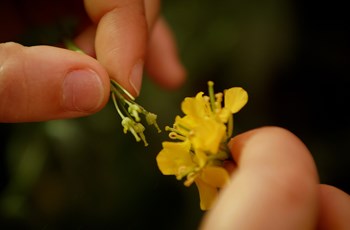
You’ve still got prothioconazole covering the ear diseases, while the bixafen will help with brown rust and additional Septoria cover. Rates should be 0.75-1.0 L/ha, at early to mid-flowering. Remember the first anthers come from the middle of the ear, not the top or bottom.
You want to try to avoid being late with ear sprays, so if anything err on the side of being a bit early, if the weather forecast looks unsettled.
3) Focus on Ramularia for T2s in spring barley
Spring barley crops will rocket away as the weather warms and with decent moisture. The awns emerging spray tends to be the more important for disease control, with Ramularia a key concern.
It’s brought on by plant stress, including wet leaves. Hopefully you’ve been able to minimise stress by keeping diseases out so far, and drip feeding micronutrients through the season.
Both Siltra (bixafen + prothioconazole) and Ascra are decent options for T2 sprays. Ascra can only be used once in barley crops, and I think it is probably best at T2 in spring barley. The fluopyram brings a little extra Ramularia activity, while it is worth considering adding a multisite as well where Ramularia risk if high.
4) Look out for aphids
We are starting to see aphids flying so keep an eye out on resources such as the Rothamsted Insect survey. Aphids can build quickly, and while we don’t often need to spray for them in cereals, they do seem to be about a bit earlier this spring.
5) Take care with timing oilseed rape desiccation
Looking further ahead into July and oilseed rape desiccation, make sure you don’t go too early as that could prevent the crop from maximising its yield, decrease oil content and increase the risk of red seeds in the sample.
You want the crop to be below 30% moisture content before spraying with Roundup (glyphosate). The best way to check is to take 20 pods from a representative part of the crop, which is sometimes easier said than done. Open the pods and you’re looking for at least two-thirds of the seeds in at least 15 of the pods to have turned from green to brown for the earliest correct timing for spraying. It's worth repeating the process in other areas of the crop to check the assessment is typical of the field.
6) Consider a clubroot soil sample if growing OSR next season
If you have a suspicion that next year’s oilseed rape field might have clubroot, then it’s worth doing a soil sample as soon as possible. It takes about six weeks for the results to come back after a susceptible brassica has been grown in the soil.
Where there is clubroot risk, oilseed rape choice is more limited. DK Pledge is an option from the Dekalb stable.
If clubroot isn’t a concern, I’d be looking at varieties with good light leaf spot resistance for next season. There are plenty of options with the Dekalb range, including the widely available DK Exstar.
7) Plan blight programmes
Last year, blight levels in potatoes were low, but who knows what will happen this season. The James Hutton Institute’s Fight against Blight sampling service is running again to keep an eye on populations so make use of that if necessary.
Plan for how you’re going to tackle the disease this season, where you are going to use certain products in the programme, and what you will do if blight does come into the crop.
Our Infinito (propamocarb + fluopicolide), for example, can be used four times in a programme and can fit at most points across the season. We tend to say to use it towards the back end because of its tuber blight activity, and the lack of alternative products with that activity, but it could be used earlier too. Check end markets carefully to make sure your intended products can be used.
8) Attend the Edinburgh Field Day
Getting off the farm either for a holiday or even just a day out is important before harvest to recharge the batteries.
If you’re looking for a good farm-related day out, then consider coming to our Edinburgh Field Day on 13 July. We will have the usual mix of wheat varieties and disease control plots, including our exciting new SDHI fungicide Iblon, plus a weed screen and stops on the tour to discuss other topics.