Granules, liquids or both? Getting on top of PCN

So your soil sample results indicate the presence of viable eggs or juveniles but not at excessively high levels and your seed is from a certified PCN-free source, you have the option of a nematicide, but what’s the best course of action?
Choosing to plant a variety that has good resistance and tolerance to both species of PCN – Globodera pallida and G. rostochiensis – wherever possible is the first course of action. Unfortunately, the limited selection of varieties with good resistance to PCN that also enjoy broad market appeal is limited.
Most growers and advisers would agree that where PCN is present, it is prudent to use a nematicide. Even at low populations – typically low single figures per gram of soil – it can make sense, especially where the objective is to preserve land for the long term.
Should I use Velum Prime on its own or in a programme?
What is low or high pressure?
Velum Prime in sequence or alone?
|
Pf:Pi Value (Untreated) |
Reduction in Pf:Pi relative to the untreated control (%) |
|||
|
28.1 |
38.5 |
28.5 |
36.1 |
40.3 |
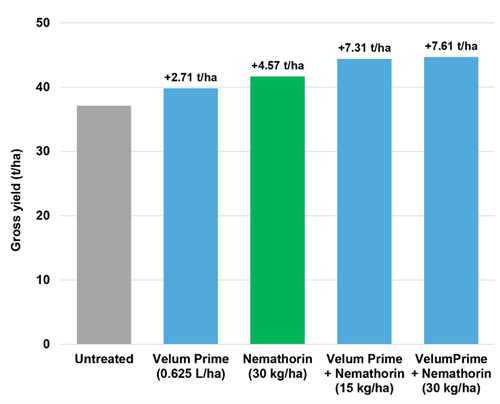
Reference: Bayer, 11 UK trials, 2018-21. Velum Prime applied in-furrow.
Soil types: sandy/silt loams. Avg. Pi: 22.4 eggs/grm soil. Cv. Maris Peer (4), Maris Piper (4), Charlotte (1), Saxon (1).
Flexibility of application
o It can be applied to beds in-furrow at the time of planting.
o It can be applied by boom sprayer to beds and incorporated to a depth of 10-30 centimetres before planting.
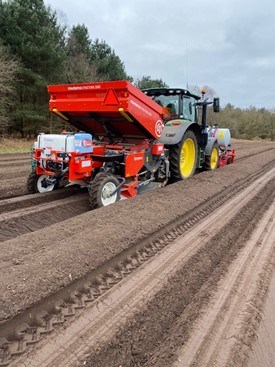
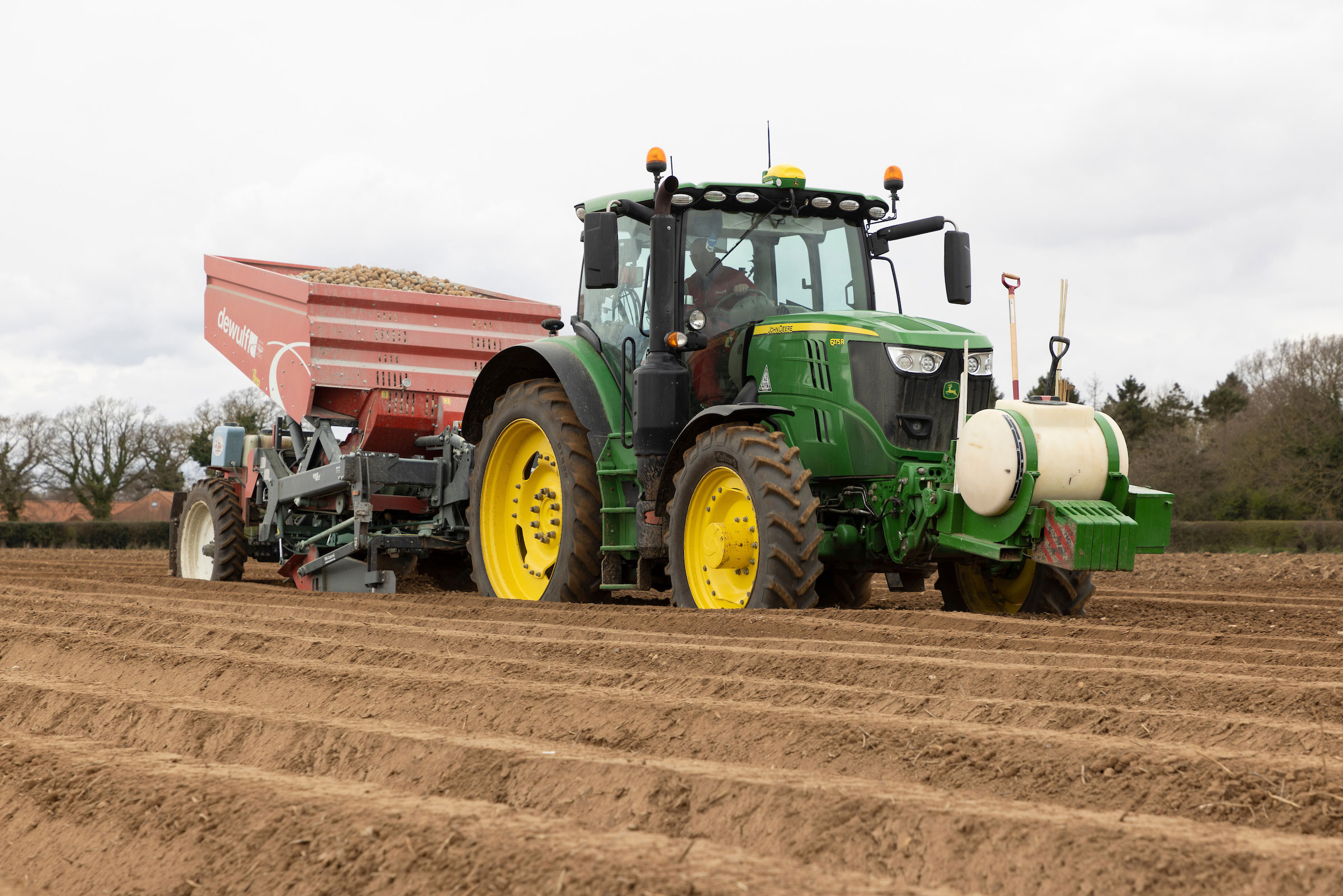
A Bye Engineering & TeamSprayers tank combination for the application of