Crop Progress
Cereal drilling in Scotland is practically done, bar a few wheat crops to go in after potatoes. Whether those will get drilled will obviously depend on the weather – it has started to get wet as we approach the end of October.
Seedbeds were good and growers managed to get it rolled where needed generally. Later drilled wheat in October should still emerge quickly as it is relatively mild. Growers might need to be aware of slugs in these crops.
Most emerged cereal crops look great currently. Some winter barley did go a little yellow but has come back nicely.
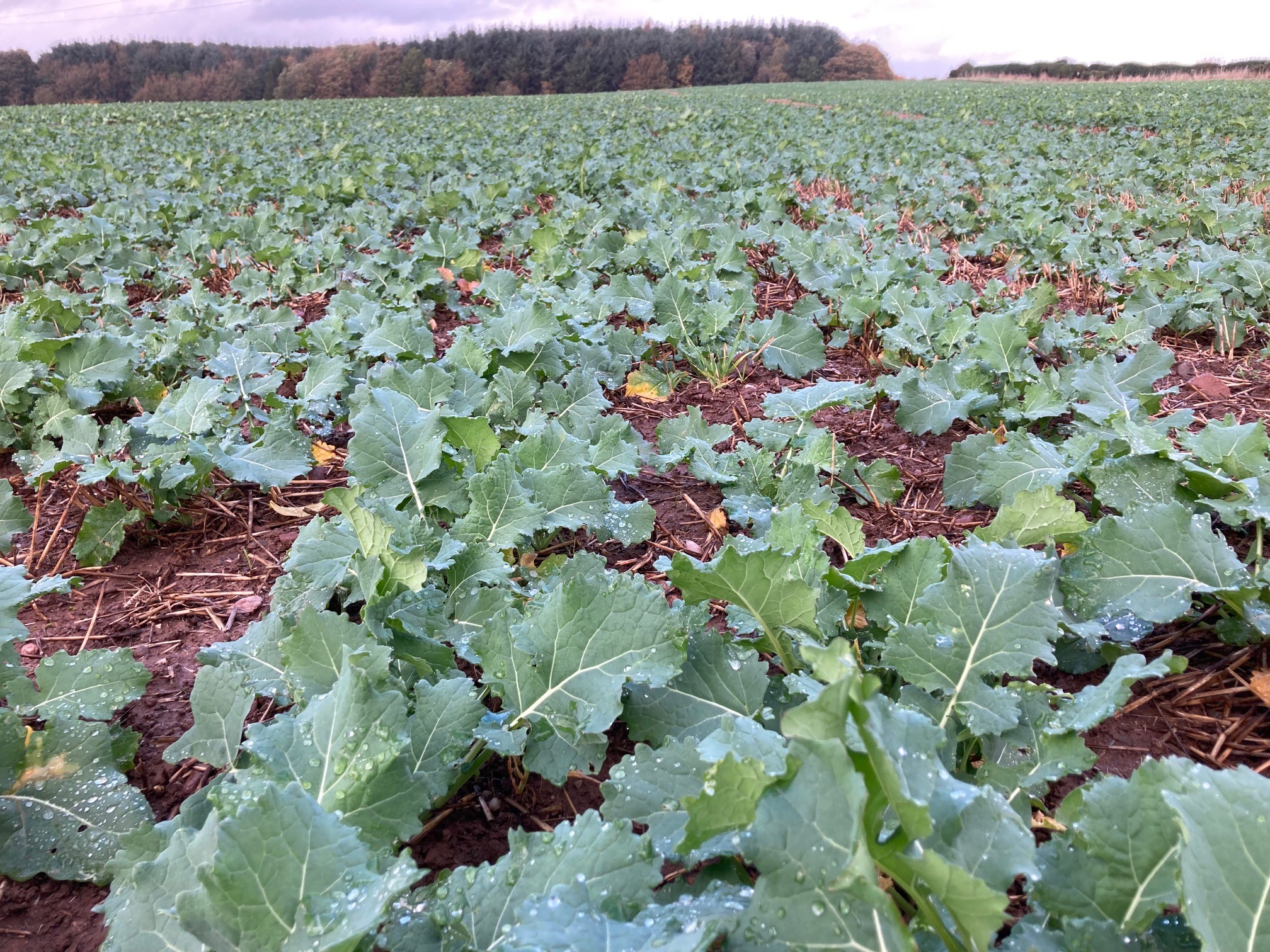
Oilseed rape generally is looking excellent – some might need a flock of sheep on them as they are motoring. At the time of writing it is too early for pigeon damage, while there were some early reports of cabbage stem flea beetle damage but not enough to cause too many problems.
Grant’s agronomy tips for November
1. Monitor oilseed rape for disease
Historically in Scotland bonfire night has been about the right time to apply a fungicide to oilseed rape for light leaf spot.
It has been relatively dry up until the end of October, which should reduce risk, but that can change quickly.
Most varieties do have some degree of disease resistance to light leaf spot, but it’s not fool proof. Keep an eye out for the AHDB / Rothamsted light leaf spot forecast or use one of our free leaf Spotcheck tests, in conjuncrion with ADAS, to judge risk.
2. Try to apply herbicides to cereals if possible
If you didn’t manage to apply a pre-emergence herbicide there are some post-emergence options in wheat.
Most can wait until the spring, particularly if the weed burden is annual meadowgrass and broadleaf weeds predominantly.
If you’re tackling more difficult grass-weeds such as Italian ryegrass or black-grass an early post-emergence spray containing a flufenacet-base is worthwhile considering if you can travel. Liberator (flufenacet + diflufenican) or one of Octavian Met or Alternator Met (flufenacet + diflufenican + metribuzin) could be options, perhaps with an additional partner in those situations.
3. Soil sample fields ahead of potatoes and other root crops
In anticipation of potato, carrot and parsnip crops November is good time to soil sample for nematodes.
While land destined for seed potato crops will be sampled by SASA for PCN, it is worth testing land for ware or other crops for free-living nematodes and general nutrition.
There’s also potential to test land that has just grown potatoes for PCN to see what the populations are like following the crop to help how to manage it for the following five years – for example by growing catch crops or a mustard crop.
With current high fertiliser prices there’s also a case of soil sampling in cereal crops – for example with a N-min type test to help refine future fertiliser requirements.
And on the same theme club root soil tests on fields earmarked for oilseed rape next autumn could be done over winter, giving plenty of time to get the results back and help inform whether a club root resistant or tolerant variety will be needed.