Opportunities for Scottish growers to take advantage of in September
Grant Reid finds five agronomic topics for Scottish growers to consider in September
Posted 4 years ago
30/08/2022
Grant Reid finds five agronomic topics for Scottish growers to consider in September
Harvest progress depends on where you are in the country. By August bank holiday there were plenty that had finished or just about finished, but for some in the very far north, they were only just starting.
Oilseed rape yields generally have been exceptionally good, with yields of 5t/ha. Winter oats have been more mixed with some above the five-year average, but others not doing so well.
There had been fewer reports about wheat yields, with more still to be cut, but there has been some talk of disappointing yields on heavier land as it had baked solid.
Rainfall in Scotland has been variable with big differences in amounts just a few miles apart. Some oilseed rape has been in the ground from early in August, which you can now see in rows. Ideally all oilseed rape in Scotland should be drilled by the end of August, but the caveat has been moisture depending on where you are. Most should have achieved this.
If you still have area to drill, you probably have until 10 September to get it done, maybe 14September at a real push.
Hybrid varieties which get up and away quickly is the way to go, so it is established well before winter. There have, in the past couple of years, been some issues with cabbage stem flea beetles in some parts of Scotland, but it’s not widespread.
We’re going to want good rooting this season, so attention to seedbeds is important. A lot of ground has cracked this year because of the drought, so there’s probably been natural subsoiling and perhaps less need for it to be carried out mechanically, except perhaps in tramlines.
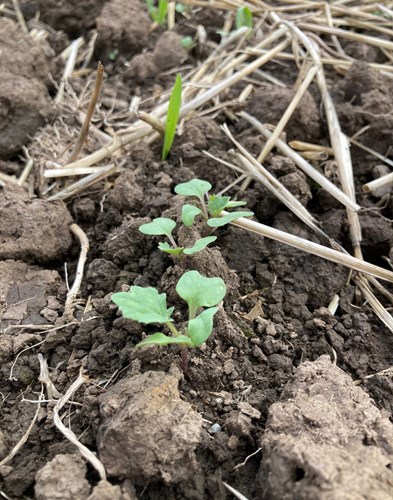
With a little bit of moisture grassweed seeds, such as from bromes, will germinate and grow this autumn. Sterile and great brome will probably respond best to tickling the surface to just cover shed seed to break dormancy. Meadow, soft and rye bromes normally need around a month left on the surface to ripen before covering with soil to encourage germination.
It's also a perfect opportunity to deal with oilseed rape volunteers going into wheat, as on average we’re two weeks ahead of most years.
Depending on your cultivation strategy to prepare seedbeds, you may or may not need glyphosate. If you’re going to cultivate before sowing, some weed species such as volunteer oilseed rape could be killed just through cultivations, especially with sunny weather and some wind which will dry seedlings out quickly.
If it’s a bit wetter – and that would be a good thing currently – that might bring weeds back to life and require a glyphosate spray.
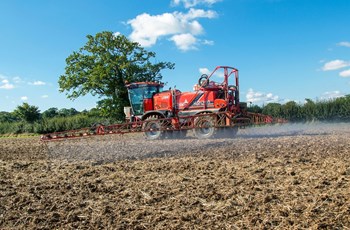
Bromes and couch grass may well need glyphosate. Check product labels for the correct rate of chemical and water, don’t go through the field too fast, and get good coverage but beware of drift.
Early wheats will probably start being drilled by mid-September, with winter barley going in more towards the middle to end of the month. Seedbeds will be key – some fields depending on soil type will be extremely hard and difficult, and obviously you have to bear in mind the price of fuel. Pulverising soil is both expensive and not great from a soil health perspective, but equally getting a fine tilth, with the lack of moisture, might be challenging this autumn.
Make sure seed is going in at the correct depth to allow pre-emergence herbicides to be used safely. If you can sow, you can roll, and get the pre-em on as well.
Main weed issues are usually annual meadowgrass and broadleaf weeds, along with sterile brome, especially in field margins and around telegraph poles.
There are no post-emergence options in winter barley for bromes, making the pre-emergence even more vital, although the old adage of don’t grow barley if you have brome is probably still true.
For those more difficult grassweeds there is now the option of using Liberator (flufenacet + diflufenican) + Proclus (aclonifen) in winter barley, as well as in winter wheat.
Be aware the rate of Proclus in winter barley is lower than in winter wheat – 1.0 L/ha compared with 1.4 L/ha. In either crop it must be applied pre-emergence and remember to keep the spray tank constantly agitated.
Where your weeds are annual meadowgrass and broadleaf species, other tank mix partners for Liberator might be considered, if necessary, depending on weed spectrum. Octavian Met and Alternator Met (flufenacet + diflufenican + metribuzin) are also potential choices – both these can be used at 1.0 L/ha up until the end of September.
Most ware growers will be trying to keep potato crops growing as long as possible to maximise potentially lower yields.
With warmer temperatures and moisture there is still the risk from potato blight, although in September the risk is perhaps lower in Scotland.
Dry conditions could also have opened cracks in ridges, which if blight gets into the crop means rain could wash spores down to the tubers. That makes Infinito (fluopicolide + propamocarb) a good option towards the end of blight programmes because of its dual foliar and tuber blight protection.
Get any home-saved cereal seed tested for the key seed-borne diseases and treat with a fungicidal seed treatment if risk thresholds are met.
I’d also consider sourcing bought-in seed from Scottish seed producers to avoid the risk of importing grassweeds, such as black-grass onto the farm. There should be zero tolerance to black-grass and brome seed in cereal seed.