Trials show strong fungicide armoury for season ahead

Posted 4 years ago
03/03/2022
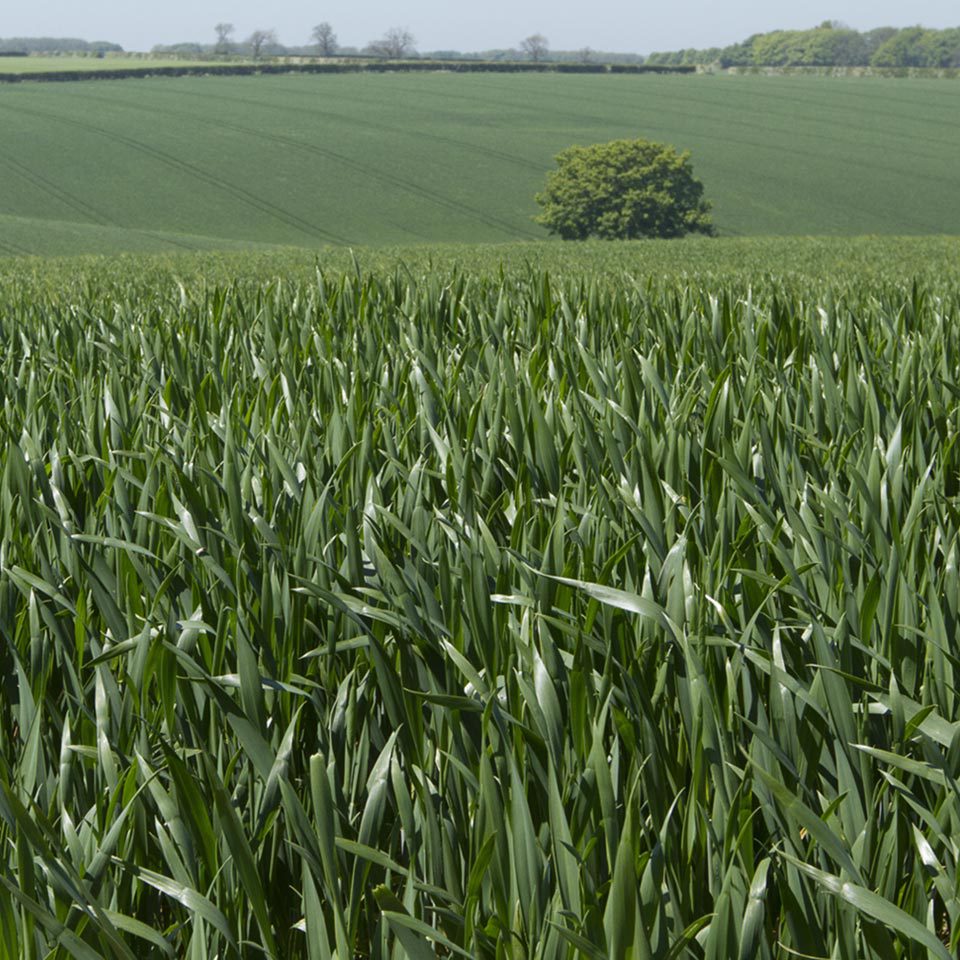
According to Crop Management Partners Kent-based agronomist Roger Bryan, 2020/21 was a very challenging season indeed.
He points to fields of JB Diego and Crusoe drilled at similar times, into similar soil types and exposed to similar weather. But that was where the similarities ended as disease levels between them varied considerably.
Clearly, the weather was a major factor. With growers waiting for warm weather to kick start crops, April was cool and saw just 6.2mm of rainfall in Kent and it remained that way through the beginning of May, delaying flag leaf emergence. The good news was there was little disease to worry about at that time.
But then the sting in the tail. As bands of rain swept in and the weather warmed up, from the base of crops, Septoria built rapidly from the middle of May and into June.It was 9th May before Kent had its first serious rainfall event of 16mm and that just happened to coincide with the T2 timing. Then it rained every day until the 25th May.
But was it all down to the weather? He questions on the possibility of new Septoria isolates circulating, but he points out that mistimed application or poor leaf contact are more likely.
In his view application timing was also an issue last season, variable leaf emergence making it particularly tricky. “In some cases, the flag leaf didn’t emerge until well into May. In many cases this was compounded with the interval from T1 fungicide applications onto final leaf 3 until flag leaf emergence extended to 4 weeks, rather than the target of 3 weeks. With wind and rain reducing T2 spray application windows we saw timings compromised.”
This will have impaired fungicide curative activity and possibly leaf wetness reducing the ability of actives to stick and penetrate leaves. “Farming with hindsight is easy, but a delayed T1 with some coverage on final leaf 2 would have shortened the interval to the rain-delayed T2 and given better results,” he adds.
He says we also shouldn’t overlook what happened to varieties with Cougar parentage such as Firefly and the surprises with JB Diego last season.
Testing on JB Diego and Crusoe via Bayer’s CropCheck service didn’t always reflect varietal ratings or drilling date. “Crusoe’s current rating of 6.2 for Septoria tritici is down from where it used to be but it is still better than JB Diego at 5.2. However, we were getting higher test scores in some Crusoe fields.”
It is another oddity from last season, with the same question mark over weather impact, crop development, compromised timings – or something else?
Results from regional sampling of Septoria populations in 2021 could give us an answer if resistant isolates are more common now. We also need to remember that with September drillings a variety’s Septoria rating can drop by as much as a full point!
The question is whether we need to be doing something different as a result? Mr Bryan doesn’t think so.
Trials data from 2021 show well-timed fungicide applications at good dose rates were still performing as expected. “Although running a trial site is a lot easier than managing a farm with regard to available spray days and coverage. On farm, the best laid plans can go out the window.’’
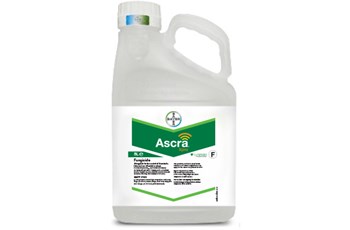
With our key fungicides working well he feels there’s sufficient diversity to meet a range of T1 and T2 scenarios. “Ascra (prothioconazole + bixafen + fluopyram), Revystar (mefentrifluconazole + fluxapyroxad) and Univoq (prothioconazole + fenpicoaxamid) and are all strong Septoria protectants, and if the disease gets a little away from you or where highly susceptible variety has been sown, Revystar and particularly Univoq have more curative activity.
“Ascra retains some curative activity so a good option for varieties with a respectable Septoria rating. It also has a good loading of prothioconazole for eyespot, mildew and Fusaria making it a good T1 option. It really is which product fits each situation and delivers the best financial return,” he notes.
Regarding folpet he is more likely to use it at the T1 timing and also base the decision on varietal rating. He feels protectants are better placed here than at the T2 where some infection might have already established on leaf 2. But it is no chlorothalonil and doesn’t re-distribute around the canopy.
He feels the luxury of a T1.5 might be the best fit for folpet in a year like 2021 when disease pressure was low but the risk of it increasing still high. That particularly applies to those varieties with Cougar heritage such as Firefly and Saki. A T1.5 would be useful to reduce the risk of an extended T1-T2 interval.
The main benefit from folpet is helping to protect the longevity of the other fungicides in the programme as an anti-resistance strategy.
When it comes to timing his advice is to keep a close eye on crops and dissect to check for leaf emergence where possible – although he appreciates farm resources can be stretched at a busy time of the season. That’s when a good agronomist earns his metal.
He also urges growers to try and keep spray intervals short – even if it means pulling them a little forward. “We saw last season the gap to flag leaf emergence stretched. If weather conditions dictate, rather than hang on and risk disease transferring from leaf 2, I would go a fraction early – flag leaf ¾ emerged on the majority of tillers and get some protection on and maximise curative activity. The flag leaf is still the key driver for yield so don’t get greedy by stretching intervals,” he says.
He also reminds growers to be sensible with rates. “Of course, we need to use fungicides appropriately, but too low a rate risks a compromise in protection. Fungicides are designed as protectants and that is where you will see the best return for your investment. They are a safeguard against the weather, helping to preserve crop potential if it turns against you,” he cautions.
Bayer’s Richard Prankard agrees and says that last season some fungicide rates used were too low to protect chemistry partners. “The FRAC guidelines make it clear that any active has to be used at a rate sufficient to support partner chemistry. But at the rates used last season some fell well short, with azole doses sometimes below 50%. It risks hastening the onset of resistance.”
That combination of effective partners is one reason for Ascra’s continued performance he says “Bixafen is a pyrazole-carboxamides and fluopyram a benzamide, so although they are similar, they are not identical. Where we’ve seen a sensitivity shift with bixafen we haven’t seen it with fluopyram and vice-versa, they complement each other,” he notes.
He echoes the importance of timing and the need to keep intervals short. “No fungicide will fully eradicate Septoria if it gets established. If we see another season where the weather delays leaf development there is justification for a T1.5 to bridge an extended T1 – T2 gap,” he concludes.