Latest learnings on Alternaria highlight value of IPM

Posted 4 years ago
16/03/2022

The spread of fungicide-resistant strains of early blight (Alternaria spp.) and the difficulties they create in ensuring crops are suitably protected continues to concern researchers.
Speaking at the Bayer potato conference, Dr Juergen Derpmann of Bayer Crop Science, Germany described how novel genotypes of Alternaria solani were evidence of the need to follow best practice in crop protection.
“We know that such isolates with a mutation in cytochrome b. gene at position F129L, were detected at high frequencies in Germany, the Netherlands and other countries across Europe. This demonstrates a reduced sensitivity to most strobilurins, such as pyraclostrobin, azoxystrobin and famoxadone,” Dr Derpmann said.
“Monitoring has also identified isolates showing several mutations in different parts of the enzyme succinate dehydrogenase, which are leading to resistance to some SDHI active substances, namely boscalid. Analysis of samples collected from across western Europe reveal that isolates exhibiting these genotypes are now becoming widespread,” he added.
More recent research indicates that SDHI-fungicides show an incomplete cross-resistance pattern in Alternaria species; for example, isolates carrying the sdhB-H278Y mutation were resistant to boscalid (a pyridine-carboxamide) but were controlled by other active substances in the same mode of action group of SDHIs belonging to another chemical group, such as fluopyram (a pyridinyl-ethyl-benzamide).
DMI fungicides such as prothioconazole (a triazolinthione) have demonstrated a stable sensitivity against the dominant Alternaria spp. over many years, with no shift in sensitivity seen in-vitro test systems.
This supports the use of Caligula (fluopyram + prothioconazole) as an effective fungicide with a built-in resistance management strategy for use against Alternaria species.
Growers are encouraged to consider cultural control measures as part of an integrated strategy for disease control. However, focussing only on plant host resistance is recognised to be of limited value because of the evolutionary potential of the pathogen.
As resistance genes in the plant can also be overcome by pathogen adaptation, it follows that repeated production of the same varieties is unsustainable in the long term. Also, eliminating weeds such as Black nightshade (Solanum nigrum) which is considered a potential alternative source of inoculum, can reduce the inoculum pressure within the crop.
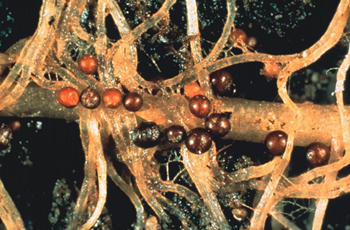
As the popularity of this plant species increases due to its capacity to reduce potato cyst nematode (PCN) populations, the inoculum pressure facing crops is likely to increase.
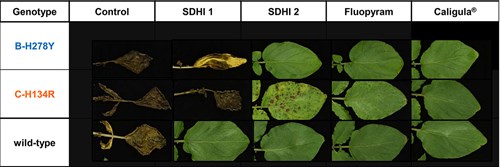
Incomplete cross-resistance of SDHIs in most frequent Alternaria solani field genotypes has consequences for early blight control