Time to plan woolly aphid control strategies

Posted 5 years ago
02/06/2021
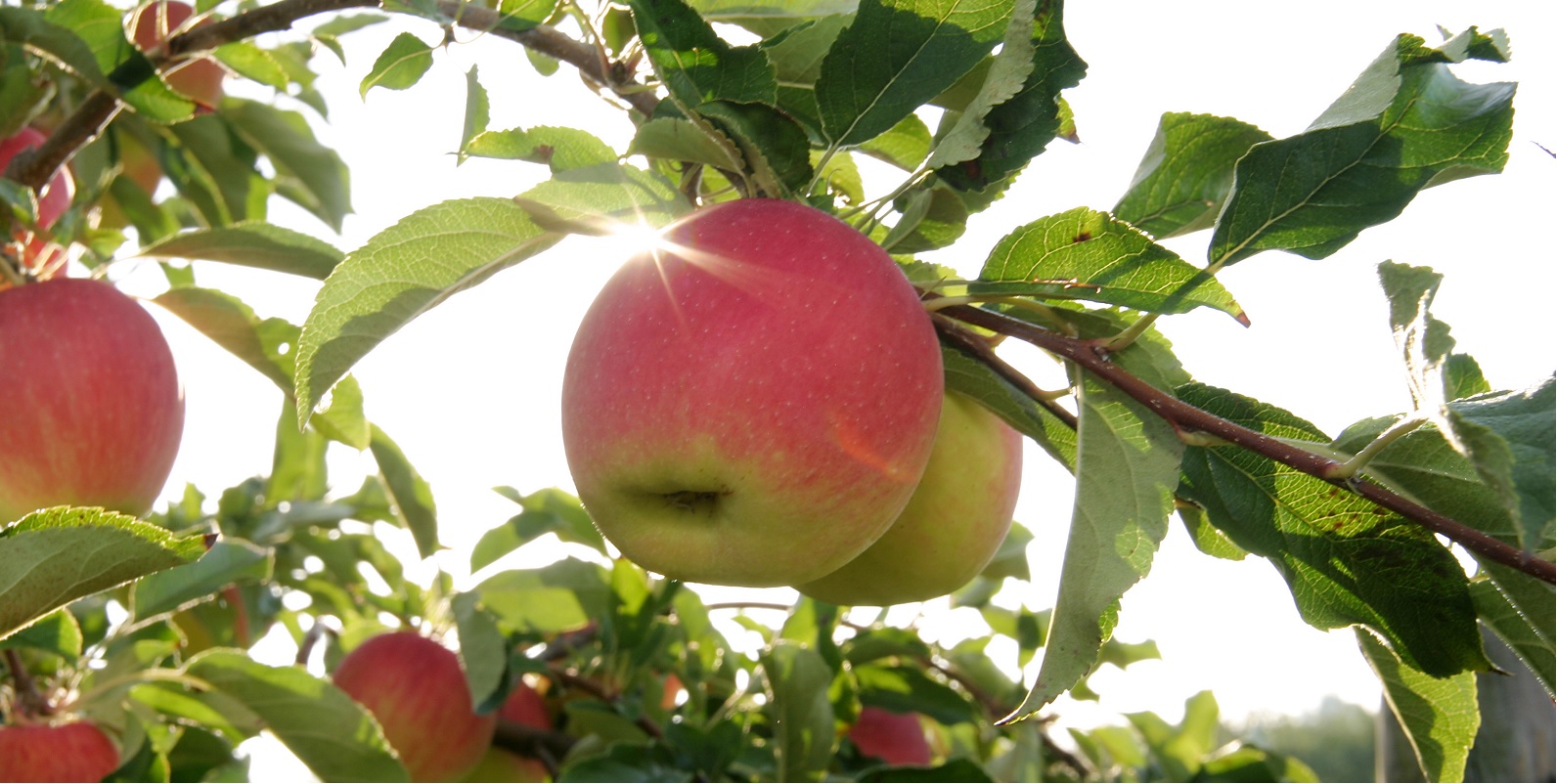
Colonies of woolly aphid (Eriosoma lanigerum) will likely now be visible in apple orchards. These insect pests complete the entire lifecycle on the tree and once active, typically by the end of May, can be found on spurs and branches, especially around pruning wounds.
Once infestations reach a level considered to be damaging to the crop, it is time to spray. The declining performance of flonicamid leaves growers with limited options. Flonicamid was once considered as a good choice for control because it was selective and has low toxicity to natural enemies [of woolly aphid]. For reasons that are not fully understood, however, populations have become increasingly difficult to control using flonicamid and, as such, AHDB Horticulture recognises that where other means of intervention are failing, Batavia (spirotetramat) is the best available option.
Successfully managing woolly aphid populations begins with good cultural control beginning with the physical destruction of colonies in the late spring when they will be visible on the trunk and before they emerge to spread to young growth. Such an approach offers value but is likely to be practical only on a limited scale.
Natural enemies, namely predators such as the earwigs, lacewings and adult ladybirds, have a role to play, especially in the early season, but rarely will they be present in sufficient numbers to negate the need for other forms of intervention.
The parasitic wasp Aphelinus mali, however, can make a valid contribution to control as it can produce four to five generations each year. Population size and time of emergence, however, are heavily influenced by average temperatures – the first adults typically emerge about 120-day degrees above a threshold of 9.4oC from 1st January – and rarely is it able to provide control alone in commercial crops.
In all cases, sprays need to be well-timed and accurately applied. It is also important to have a strategy that balances the use of insecticides with the need to promote natural predators. There can be eight to 12 generations of the aphid in a season, so programmes that seek to rely solely on foliar insecticides are unlikely to be successful.
Batavia can be applied under an extension of authorisation for minor use (EAMU) granted in 2019 and the user must be in possession of it before the spray is applied. It can be downloaded from the HSE website.
A maximum of two Batavia applications can be applied between the end of flowering and the beginning of ripening at the higher rate of 1.7 L/ha where trees have an average canopy height of 2.4 metres or more. It must be applied after flowering and works best during periods of active shoot growth and as the aphid appears, when the young larval stages can be targeted.
Batavia’s effective control is due in part to its two-way systemicity which sees the active substance carried through the xylem and the phloem ensuring it is transported throughout the plant, controlling pests and delivering protection to new growth.
While this has advantages over products that are moved through the xylem only, meaning that they are transported outwards and upwards from the point of application, Batavia can be slower to act which makes application timing especially important. It can take 10 to 21 days before the full benefit is seen, hence the need for well-timed applications. Batavia will also provide effective control of a range of other insect pests including, rosy apple aphid, pear sucker and mussel scale and is safe for beneficial predators. It has a 21-day harvest interval.
Introduced ahead of the 2020 season, the biological insecticide and acaricide FLiPPER contains fatty acids (C7-C20) derived from olive oil. It is a contact-only form of control which works best when applied in a high-volume spray, typically no less than 400 L/ha and up to a maximum of 1000 L/ha at an inclusion rate of no less than 1 L/ha of product. It does, however, provide reasonably quick knockdown with feeding activity stopped about 30 minutes after contact and mortality typically 24-hours later.
As a lifecycle breaker, Batavia can be thought of as a means of ‘re-setting’ populations, but a maximum of two sprays per season means it should be used strategically based on the time of the season, pest pressure and forecast conditions. In comparison, FLiPPER should be thought of a means of keeping populations in check to be used alongside the promotion of beneficial predators and until conditions develop that favours a rapid escalation of pest numbers that require the application of Batavia.
Up to eight applications between 1st March and 30th August and no pre-harvest interval or residue limit to observe, FLiPPER can be applied at seven-day intervals with a minimum interval of 28 days between each block of three sprays. FLiPPER also controls other orchard pests, including aphid species, the two-spotted spider mite (Tetranychus urticae) and blossom weevil (Anthonomus pomorum).
As with Batavia, FLiPPER is authorised for use in pome fruit under an EAMU of which the user must have on file before the product can be applied.