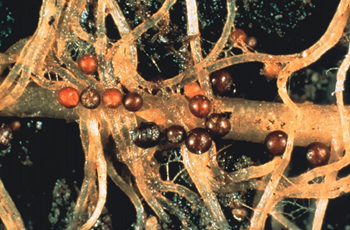
Using all available means to beat potato cyst nematodes

Posted 5 years ago
04/03/2021
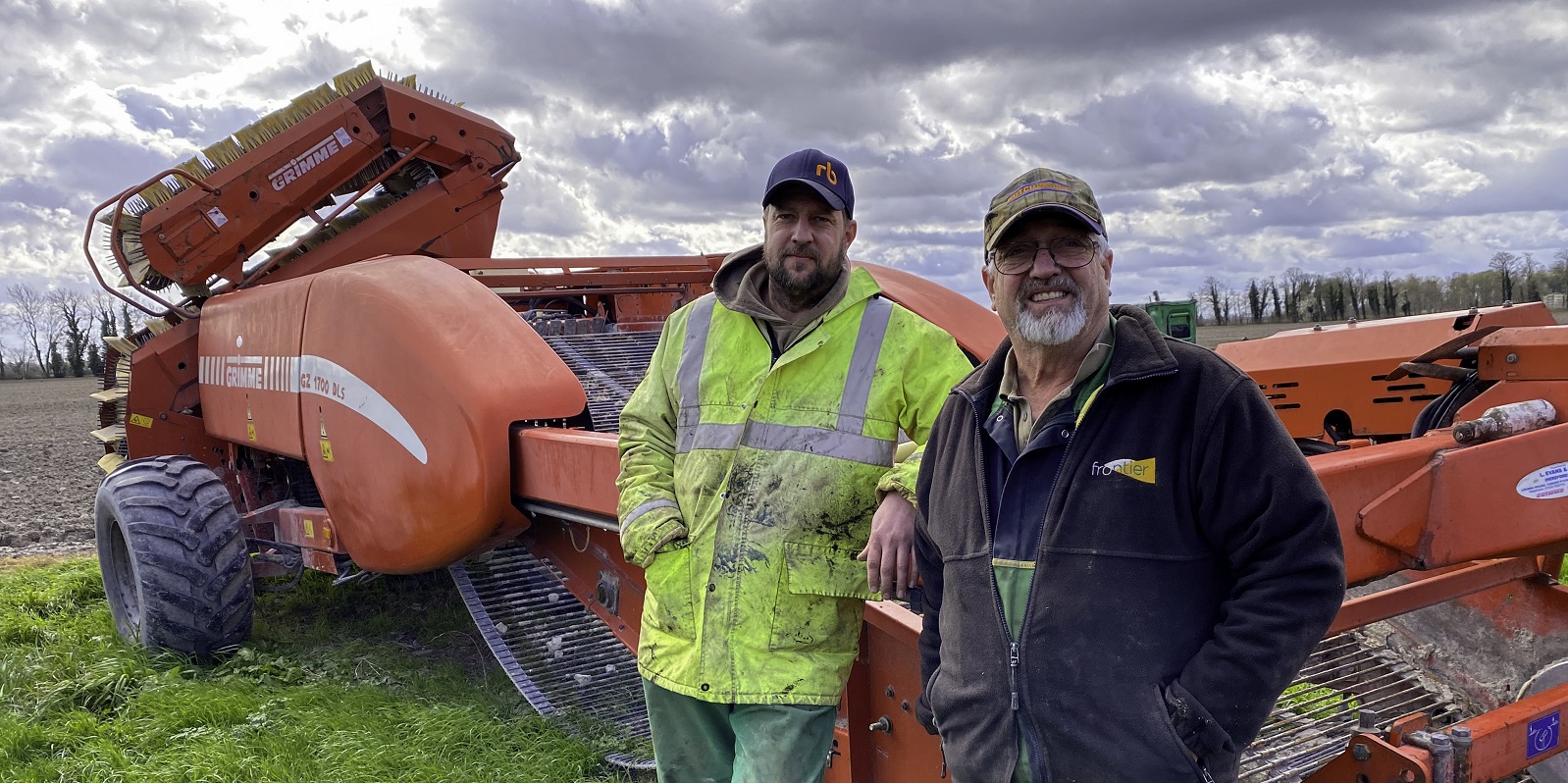
Daniel (left) and Stephen Sizer (right) have successfully driven down PCN populations through a concerted effort involving a range of measures.
Bringing potato cyst nematode to heel is an aspiration shared by many growers but achieving it in practice is often easier to plan than deliver. The limited number of ware varieties with broad market acceptability and the need to maximise profitability across the rotation often hamper adoption of those means of control that would otherwise be most effective.
Despite the spread of PCN to new areas, there are some for whom it simply is not an urgent problem. A survey of growers in Scotland, where maintaining the area of PCN-free land is considered essential to protecting its status as a leading producer of clean seed, found blackleg was a greater concern because it is responsible for most down-gradings. PCN came third on the list of concerns with late blight control second.
But there is only so long that the PCN problem can be ignored before radical action is needed. For Stephen Sizer that moment came when the agronomist called with his soil sampling results and asked: “is there not another field you can use?”. It may have only been one field, but at 120 eggs per gram of soil, the result was enough to make Mr Sizer take notice.
“In those situations, the responsible course of action is to leave the field out of potatoes for 10 or more years but going to a one-in-ten rotation as standard practice simply isn’t feasible. There has to be a way of managing populations that is commercially viable,” he says.
As it happened, the field in question was left out of the rotation for an extended time, but for Mr Sizer, who farms with his wife, Angie, and son, Daniel, it was time to develop an integrated plan.
Across, 222 hectares (550 acres) at Russel Farm, near Lakenheath, Suffolk, Globodera pallida dominate the black fen and white silt soils. Management has proven easier on the black fen soils, perhaps because they are quicker to warm with the onset of spring, while the white silts with their higher alkalinity represent a different challenge.
Working with his agronomist Ian Cook of Hutchinsons, Stephen and Daniel developed a plan. It was truly a ‘zero tolerance approach’ that included cover crops, the full gamut of available nematicides and, where the market allowed, the use of resistant varieties.
“Resistant varieties hold a lot of promise but can be difficult to grow. We’ve tried several with varying success though we aim for those that are both resistant and tolerant to G. pallida wherever possible,” explains Stephen.
Cover crops too have been a great success, especially Indian mustard (Brassica juncea) which is sown as a biofumigant. Sown as soon as possible after the preceding crop is harvested, it is left for about 12 weeks, at which point it should be in full flower, before being incorporated.
“In a good year it will be above the tractor bonnet, but in most seasons, it will be 4-5ft in height. The greater the biomass the more the hydrolysed glucocinolates. These release volatile isothiocyanates, a form of mustard gas, and have been shown to be effective against PCN,” says Daniel Sizer.
Other cover crops have been tried, including black nightshade (Solanum nigrum), but while a near neighbour has enjoyed success, it has fared less well for the Sizer family. As a result, Indian mustard has become the preferred choice and the intention is to grow it at least once in the five-year rotation, but where there is an opportunity to sow it twice, it is not overlooked.
“We try to grow it twice to help bolster control of beet cyst nematode as well as PCN,” says Daniel. Central to the success of any biofumigant crop is ensuring it is fully incorporated and achieving this meant having the right equipment.
“Initially we attempted to incorporate it with a heavy disc cultivator but struggled to do it to a sufficient depth and at a sensible forward speed. This led to the purchase of front-mounted flail with a 3-metre cultivator on the rear,” explains Daniel.
Evidence on the contribution made by cover crops to the reduction in PCN populations varies enormously with as many trials reporting no effect as there as those reporting a reduction. Where positive results have been observed, none have achieved a reduction of more than 80% and most have been far lower and more variable.
Such variable performance is nothing new to Stephen and Daniel Sizer and it merely underlined the need to develop an integrated programme. “We’re used to seeing varying levels of success. While others were enjoying good results with Metam sodium we found it didn’t work for us. It meant we needed to keep trying other forms of control, in combination if necessary, until we found success,” says Stephen.
Nematicides are still relied on to contribute to the overall package of measures. Nemathorin (fosthizate) is applied at full rate and, beginning in 2020, Velum Prime (fluopyram) applied in-furrow at planting.
“They’re complementary forms of control with different modes of action and vastly different profiles. They’re relatively easy to apply given their contribution to control and while we have such products, it would be naïve not to use them,” he says.
“The Velum Prime is a compelling proposition. Once egg counts fall to less than 10 per gram of soil, I can see it becoming the only nematicide we need to apply,” he adds.
In the five years since Indian mustard was first grown and resistant varieties became normal practice at Russell Farm, PCN populations have gradually fallen which has served to endorse the strategy and persuade the Sizer family to continue with it.
“In 2015 soil sampling revealed a range of 11-66 eggs per gram of soil. In 2020, the range was 11-28 eggs per gram of soil, so the trend is positive and highly encouraging. We know we are not yet where we need to be, but we are seeing better crops and the results are rewarding,” says Stephen.
Outside of a trial protocol, it can be hard to establish what affect any intervention has on populations, but for Stephen and Daniel the downward trend in egg counts coupled with the improving crop performance is confirmation that it is possible to achieve control within the restraints of a commercial rotation.
“It has required significant investment in time and cash, but the results demonstrate that it is achievable,” says Stephen.