5 priorities for growers in the south this March
Richard Prankerd evaluates agronomic priorities for March in the south.


Richard Prankerd evaluates agronomic priorities for March in the south.
Fieldwork generally stalled in February with the blast from the East bringing snow to areas of Kent and freezing temperatures elsewhere. Some growers took the opportunity to cultivate frozen land ahead of spring cropping to get a head start.
Without much progress, many of the priorities from last month still remain.
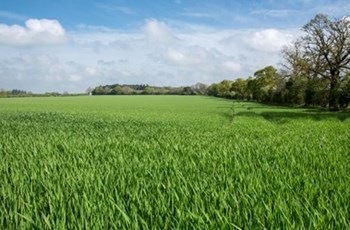
The priority will be wheat crops where autumn residual weed control programmes were either curtailed or missed. With most crops likely to have emerged weeds, the focus will be on applying post-emergence contact-acting herbicides.
A good choice will be Pacifica Plus (mesosulfuron + iodosulfuron + amidosulfuron) as it is a good all-round product which gives good control of both grass weed and broadleaved weed species. That includes chickweed and mayweed, which are an increasing threat in the south, along with fumitory on lighter ground. Pacifica Plus offers better efficacy against these weeds than pyroxsulam-based products.
Where pre-emergence residual herbicides in the autumn were applied, they generally have worked well because of the good, moist soil conditions. But they will start to run out of steam in March, if not before, so walk fields and assess whether follow up treatments will be required.
It’s important to finish off programmes to keep ahead of weeds and reduce seed return this summer.
Brome is increasingly becoming a problem weed in the south, alongside rye-grass. Identifying brome species correctly can help you make better decisions on product choice.
Pacifica Plus is very good on the Anisantha species (sterile and great brome), but the Bromus species (rye, meadow and soft brome) are better controlled by Monolith (mesosulfuron + propoxycarbazone), according to results from our weed screen.
Timing is also important – the sweet spot is dependent on weather. Ideally you’re looking to apply once the cool weather has lifted without leaving it too late and the weeds have grown too large. And then you have to factor in whether you can travel – so it’s not easy to get right.
Results from January’s leaf samples sent to ADAS for analysis of oilseed rape diseases through our free Spotcheck service highlight the threat from light leaf spot again this season.
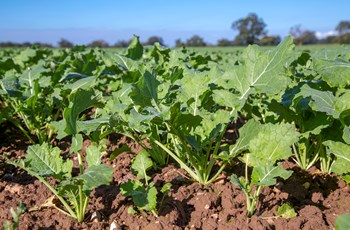
Of the 56 samples received in January, 68% of them were showing symptoms of light leaf spot after incubation, while only 14% had visual symptoms. While the cold weather should have slowed down infections, the disease is tracking similar levels to last year’s epidemic.
With any autumn treatments now running out of steam, protecting oilseed rape crops with decent potential at the next opportunity with Proline (0.32 L/ha) would make sense.
From the middle of March especially, monitor winter wheat and winter barley crops for early signs of damaging diseases.
In winter barley, look out for mildew and any rust of any significance. Alongside this there have been reports in previous years of seed-borne net blotch, which needs to be addressed as early as possible. A good azole fungicide, such as Proline (prothioconazole) at 0.3-0.4 L/ha will be control all of these, if required at this early stage. If it is just mildew, then a mildewicide would suffice.
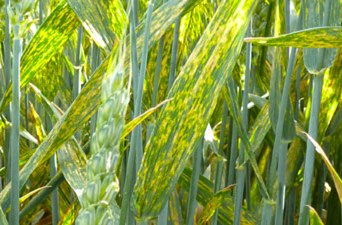
In wheat, T0s are usually applied either at the end of March or in early April. Be on the lookout for yellow rust, where the changing races are now affecting multiple varieties on the Recommended List. Popular milling varieties in this region, especially Skyfall and KWS Zyatt are both susceptible to yellow rust, so need careful monitoring, although again the colder weather should have helped out.
A second application method is now available for Velum Prime (fluopyram), Bayer’s recently introduced nematicide for controlling potato cyst nematode.
As well as in-furrow application, this season it can also be applied an overall spray and then incorporated. For the latter, it must be incorporated to 10-30cm depth, after you’ve de-stoned as that operation doesn’t do the job correctly.
Velum Prime is a good low use rate option for PCN control, reducing the amount of product storage required compare with a granular nematicide. In trials, under low potato cyst nematode pressure Velum performs similarly to oxamyl used to, while in higher pressure situations you might want to use it alongside a half dose of a nematicide granule.