5 pieces of agronomic advice to get growers through March in the North
Adam Tidswell guides growers through the busy month of March with these 5 pointers.

Posted 5 years ago
23/02/2021
Adam Tidswell guides growers through the busy month of March with these 5 pointers.
As we approach the end of February, it’s perhaps more wet in the north even than this time last year. Our Field Days trials site at Stockbridge Technology Centre in Cawood, near York has sat under water for some time, although thanks to the good work of the team there, we hopefully have saved the trials through the pumping of water off the site.
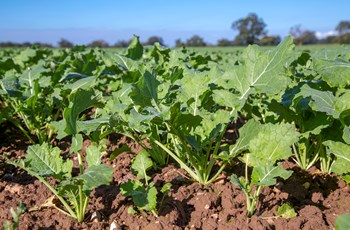
There does look like there are some good high yield potential oilseed rape crops in the north. They have established well and grew away from the adult cabbage stem flea beetle threat, and while we are not through the danger period yet, it is looking promising.
Our Spotcheck service, in conjunction with ADAS, which assesses oilseed rape leaves for diseases has been showing high levels of light leaf spot over winter. In January, 68% of the samples sent in were infected with the disease, and in the north we were slightly above that average.
So when conditions improve enough for sprayers to travel, applying a product such as Proline (prothioconazole) with activity to protect against light leaf spot should be high on the priority list.
Where crops are vigorous and need some canopy manipulation, then adding in some tebuconazole by using one of the Corinth, Prosaro or Kestrel formulated tebuconazole + prothioconazole products might be worthwhile.
There was a good drilling window in the north, and many growers understandably after last year were concentrating on drilling up to the rain arriving. That meant in quite a lot of cases there wasn’t an opportunity to apply a pre-emergence herbicide, which ended up going on post-emergence which isn’t the ideal timing and leaves crops more susceptible to new flushes of weeds in the spring.
There are a number of contact-acting products available for different scenarios. For all-round activity against grass and broadleaved weeds Pacifica Plus (mesosulfuron + iodosulfuron + amidosulfuron) is a good option, while there is also the season-long choice of Atlantis OD (mesosulfuron + iodosulfuron). For more specific brome issues, Monolith (mesosulfuron + propoxycarbazone) is useful.
Both Pacifica Plus and Monolith will do a good job on all brome species, although Monolith might have the edge on Bromus species such as rye, meadow or soft brome from the evidence of our weed screens around the country.
For all grassweeds it is better to target weeds when they are as small as possible, and get on as soon as there is active growth. That trade-off is not always easy to find, but try not to wait until GS30 of the crop, when the grassweeds are tillering and will be more difficult to control.
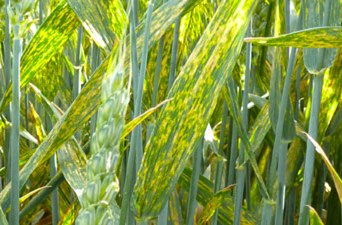
Early results from our rapid early disease detection tests in January found some early signs of latent Septoria infections on the newest leaves of KWS Extase wheat, although perhaps surprisingly not on KWS Kerrin in Yorkshire. That mirrors agronomists’ finding of active Septoria in crops too. We will continue to use these tests through the season to track the disease.
We’re also this season testing for yellow rust, but so far no disease has been found, although it will be one to keep an eye on.
Towards the end of March attention might turn to whether to apply a T0. Without chlorothalonil this season, the jury is out on whether to include a multi-site at the timing. If there is yellow rust present then applying an azole, such as tebuconazole will probably be justifiable.
An additional method of applying Velum Prime (fluopyram) has been approved which will give potato growers more flexibility for controlling potato cyst nematode.
Alongside the in-furrow application at planting, there’s now an option for broadcast and incorporate before planting, which adds options for growers without the equipment to apply in-furrow.
The key when using broadcast and incorporate is to de-stone first, if necessary, then broadcast spray and incorporate within 72 hours to a minimum depth of 10-20cm.
As well as potatoes, this method is also now approved for carrots granules. Velum Prime can be used for the suppression of plant parasitic nematodes and for the reduction in typical root damage symptoms associated with free living nematodes.
There is also an EAMU for use of Velum Prime in parsnips, again only via the broadcast spray and incorporate method of application.
In all these crops the approvals will be welcome with the demise of Vydate (oxamyl) authorisations.
For those preparing land for spring planting, a clean-up with Roundup (glyphosate) will help get it off to a good start.
To get the maximum efficacy from Roundup apply it to small weeds, choose the correct dose for the hardest target weed or cover crop species and follow best practice application advice – limit forward speeds, choose the correct nozzle for the size of the weeds, etc.
Roundup formulations, such as Roundup Flex and Roundup PowerMax are rainfast in an hour for annual weeds and cultivations can start within 24 hours. For perennial weeds it is four hours for rainfastness, and five days for cultivations. That flexibility can be important in a busy period.