South: Focus on these 3 key tasks in crops this April and early May
Richard Prankerd looks at what’s happening in crops in the south and offers some advice for key tasks in the coming month.

Posted 6 years ago
16/04/2020
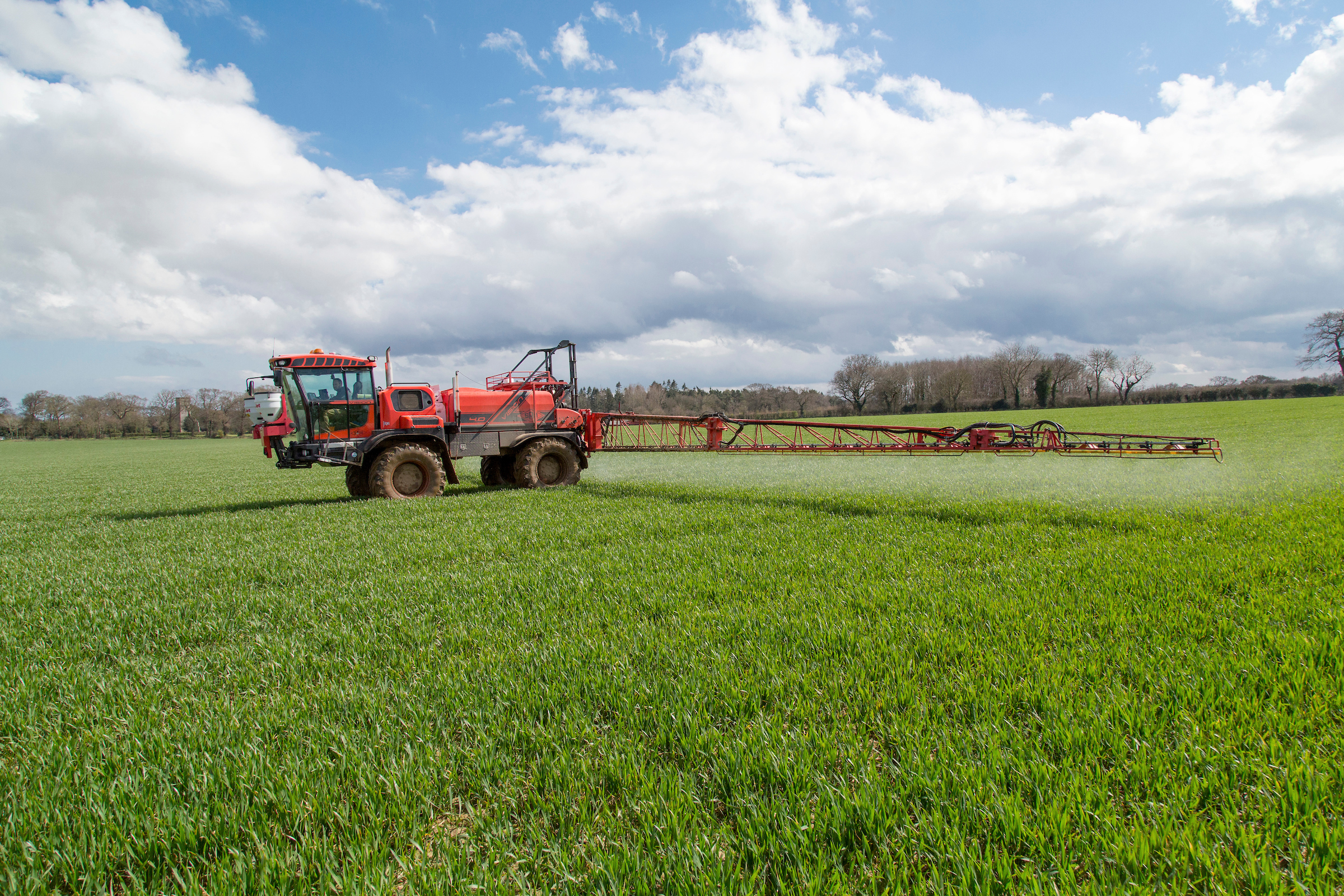
Richard Prankerd looks at what’s happening in crops in the south and offers some advice for key tasks in the coming month.
Around 60-70% of wheat eventually was drilled in my region in the south-east. It varied – growers in Hampshire, Sussex and Surrey had more success than those on the Weald in Kent and Romney Marsh where drilling was perhaps only 30%. Further east in Kent – east of the M2 – then it picked up again and perhaps 80% was drilled.
Most of the autumn drilled crops are now at GS30, with T0s being applied in the weeks around Easter. Forward early crops have plenty of Septoria in the base – they’re just starting to grow away, but while it might not have moved up yet, the potential is there. In Hampshire there have been fewer reports of yellow rust than in Kent.
There’s less winter barley in the ground this season locally it seems, as growers opted for winter wheat where they could. What is drilled has tillered well, looks healthy, although there is plenty of mildew and brown rust present, with some reports of Rhynchosporium and net blotch.
With such a prolonged drilling window this season, picking the time for T1s will be challenging.
If you go by nodal development you risk getting timing wrong this season, perhaps more than others. Not only is there the wide spread of drilling dates, but fertiliser uptake will have been slow around Easter with the dry weather. Once that gets into the crop you will see accelerated growth, so the only accurate way to make sure you’re not spraying the wrong leaf layer is to dissect plants – you’re looking for leaf 3 being three-quarters emerged on the main stems.
If T1 comes a little earlier than expected with plants rushing through growth stages, then there is a potential risk of intervals between T1 and T2 being stretched. Using an azole + chlorothalonil at T1 in that situation could be more risky as it will only give a maximum of three weeks protection. That’s where the extra protection from SDHI / azole formulations, such as Ascra (bixafen + fluopyram + prothioconazole) and Aviator (bixafen + prothioconazole) help.
They also provide physiological benefits on top of enhanced disease control, so in a year where rooting might be poorer, that could be beneficial too.
Most winter barley T1s will have gone up in the week before or after Easter. Ideally this will be followed up in about three weeks’ time as the awns emerge. Keep an eye on disease levels in the crop. If net blotch threatens then you should look to keep the prothioconazole rate a bit higher to combat it – something like 0.5 L/ha Siltra (bixafen + prothioconazole) for example.
In winter barley, the cut off date for last use of chlorothalonil shouldn’t be an issue for T2, so it will make sense to use that to reduce the threat from Ramularia.
Spring barley is all drilled up in the region and starting to emerge. First sprays should be applied before the end of tillering, with again a three-week gap until T2 sprays are required.
Flowering started around Easter in oilseed rape crops. We had higher pressure from flea beetle this season, and some crops were struggling with larval attacks.
If spraying is warranted, then topping up light leaf spot control at the same time as protecting against Sclerotinia is advisable. Light leaf spot has been rampant this season, with 80% of crops having confirmed light leaf spot symptoms in our SpotCheck survey in March, with between 40 and 80% severity.
Using something like Aviator at around 0.75 L/ha will do a good job on both diseases.
Apple scab and powdery mildew protective sprays are set to continue at 10-14 day intervals during this current dry spell we are experiencing. If a high apple scab event occurs then an application of Flint (trifloxstrobin) is recommended, while Luna Privilege (fluopyram) will deal with powdery.
Some agronomists are starting to find Rosy apple aphid in some orchards, and with a threshold of 1, once found a spray of Calypso (thiacloprid) is recommended but consider bee safety before applying. An early morning spray of Flipper (fatty acids C7-C20) could be an option if contact can be made with the pest and has a very good beneficial profile.
Continue to also monitor orchards for woolly apple aphid, which will start to appear from late April, if present apply Batavia (spirotetramat) at split dose which will also give control of any Mussel Scale present.