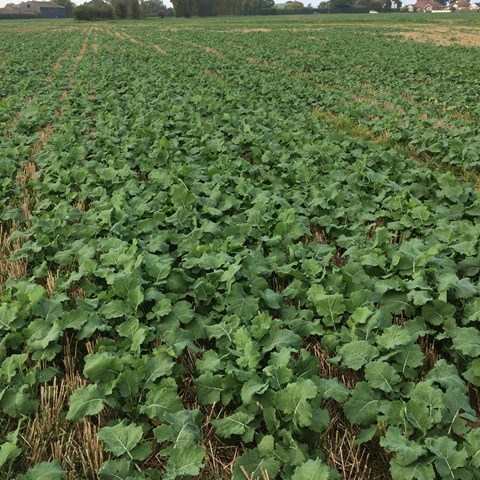
Oilseed rape has grown away strongly, despite flea beetle pressure increasing further west. Growers have tended to drill earlier often resulting in thick crops with large canopies moving into winter, but have realised the value of good seedbeds and vigorous varieties in achieving positive establishment.
Phoma infection was as early as I’ve seen and it has really helped pick out the varieties with stronger resistance. In more resistant varieties, phoma thresholds frequently haven’t been reached, so one spray with activity on phoma and light leaf spot will suffice on these crops this season.
If applying just one fungicide this autumn, 0.46L/ha of Proline (prothioconazole) is the way to go and the higher rate needs to be maintained to help keep crops protected through to the spring. If a phoma spray with light leaf spot activity has already been applied, it gives some flexibility on rate and timing, with a 0.32L/ha top-up 4-6 weeks after the first application enough to maintain protection through the winter.
Despite the recent cold snap soil temperatures at 30cm are still about 12C, so it is still currently too warm to combine the fungicide with Kerb (propyzamide) applications. If Kerb timings continue to be delayed, don’t be tempted to delay light leaf spot sprays as you risk not getting any protection on at all if the weather deteriorates.
At our Oxfordshire demo site, we have a seed rate and seed treatment trial that has shown some interesting results so far. In part of the trial Elgar sown at 40, 60, 80, 100 and 200 seeds/sq m has seen big differences in rooting and canopy. There has been a trend to drill conventional varieties at higher seed rates due to flea beetle pressure, but lower seed rates clearly produced bigger and stronger roots and look more impressive above the ground, too.