Mitigating soil compaction threats

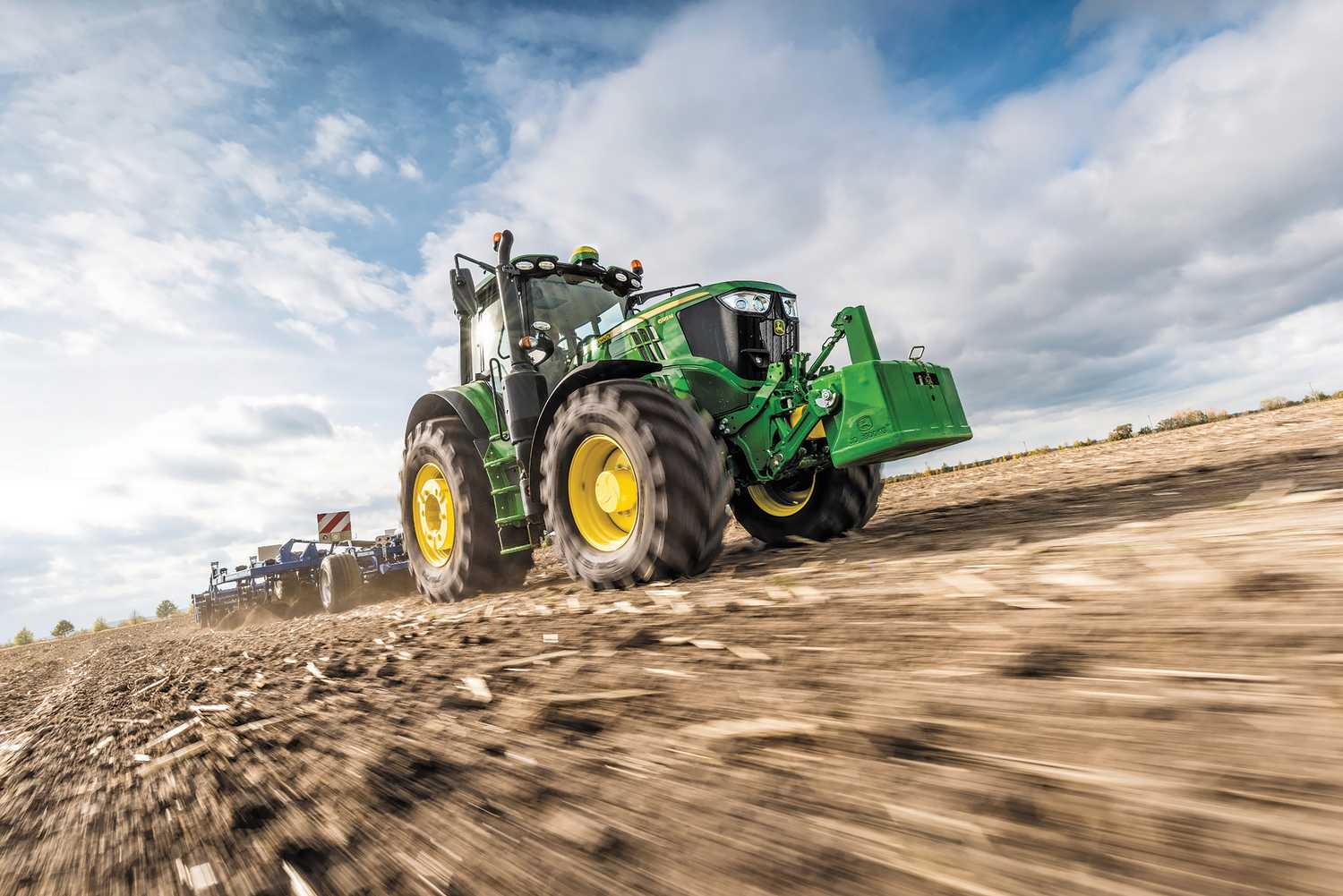
Options for minimising soil compaction at busy times range from quick-fix solutions, such as timely tractor ballast and tyre pressure management, to more complex long-term measures like controlled traffic systems.
Introducing a grain chaser on very generous wheels and tyres is an alternative way of keeping grain trailers off the main growing area, but arguably has more value in meeting the logistical challenges of carting grain over lengthy field-to-store hauls without interrupting combine progress.
Weight is an essential component of power-efficient traction for cultivations and other draft work, but wasteful if overdone or distributed inappropriately.
For grain carting, none at all; so shedding unnecessary wheel and front-end ballast is the way to go, to get tractors down to their basic weight with tyre pressures adjusted accordingly.
Ideally, that requires a record of tractor and trailer axle loads when the outfit is fully laden, and taking advantage of the advanced trailer tyre designs capable of handling road speeds at inflation pressures that provide a generous contact patch in the field.
For cultivations work, three factors determine ballast requirement; power, implement type and working speed.
The first two are obvious; all modern tractors are designed to operate effectively at their build weight for operations that are undemanding where traction is concerned, but can be ballasted to deliver more traction when needed.
For example, 180-240 hp Fendt 700 Vario tractors weigh around 8 tonnes, but can be loaded with ballast and implement to 14 tonnes max.
These and similar tractors can therefore be run light when appropriate, to minimise fuel consumption, tyre wear and the tractor’s impact on the soil, but ballasted when necessary for traction with demanding draft implements.
While the type of implement – mounted, semi-mounted or trailed – affects the contribution and distribution of weight on the tractor, the effect of working speed is less well appreciated.
Operating at relatively higher speed mitigates the need for weight, and there is a formula to make the calculation:
Multiply the tractor’s pto power in kilowatts by 650, then divide the result by the working speed in kilometres per hour.
For a 240 hp (176 kW) Fendt 724 Vario, which has 158 kW at the pto and an unladen fuelled weight of 8,000 kg, working at 6.5 kph on heavy draft work, requires a total mass of 15,800 kg and therefore a ballast requirement of 7,800 kg.
A higher working speed of 9.5 kph brings the weight and ballast requirement down to 10,810 kg and 2,810 kg, respectively, while at 13 kph, the calculated figure is less than the tractor weighs ‘bare’ so it should be possible to strip off ballast, reduce the tyre pressures and ease the machine’s impact on the soil.
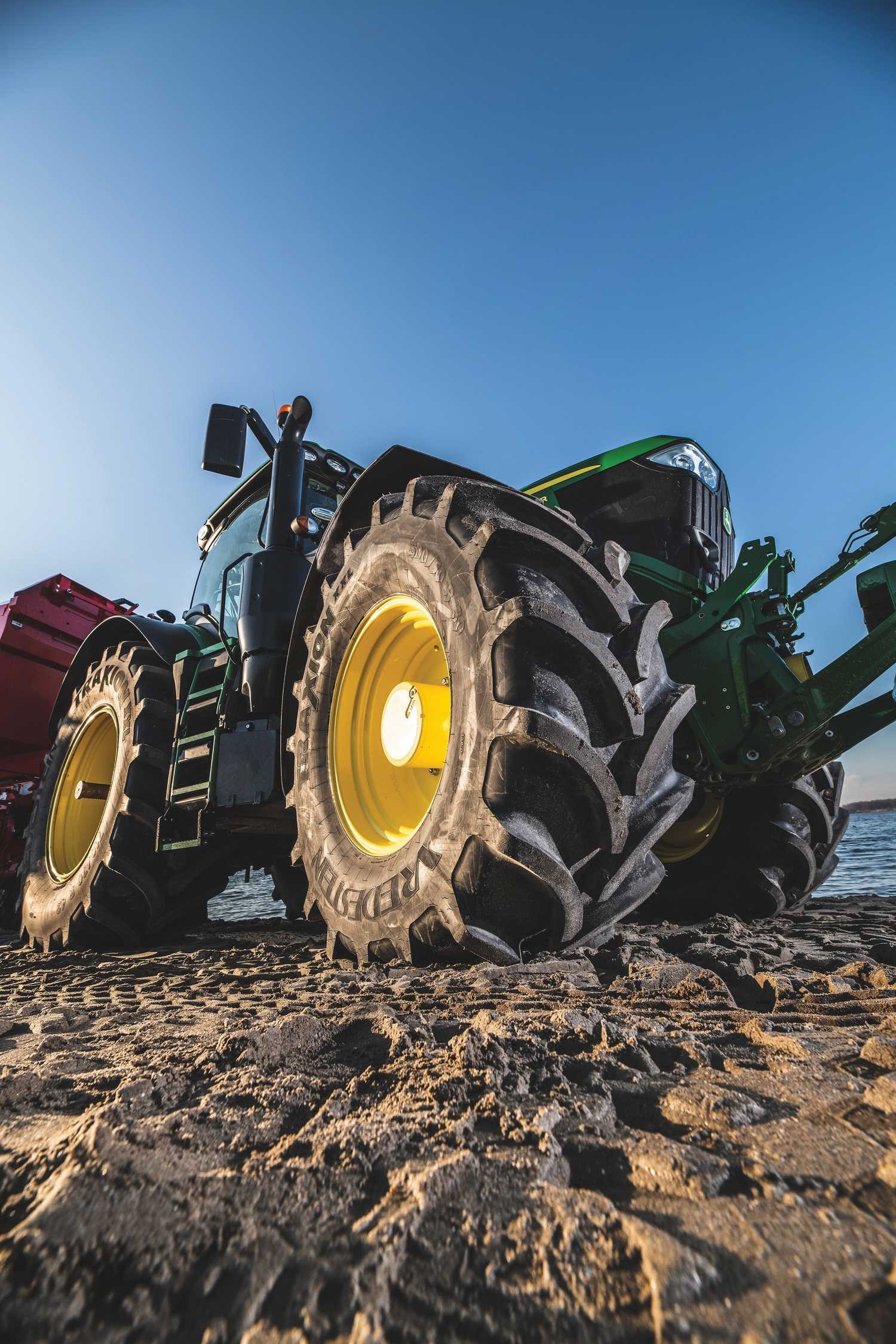
Optimum pressure adjustments are often small in numerical terms, but even slight variations represent a significant change in air volume – the only thing supporting the load – and the size of the contact patch of tough, but supple, modern tyres.
It makes sense to adjust pressures when tractors change between contrasting tasks for any length of time, rather than sticking to a ‘one size fits all’ compromise pressure.
Over-inflation for a given load limits sidewall flexibility and therefore the potential size of the tyre’s footprint, resulting in less grip and greater soil compaction.
As a general rule, 20% over-inflation can result in a 30% performance loss, say tyre experts; and with the low pressures used today, 20% can be as little as 0.16 bar (2.4 psi).
The ideal way to determine the appropriate inflation pressure for individual operations is to weigh the farm’s tractor and implement combinations one axle at a time, using a weighbridge or calling in a tyre manufacturer’s technical adviser with portable weigh cells.
Weigh each axle in the ‘worst case’ configuration; for rear-mounted equipment, that is with the implement up in the air for the rear tyres and down on the ground for the front tyres.
Reference to the manufacturer’s data table or mobile device app for the tyre model and size will reveal the recommended inflation pressure for the load per tyre.
If necessary, remember to factor-in road travel speed, very heavy draft loads and working across significant slopes (because of weight transfer and lateral forces) to identify the appropriate pressure.
For field operations involving frequent to-and-fro travel, such as grain carting, slurry and digestate spreading, active tyre inflation management ensures optimum pressures for road and field.
Retro-fit central tyre inflation systems for tractors and trailed equipment use either the tractor’s air braking system compressor, or a higher-capacity supplementary compressor – typically carried on front linkage – for quicker inflation.
Factory-installed fully integrated systems for John Deere 8R and Fendt 1000, 900 and 800 Vario tractors can also operate a trailer or slurry tanker system.
Whether integrated or retro-fit, electronic control allows at least two pressures – road and field – to be pre-set for each axle and selected at the press of a button, a tap on a touch screen or even a GPS location trigger. John Deere reckons its system takes around six and a half minutes to add 1 bar (14 psi), while AgriBrink says its tractor and trailer system with its own compressor needs barely a couple of minutes to transition from field to road pressures.
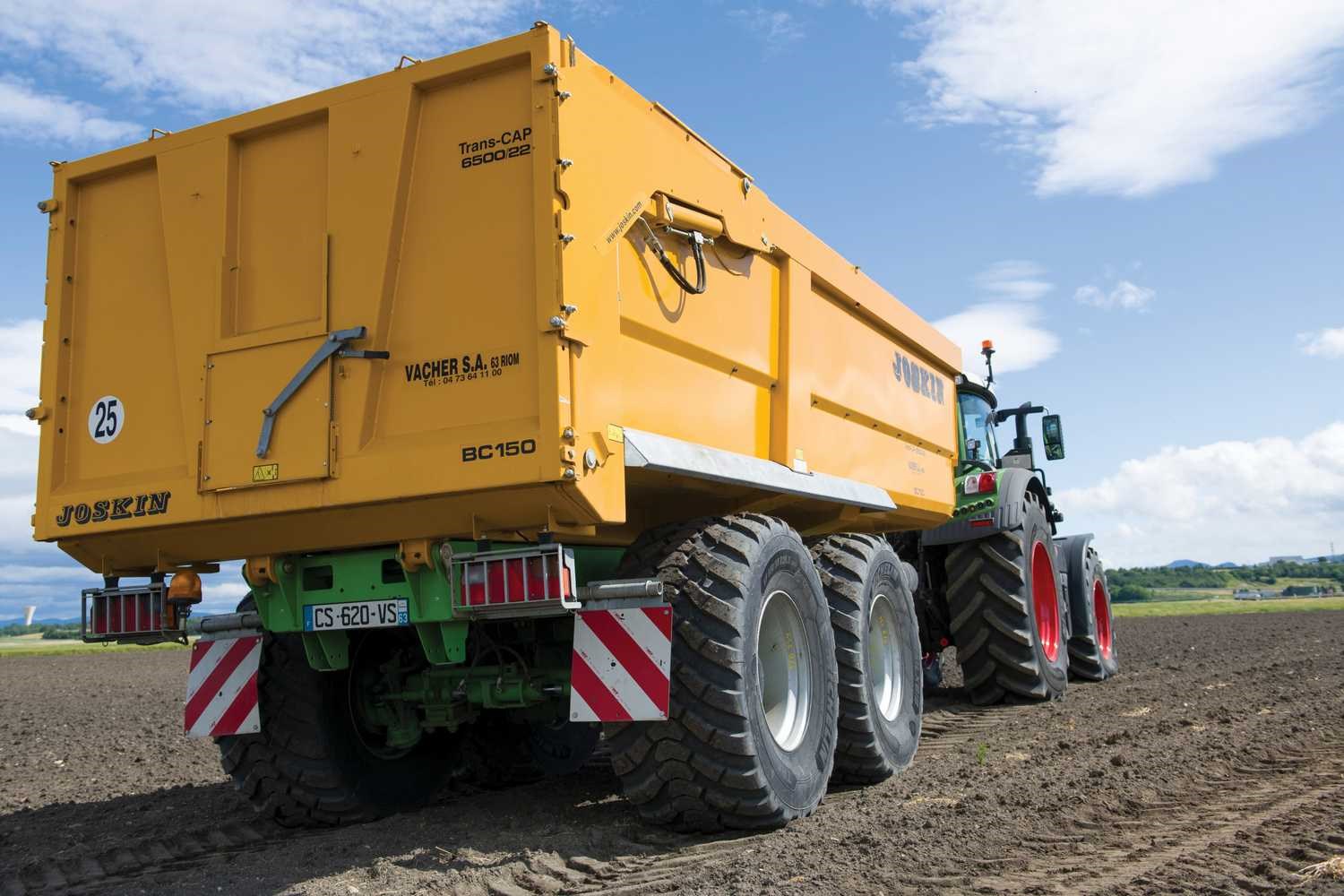
Advances in structure design and rubber compounds have pushed the performance boundaries of tractor and implement/trailer tyres in terms of productivity, cost-efficient fuel use, and minimised the impact of weight and wheel slip on soils.
A Harper Adams University College study comparing field work using regular and the latest highly flexible ‘VF’ category tyres highlighted a 4% increase in yield resulting from reduced soil compaction.
‘VF’ tyres have exceptional load carrying and sidewall flexibility, enabling them to support loads at up to 40% lower inflation pressure than a ‘regular’ tyre of the same size.
In practical terms, the 4,785 kg load capacity of a ‘conventional’ Bridgestone VX-Tractor 710/70 R42 tyre at 1.2 bar (17 psi) and 50 kph road speed is more than matched by the same size VF-Tractor design with 4,955 kg load capacity at just 0.8 bar (12 psi) – a 30% reduction.
The tyres achieve these characteristics through materials and internal structures that create a strong and resilient sidewall with exceptional flexibility to lay down a longer and wider contact patch while coping with repeated high levels of flexing as the wheel rotates.
Development of fully-integrated track systems for tractors has encouraged more growers to consider this alternative to tyres.
Fully-tracked machines like the Fendt MT and John Deere 8RT compete with the semi-track Claas Arion, Case IH Magnum and New Holland T8 Genesis that retain a wheeled front axle.
While fully-tracked machines offer the biggest contact patch, conventional rather than slew steering is an attraction of semi-tracks.
Claas calculates a total contact area of up to 4.0 m2 for an Axion 900 on the widest rubber traction belts – 1.0 m2 or 35% more than a typical wheeled equivalent – and highlights trials showing up to 50% less soil pressure in deeper soil horizons below 40 cm.
This is despite semi-track machines being heavier – unballasted, at least – than wheeled counterparts, typically by 2,200 to 4,900 kg, while also being limited to 40 kph.
High-definition satellite guidance and wider-working combine headers have spurred growers to consider how to create a controlled traffic system, combining permanent wheelways and temporary tramlines.
How quickly that can be achieved and at what cost depends on the mix of machine working widths started with.
While most systems evolve around a big combine with a 12 m+ header, farms with a mid-size combine can use a 10 m+ header and longer grain auger upgrade, 10 m cultivations equipment and a 10 m seed drill for a 10/30 m system.
With a ‘narrow body’ combine, and tractor and trailer axles pushed out to a 2 m track width, these machines match well, with harvesting in three-cut ‘lands’ keeping trailers to the permanent wheelways.
Likewise, the other potentially most damaging passes – spraying and spreading on row-crop wheels – are confined to those hardened strips.
Reducing field traffic from 80% of the field surface to just 20% in this way has clear benefits for soil structure and maintenance.
£2,800 to £5,250 per set mid-range, to £10,800 for bigger tractors, up to £14,000 for equal four-wheel drive.
Tractor-integrated £13,490 to £14,580; tractor retro-fit £6,000 to £8,000 (air brake compressor); trailer retro-fit (air brake compressor, on-board storage tanks) £4,800; tractor, trailer retro-fit (dedicated compressor) £16,950 to £21,950.
Typically, an 18-30% (£51,000 to £76,000) premium for rear tracked models, 20-30% (£68,000 to £100,000) for twin track machines, and 40% (£144,500) for four-track models over their wheeled counterparts.
This article is an extract from CropFocus magazine, if you would like to sign up for the next issue please sign up here