Top tips for sugar beet weed control in spring 2022

Posted 4 years ago
20/05/2022

Warm temperatures and regular rain showers mean that sugar beet growers are likely to see repeated weed flushes before crops reach across the rows. To avoid causing undue stress, spray applications should be timed carefully while the inclusion of a residual herbicide can broaden the spectrum of control and extend the period between passes.
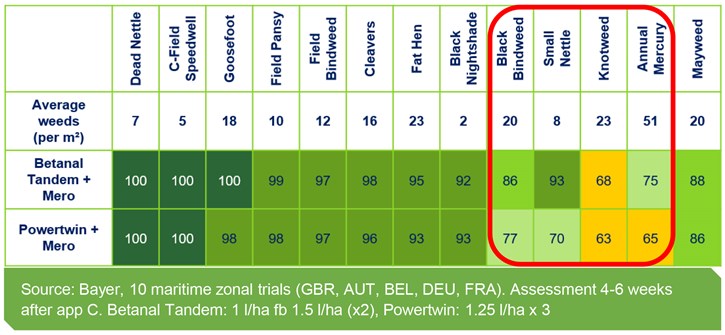
For most growers, formulated products such as Betanal Tandem (phenmedipham + ethofumesate) will form the backbone of a weed control strategy. These products are popular with growers because they offer reliable control over a broad spectrum of weeds and come pre-mixed which removes the need for the sprayer operator to measure out individual products. This provides both efficacy and offers good crop safety.
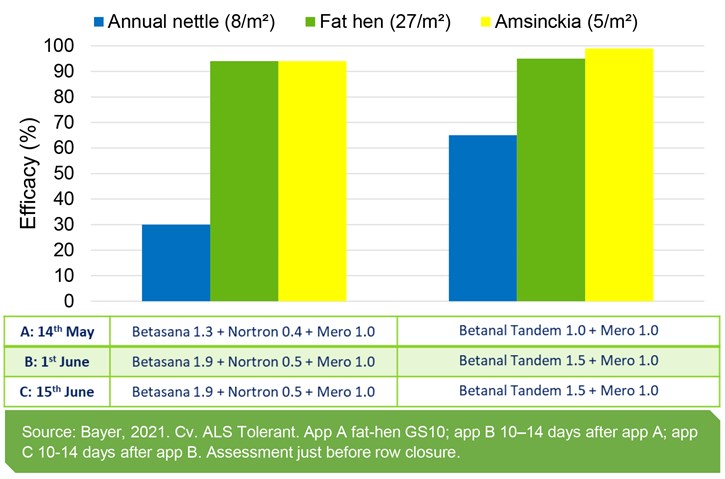
In contrast, active substances applied as straights can seem appealing. In practice, performance often depends on the weed spectrum involved. Some weeds are harder to control than others.
Crop safety is a foremost concern. Checked growth arising from herbicide damage can result in slow and uneven growth. This will delay the development of adult plant resistance, which can be essential in supporting the plant’s ability to tolerate virus. In some seasons, it can also lead to crops being sprayed for disease before all plants are fully grown.
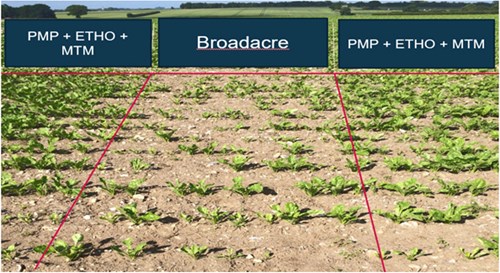
Source: Bayer, 2018. All products applied on the same day. Picture taken mid-June.
Herbicides applied as straights under the so-called ‘Broadacre’ strategy, can easily cause excessive crop damage