Potato costs of production rises led by energy and wage inflation

Posted 4 years ago
11/02/2022
The rising price of goods and services is being felt across all sectors of the UK economy. In December 2021, the government’s preferred measure of inflation, the consumer prices index (CPI), reached a 30-year high of 5.4% with the biggest increases seen in food and drink followed by restaurants and hotels and furniture and household goods. The Bank of England expects inflation to reach 6% in the spring of 2022 before falling during the rest of the year and into 2023.
The impact of higher input and labour costs is being felt acutely across farming. According to Nick Blake of Andersons Eastern, potato growers can expect costs to rise by roughly 15-20% compared with 2021.
“Much will depend on specifics such as when the electricity contract is renewed or when the ammonium nitrate fertiliser was purchased, but costs could be at least 15% and in some cases closer to 20% up on 2021,” Mr Blake says.
The decision by OPEC and its partner countries (known collectively as ‘OPEC +’) to reduce oil production at the start of 2021 has led to a steady but sustained increase in the price (of oil). Between July and October 2021, the price of a barrel of Brent Crude increased by $8.41 to £83.54/barrel, substantially above the average price of $41/barrel seen in 2020.
By early February, the price of a barrel of oil had increased to $89 largely off the back of tensions in Ukraine causing unrest in world markets.
With prices above $70/barrel, OPEC has agreed to increase monthly production volumes by 400,000 barrels per day. This is unlikely to be sufficient to result in a price drop as demand is expected to rise as the global economy continues to recover from the Covid-19 pandemic.
A forecast produced by the US Energy Information Administration (USEIA) suggests oil prices will fall gradually through to the end of 2023. The forecast, however, is within a wide range with price increases a greater likelihood than a downward correction (see chart).
|
|
Few could have anticipated the extent of the price increases for ammonium nitrate fertiliser in the past 12 months. An increase in the area of winter-sown crops and rising gas prices at the start of 2021 put growers on notice, but the volatility seen through the year was beyond the expectations of most analysts.
“Depending on the reference period, AN prices are up 150% on 2021, but as a component of the overall cost of production it is a relatively small charge – at 8-10% of the ex-field cost of production,” Mr Blake says.
“This cost increase outweighs that for fuel, which depending on the production system, might account for about £5/t to the cost of producing potatoes.”
Forecasts by the USEIA indicate natural gas prices will average $3.79 per million British thermal units (mBtu) through 2022. This is close to the point at which they finished 2021 and is reflective of inventory levels being consistent with the five-year average. As with oil price forecasts, gas prices are expected to move within a wide range, so it may be that prices will remain volatile through the year (see chart).
 |
Using the market prices seen in 2021 as a crude indication of ammonium nitrate prices, natural gas price at roughly $4/mBtu suggests ammonium nitrate prices in the region of £500/t (see chart).
 |
The price of ammonium nitrate fertiliser bears a closer relationship to that of natural gas than the commodities to which it is applied
Source: AHDB; US Energy Information Administration
As with previous years, increases to the national living wage, which is the minimum employers can expect to pay, will rise above the rate of inflation.
For 2022, the national living wage will rise 6.6% to £9.50/hr from the 1st April.
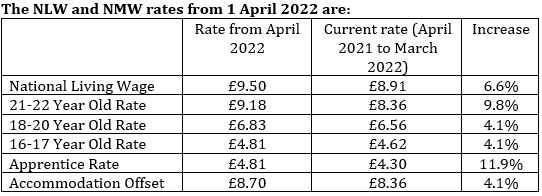 |
Source: https://www.gov.uk/government/publications/minimum-wage-rates-for-2022
“Where labour availability is tight, gang labour providers may well be charging more, reacting to demand, and to maintain pace with rising labour costs seen across the wider economy,” Mr Blake says.
“Full-time staff costs are also likely to increase too in 2022. Many employers have followed the practice established by the now defunct Agricultural Wages Board of reviewing renumeration rates in October, those who did may have increased rates by 2-3% on average over 2021, but a catch-up may be required in 2022 if it is to reflect the real increases in the cost of living,” he adds.
One saving, and it will be for others to decide whether this is a positive or not, is the end to the AHDB levy which we are told will cease to be collected from this season.
“At just under £43/ha the saving may be modest, but most are believed to be welcoming it and will go a small way to off-setting the increased costs seen elsewhere,” says Mr Blake.
Demand for good land remains as strong as ever and it is reflected in the price being offered to secure it.
“The prices being paid are rising in spite of the falling value of the basic payment and this is perhaps a reflection of the current market prices and that many growers simply want to farm more land,” Mr Blake says.
The challenge facing potato growers, he believes, is to pay less for the marginal or poor land, and possibly more for the very best.
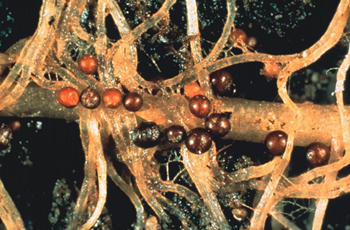
“It is difficult to secure the best land every year, but the productive value of land is only one part of the cost calculation. The additional cost of irrigation, nematicides application where required, storage, where it applies, and the travelling distance involved should all be factored into the equation. Sometimes there is too much focus on the per hectare rent without considering the potential costs or savings that come with it,” he says.
The Farming Transformation Fund, under which grants are available to businesses that can satisfy the criteria, is likely to be welcomed by many growers. Although these will do nothing to offset production costs this season, over the long-term they are likely to at least offset other cost increases by raising output levels.
“Funding available through the water management initiatives could contribute up to 40% towards the cost of capital items. In practice, this will enable some growers to bring more irrigable land into the mix through improvements to irrigation infrastructure and increases to storage capacity. Even if the planted area remains static, the ability to irrigate land that was previously not irrigated could result in a larger crop,” Mr Blake says.