Be ready for Cercospora, but don’t overlook rust and powdery mildew

Posted 5 years ago
19/08/2021
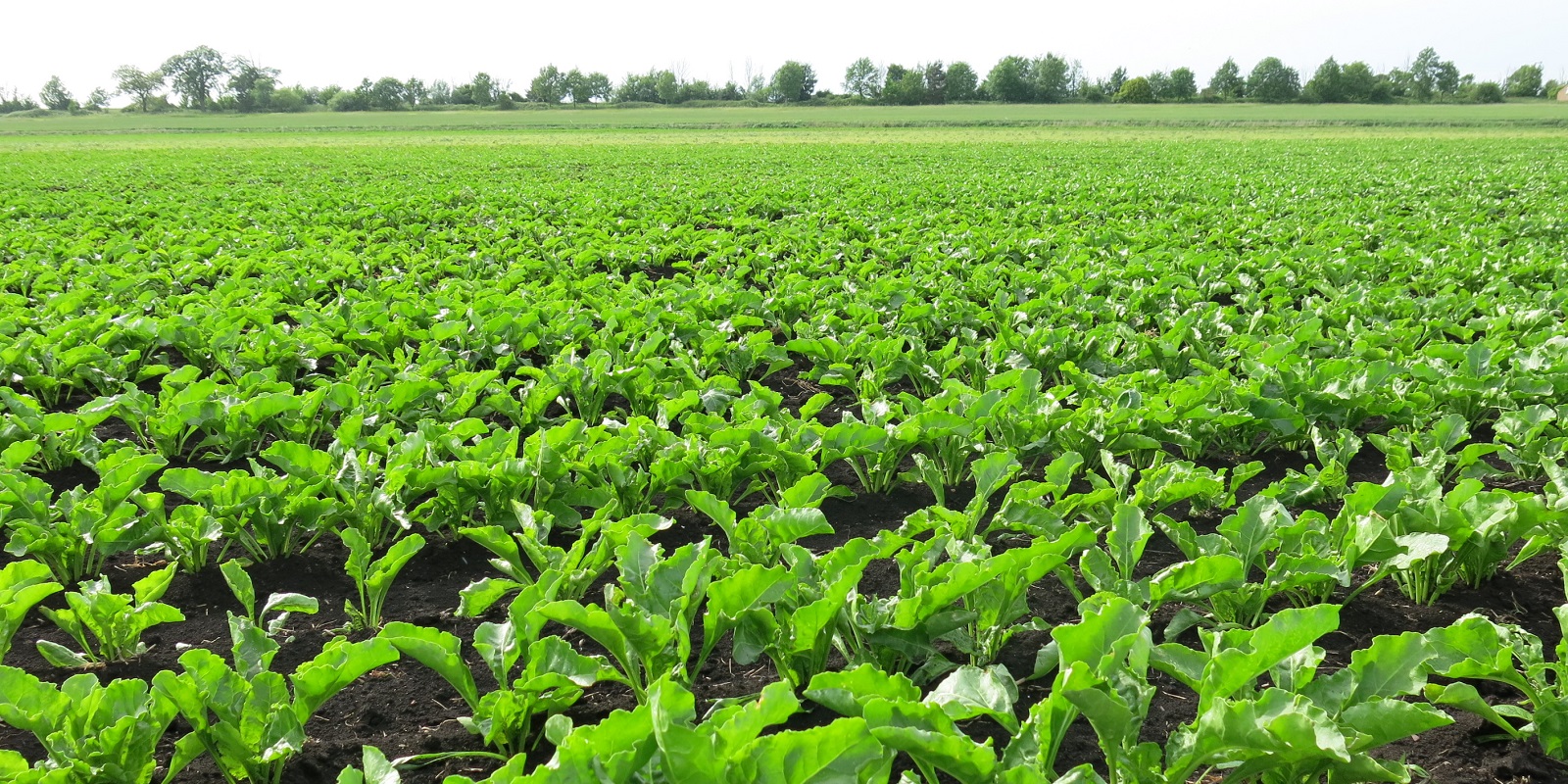
Rust and powdery mildew are likely to remain the principal diseases to affect sugar beet crops, but a changing climate means Cercospora leaf spot is rapidly becoming a concern.
Mild weather has increased the disease risk facing sugar beet and consequently powdery mildew is now being reported in crops. It is worth remembering that powdery mildew is the single greatest foliar disease to threaten crop yields, so should not be overlooked.
The standard BBRO advice is to apply the first fungicide at disease onset with a second application made about four weeks later. This has been demonstrated to consistently deliver yield increases over a one-spray programme.
|
Reference: Bayer, 21 trials spanning the 2009-2020 campaigns |
|
Reference: Bayer, 64 trials spanning 2007-2020 |
The timing of the first fungicide remains unchanged, but the impact of Cercospora leaf spot in 2020 led the BBRO to adapt its advice. Where Cercospora is a concern, the second fungicide should be applied roughly three weeks later.
In late lifted crops, this may mean that a three-spray programme is the minimum needed to protect crops. Where this is the case, growers have the option of applying a straight triazole at the second spray which would allow the final application of Escolta (cyproconazole + trifloxystrobin) to be retained for the third spray.
“Cercospora leaf spot is a formidable foe,” says Andreas Mehl, Bayer senior fellow and global fungicide resistance research and management lead.
|
|
“Unfortunately, there aren’t too many examples of how this disease has been successfully controlled on the continent without any fungicide resistance issue, but there is plenty of experience of just how damaging it can be,” he adds.
Cercospora, caused by the fungus Cercospora beticola, first came to Dr Mehl’s attention roughly 10 years ago when the Austrian sugar beet industry reported that growers were having difficulty controlling the disease. Samples were received for analysis, and it was subsequently confirmed that these isolates had developed resistance to the quinone outside inhibitor (QoI) group of fungicides commonly referred to as strobilurins.
“QoI resistance affects all fungicides in this group, but efforts to communicate this to the growers and the urgent need to promote anti-resistance tactics that involved mixing strobilurins with products belonging to different mode of action group required either too much time or were even partly hampered by some repeated advice to continue the use of solo-applied strobilurin fungicides,” says Dr Mehl.
Strobilurins are an important group of fungicides because their broad antifungal spectrum and low phytotoxicity means they can be used in a wide array of crops. In sugar beet, strobilurins and another group of single-site fungicides, triazoles, belonging to the demethylation inhibitors (DMI) group of chemicals, provide the basis for foliar disease control strategies.
“Strobilurin resistance is highly concerning. It is based on a single site mutation (G143A) and is the same for Zymoseptoria tritici in the UK as well as other pathogens from elsewhere around the world. Wherever this mutation occurs we see a strong shift in sensitivity to all strobilurin fungicides,” explains Dr Mehl.
Following the confirmation of resistant isolates in Austria, disease monitoring was expanded to other countries and within a few years isolates exhibiting 70-80% resistance to the strobilurin group of fungicides were found in nearly all countries neighbouring Germany and Austria. Resistant isolates have also been confirmed in Chile, Japan and New Zealand.
A consequence of this has been to increase the pressure on triazoles. As yet, there have been no reported cases of triazole resistance from the field which led to a total loss of Cercospora control as observed with the strobilurins, but laboratory testing has found a wide range in sensitivities between products that suggest growers should take resistance management seriously.
“With triazoles we tend to see good to reasonable levels of intrinsic activity, but there is a broad range of variation in the EC50 values that give reason to be cautious and adopt practices that protect this mode of action group,” he says.
“Within the triazole group, prothioconazole is regarded as showing the strongest activity and low susceptibility to sensitivity shifts. This is closely followed by epoxiconazole and cyproconazole which offer slightly less activity but good stability under field conditions.”
Sensitivity shifts are calculated using the industry standard, EC50 test. The result is the concentration needed to reduce growth by 50% relative to the untreated control.
“With difenoconazole we see good intrinsic activity but a broad range of EC50 values, whereas prothioconazole still shows a narrow EC50 range without regional differences,” explains Dr Mehl.
“Mefentrifluconazole, a new DMI triazole, bears a similar chemical structure to that of difenoconazole, so there will need to promote active resistance management of that product if it too is to be protected for the long term,” he adds.
The lack of fungicides conferring effective protection against resistant strains has prompted a reversion to a class of products previously considered outdated.
“In Austria and Germany, we have seen applications for the emergency authorisation of copper. Repeat applications of this metal are now the standard means of control. In America where Cercospora poses a similar threat, we see that growers have resorted to spraying tin. The use of both metals as a fungicide poses a long-term risk to the biology of the soil,” says Dr Mehl.
It produces large volume of conidia (asexual spores) that germinate in a wide temperature range, typically 12-37oC. This is outside the range of many other fungal pathogens seen in Europe and emphasises its durability.
Where the relative humidity stays above 90% for 10-12 hours each day for a three- to five-day period and temperatures remain above 10oC, severe epidemics can be expected. In continental Europe, such conditions occur regularly between June and July.
Sugar beet crops adjacent to a watercourse are likely to see the first signs of infection as the morning mist comes off the water and over the crop which promotes the humidity needed to support disease spread. Couple this with regular rain showers and it is easy to understand how it can take hold so rapidly.
Although the fungus can be seed-borne, it usually overwinters on infected plant material, waiting up to two years for suitable conditions, and travels short distances by rain splash. Infected weeds, especially from Amaranthaceae, such as fat-hen (Chenopodium album) are believed to serves as a green bridge for the C. beticola fungus.
 The yield benefits of a two-spray Escolta programme
 The long-term yield response of a two-spray Escolta programme