Award winning Lincolnshire recipe defies the OSR challenge

Posted 5 years ago
21/04/2021
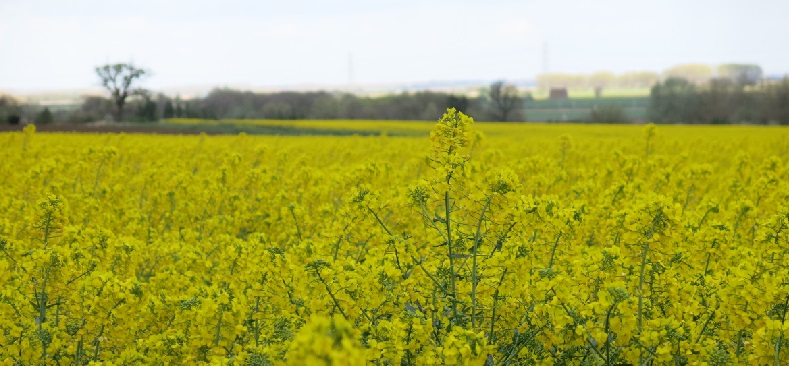
Last season was the first time Lincolnshire grower, Mark Stubbs had any oilseed rape fail since his family partnership re-introduced it 10 years ago. But this certainly hasn’t deterred the double Oilseeds YEN award winner from growing the crop. Nor in continuing to reject either early drilling or pulling back from every other year growing with wheat at Marshchapel on the coast or a one-in- three rotation with wheat followed by spring barley or oats on the Wolds at Calcethorpe.
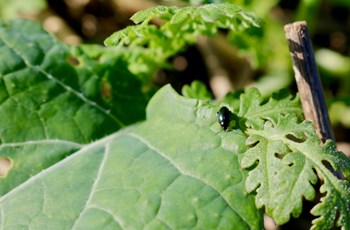
“Our establishment recipe saw last year’s Marshchapel crop through alarming levels of flea beetle,” explains Mark. “But harvesting delays meant we sowed later and into less good conditions than we like. Then it was overwhelmed by a combination of intense slug pressure and winter flooding on the heavy ground.
“We went out of rape 20 years ago because our original plough-based regime wasn’t performing. But almost every year since we’ve come back into the crop with modern hybrids and single pass seeding, we’ve averaged 4.5t/ha or more across our farms. And, despite some early flea beetle damage, we took the bronze YEN award with 6.77t/ha from our DK Exclaim entry in 2019, going one better last season with V316OL averaging 6.71t/ha for the silver.”
A&C Stubbs & Sons currently have 50ha of DK Exclaim and 160ha of HOLL – mainly the latest variety, V367OL – in the ground. With fewer early pest or establishment pressures, the 2021 crops are looking especially promising, boding well for overall farm performance as well as further YEN success.
“We deliberately chose hybrids for our return to rape growing, starting off with Excalibur and now DK Exclaim, together with high value HOLL-growing,” Mark says. “Dekalb varieties have always suited us well for their consistent all-round strength and ability to crack-on rapidly in the spring.
“We’re not fans of PGRs, so we don’t want our crops over-growthy ahead of the winter. After the Proline they get with their Astrokerb in late November we don’t spray them again until mid-flowering. So, good light leaf spot resistance and stem strength are vital. We also really value the pod shatter resistance that allows us to hold-off on combining for the highest yields without added risk.”
Keen not to have their OSR too forward too early, August 12 is the earliest date the Stubbs family are prepared to sow. They aim to finish before the final week of the month to get their crops established ahead of the early September peak of flea beetle migration.
Taking care to preserve soil moisture and maximise seed-to-soil contact in their establishment, they are never afraid to drill when the soil surface is dry either, providing rain is forecast. That way they know the crop is ready to go as soon there’s enough moisture for germination.
Their successful main defence against CSFB is crops that come through evenly and all at once, growing away rapidly to establish themselves strongly below ground more than above it.
This is really helped by their success in building soil structure and health over the past 10 years. The least possible tillage in the rotation, winter covers ahead of spring cropping and regular organic manuring, indeed, has seen soil organic matters climb from around 2% to over 6%.
“We bale all our straw because we don’t want it interfering with establishment or providing shelter for the slugs,” explains Mark. “However, we leave 10-15cm (4-6”) of stubble to protect the soil surface from drying out and give our OSR seedlings the best micro-climate.
“Our one-pass modified Discordon works well, following the baler as closely as possible and sowing at 45 seeds/m2 to deliver our target population of 20-25 plants/m2. With the spring development ability of our preferred hybrids, this gives us the really thick-stemmed, well-branched canopies we know deliver best with our three-split, 210 kg N/ha liquid fertiliser programme.
“We generally set the low disturbance legs at about 15cm but can go deeper to deal with any compaction. Dropping the seed behind the packer into the 25cm grooves created by the DD rings we’ve fitted ensures it goes in at a consistent 2-3 cm before being pressed firmly into place with the double set of DD rings we tow behind the machine.
“After extra consolidation and slug pelleting from the Cambridge roll within 24-48 hours, followed by 125kg/ha of DAP we leave the crop to do what it does best. Falcon ensures we keep on top of cereal volunteers, with Centurion Max a key element in our programme ahead the Astrokerb for the first-class black-grass control that is one of the main reasons we grow the crop. We only use an insecticide when we can’t avoid it.”
As the family have a good local source of poultry manure and application without incorporation is permitted after sowing, they’re planning to try this instead of the DAP in the coming autumn for some extra CSFB deterrence.
Although large amounts of shot-holing are seldom apparent in them, Mark’s policy of only spraying-off OSR volunteers from his previous crops a week or so ahead of early October wheat drilling almost certainly helps to divert flea beetles from his new seeds.
In addition to preventing canopy growth until he really wants it in the spring, not drilling in the first part of August also means few, if any problems with CSFB larvae; certainly none that are any threat to the well-rooted and resilient stands achieved by his establishment regime.