Established regime proves a match for exceptional pressure

Posted 5 years ago
16/03/2021
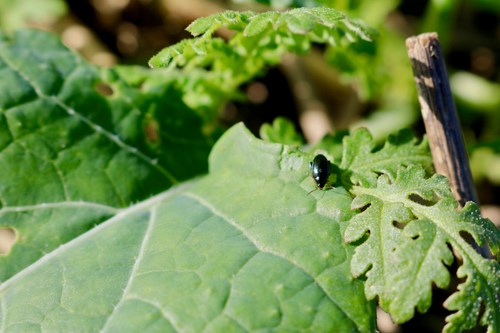
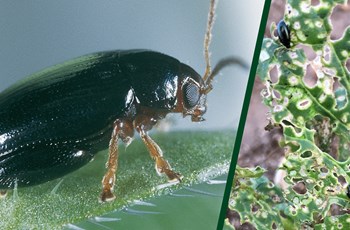
Flea beetle pressure at Springfield Farms in Worcestershire’s Vale of Evesham was exceptional last season. The black legions marched out of the grain store in an endless stream after the 2019 harvest, presented serious challenges throughout establishment, and left significant spring larval burdens.
As if this wasn’t enough, Rothamsted testing showed 75% of the beetles were resistant to pyrethroids locally, and one of the wettest winters in recent memory did OSR on their heavy clay ground no favours whatsoever.
Even so, manager Ben Knight brought all his plantings to harvest. And by doing nothing different from his normal oilseed rape practice either.
Admittedly, the 2020 harvest struggled to deliver 3.5t/ha against the previous 4.2-4.5t/ha 10-year average. However, with lower pest pressures and less extreme autumn and winter weather this time round, he is confident of getting performance back on their 4t-plus track.
“Horrendous as 2019/20 was, it really only reinforced the importance of a number of key things we’ve learnt about OSR establishment over the years,” explains Ben.
“Since Martin Lole bought the farm in 2005, we’ve been on a determined journey to reducing cultivations and improving soil structure and health here. Hand-in-hand with this has been the development of the Mzuri system of strip tillage to create the best nursery seedbeds for our crops while moving the least amount of soil.”
Springfield Farms grow oilseed rape every fourth year followed by wheat, a multi-species winter cover and spring legume, then another first wheat. It’s drilled in mid-August immediately behind careful combining for the best possible residue chopping and spreading.
On top of the increasingly resilient and biologically-active soils built-up over the past 10 years and only tilling where you sow, Ben identifies long stubbles, fast-developing hybrids, consistent sowing depths, wide row spacings, and accurately-placed seedbed fertiliser as their key ingredients for OSR success.
Right from the word go, the Mzuri focus has been on creating the best micro-climate for young seedlings as well as protecting soil from erosion, capping in heavy rain and moisture loss from the sun and wind by drilling into 8-10” of standing straw.
To preserve the stubble and prevent it interfering with sowing Springfield Farms employ RTK to drill accurately between the previous crop rows. Rapid root penetration is encouraged by a narrow, low disturbance leading leg on their Pro-Til drill run at between 6-8”depending on soil need. This also maximises the breakdown of any residual herbicide chemistry in the seeding zone that could interfere with establishment.
DAP is placed behind the legs set at 66cm centres and the soil reconsolidated ahead of seeding with independent controlled-pressure, contour-following coulters and a press wheel for final consolidation.
This means the fertiliser is exactly where the young roots need it; the seed goes in at a consistent 1-1.5cm with first class soil contact so it all comes up at once; the plants have the space to branch out for the best-structured canopies; and everything is done in a single moisture-preserving and labour-saving pass.
“Being the development testbed for Mzuri is really valuable in allowing us to evaluate different establishment options in a thoroughly scientific way,” says Ben. “For instance, we know we can get a useful yield advantage from wide row spacing to give the fast-developing hybrids we also know perform best the space they need to build the most efficient, light-intercepting canopies.
“As well as speed of development in the autumn, we have found earliness of regrowth in the spring crucial in enabling our crops to grow away from flea beetle larvae, not to mention pigeon damage. That’s why DK Expedient has been our mainstay for the past three seasons. We’ve yet to find a variety with more of the all-round get up and go we really value.
“We sow the hybrid down to 30 seeds/m2 to avoid over-crowding in our wide rows. Excellent immediate consolidation from the drill means we get no advantage from rolling. We’ve given up using a pre-em to take away any restriction to early crop growth too. And, things would have to be dire for us to use any insecticide.
“Our trialling this season has shown much more adult beetle grazing from drilling at the start of September than from our preferred mid-August slot,” he reports. “Even so, vigorous fast-developing seedlings all coming through at once again proved more than a match for the little blighters.
“We remain to be convinced of the distraction value of the buckwheat companion we applied with a Stocks seeder on the Pro-Til across half the later-sown field; probably because our long stubble does enough of a job here anyway. It was very fast to establish, though, and we are keen to see what soil health benefits it can give as a true companion.”
Given their rotation and establishment experience, Springfield Farms have no plans to move drilling any earlier than mid-August. Nor are they afraid to sow in the absence of rain, never having found insufficient moisture immediately beneath wheat stubble with their single-pass, minimal disturbance drilling approach.
“Flea beetle has certainly been a challenge for us,” Ben Knight concludes. “But it’s one an establishment regime that nurses the young crop by retaining sufficient moisture, giving it the best conditions under the surface, and protecting it as well as possible above ground has proved well able to deal with.”