Perhaps more than any other sector of farming, horticulture is a people-orientated business. This reliance on labour, often temporary workers from eastern Europe, came to the national attention in the summer of 2020 when the media reported that crops were being left to perish as there was not the labour to harvest them.
Despite a widely publicised campaign to encourage UK citizens to “Pick for Britain”, the physical nature of the work coupled with its rural location which meant those involved would be away from home, the promise of spending sun-filled days outside proved unappealing to many.
An NFU survey last year of 244 horticultural business which collectively employ 30,000 seasonal workers, found UK residents made up just 11% of the workforce.
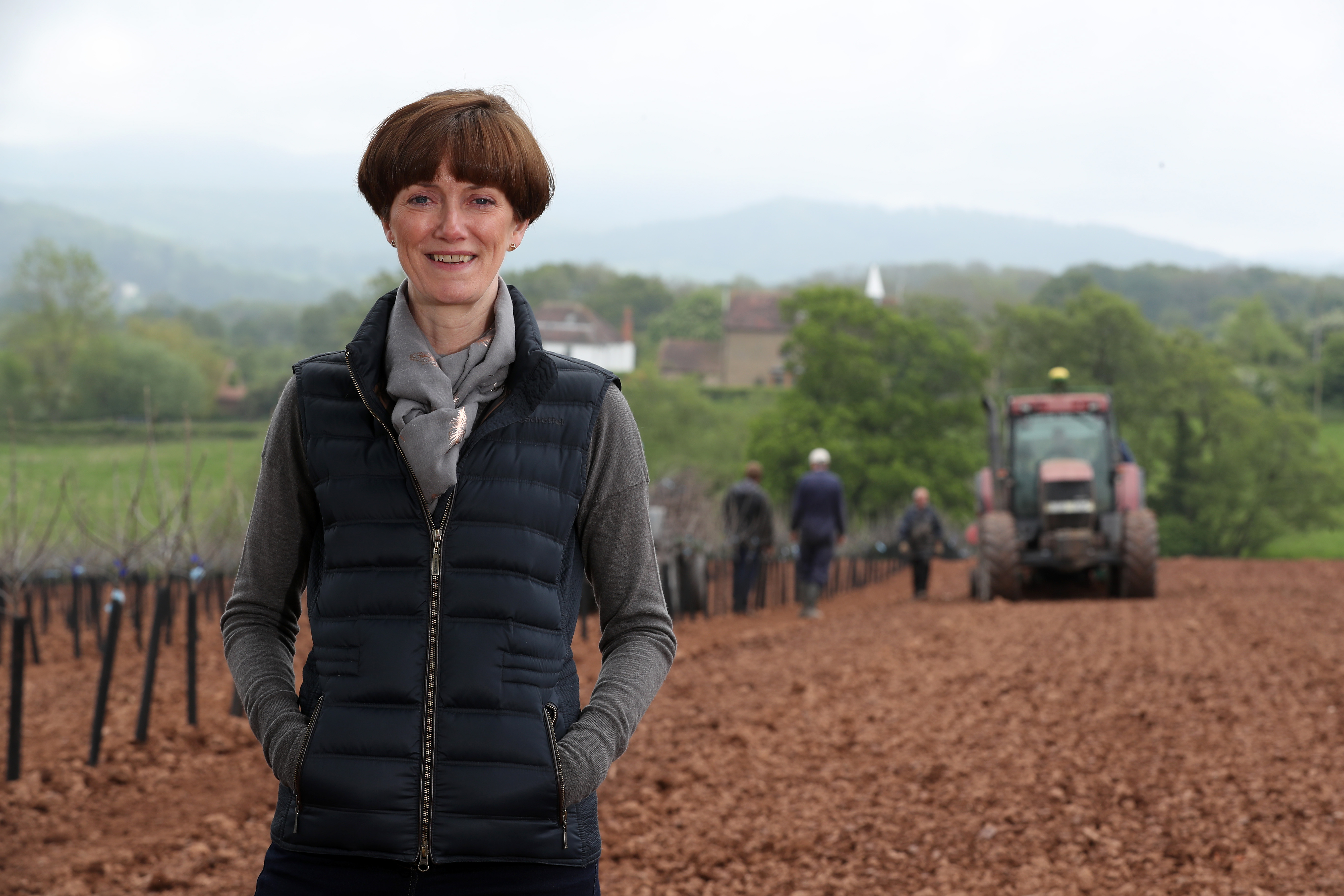
“We desperately need government to provide a long-term solution to fruit, vegetable and flower businesses to enable them to recruit seasonal workers this season and into the future,” says Ali Capper, chairman of the NFU horticulture and potatoes board. “Hopes that we may be able to mobilise a modern-day ‘land army’ to fill the labour gap are a nostalgic pipedream,” she adds.
The situation in the summer of 2020 exposed an issue the fresh produce sector has been struggling to resolve for more than two decades: a reliance on seasonal labour and lack of mechanisation and automation at harvesting. Across the sector, the reliance on seasonal labour is undeniable: each year roughly 70-80,000 workers are employed to grow, pick and pack crops. For many growers, employment is their single greatest cost accounting for 40-70% of all expenditure.
For all its ‘low-cost’ credentials, seasonal labour is far from cheap. The National Living Wage (for those aged 25 years and over), which is the minimum employers can pay and still comply with supermarket assurance schemes, rises to £8.91 in April, an increase of almost 24% since its introduction in 2016. After allowing for the change in payment rates following the introduction of the National Living Wage, itself an increase of 50p per hour over the national minimum wage, labour costs have increased 33% in five years. There are often indirect costs such as providing subsidised living quarters while many businesses are reporting that Coronavirus has increased the overall costs associated with accommodation, training, transport and logistics.
An industry report, The Potential Implications of Covid-19 for the Costs of Production of UK Fruit & Vegetables in 2020, produced by consultants, Andersons West Midlands, highlighted the impact inflationary costs in labour have on performance.
“This feature makes many fruit and vegetable crops different from those broadacre crops, such as wheat, barley and oilseed rape, which dominate the UK lowland landscape. By way of illustration, the cost of labour for wheat production – the most widely grown crop in the UK – is typically in the range £80-150 per hectare; the range for field strawberry production, for example, is typically £40,000-70,000 per hectare,” notes Andersons.
Covid-related employment cost increases seen in 2020
| Crop |
Increase range |
Estimated cost to industry |
| Asparagus |
6-12% |
£1.3m |
| Strawberry |
6-10% |
£15m |
| Lettuce |
12-15% |
£4m |
| Apple packing |
6-15% |
£4.8m |
Source: Andersons Eastern
In asparagus, labour costs are estimated to be equivalent to about 70% of business turnover. In soft fruit, it is roughly 50% and for tree fruit, about 40%. The reliance on seasonal labour in these crop areas is perhaps evidence of the absence of automated systems. Roughly half the seasonal labour, typically 30-35,000 people, employed in horticulture each season is in soft fruit.
The problem with robots
The amount of automation in the harvesting process is often dependent on the crop type. In certain types of lettuce and some brassica species such as cabbage and broccoli, it is considerable. In short shelf-life crops, typically those that are easily bruised or are highly perishable, progress has been slower.
“Part of the difficulty rests in the uniqueness of each crop which means that each system must be bespoke. Soft and top fruit for example is easily bruised but because all the fruits on the plant or tree do not mature at a uniform rate, there will be some that are close in colour to a leaf, branch or stem. The optical technology needed for a machine to distinguish between two parts of the plant that are, on one level, similar in appearance does not exist.”
The visual technology needed, however, is just one component of a machine. To pick strawberries, raspberries or even apples without bruising them requires a level of dexterity that is beyond any robot.
“There is no parallel with other sectors. Where machines are used in other industries, they are static and tend to perform repetitive tasks that are simple in comparison with robust materials that are of a uniform size, weight and density all of which means they can be done without the need for advanced pressure and optical sensors.
“To expect robot manufacturers to produce a machine capable of fulfilling these requirements and able to work across undulating terrain is a tall order, so it is perhaps not surprising that the technology capable of replacing a skilled labourer does not exist.”
Time for new thinking
When coronavirus spread across Europe in the spring of 2020 governments reacted by restricting freedom of movement. In some cases, countries closed their borders and banned international travel. In response, the NFU called on the government and the academic community to develop a collaborative approach with funding to accelerate the role of automation in the sector.
“If we are to make the progress needed and that government expects, then it will take a level of collective effort similar to that seen in developing a vaccine in response to the Coronavirus pandemic,” says Mrs Capper.
Her call for greater collaboration and coordination among industry and the academic sector is in part due to the perceived failure of the current system. This, she believes, is poor use of public money and reason for government to intervene.
“The current model is predicated on making institutions compete for funding with money awarded to whichever does best at selling its concept. Yet, what we need is collaboration – we need the academics and engineers to work together to solve these challenges,” she says.
To some in government this is seen as a private issue and not a matter of public interest. As such government believes that it is for the industry to resolve through shared interest and market economics, but Mrs Capper disagrees.
“The research funding supporting this sector comes largely from the public purse through the BBSRC, UKRI, and other programmes and yet it is not delivering. The government should ask why? It is time the government took a different approach that involved collaborative effort that unified institutions with a shared objective. But it’s not just about banging heads together in the academic space, it needs to involve those on the ground.”
In pursuit of this Mrs Capper will be hosting a group of academics on her family farm in Worcestershire to bring home the realities involved.
“The practicalities are too often overlooked. You can have the best robotic arm ever produced, but if the machine it is attached to cannot travel then its more time lost while those involved seek more funding or new partners to take it forward. All the time this is happening, growers are seeing margins squeezed ever thinner. It’s no wonder growers are holding back with investment and contemplating their future.”
Addressing the productivity gap
The reliance on seasonal labour is a frustration of government because it acts as a drag on productivity. On one level government is willing to see crops perish if it spurs investment in systems that reduce this reliance. The issue with this approach, however, is that it assumes the technology needed is readily available.
“As if the suggestion that growers are technology luddites is not bad enough, government also thinks that the robots needed are already available and that as growers we are too lazy to invest in them or change our systems to incorporate them. The reality is that the technology does not exist.
“There is a misalignment between perception and reality. This may be propagated by institutions who over-promise in order to secure funding. We have sought to explain this to government on many occasions, but priorities and responsibilities differ between departments so finding a way forward is often a slow process,” says Mrs Capper.