How to optimise Roundup to tackle black grass and spring weeds

Posted 5 years ago
19/02/2021

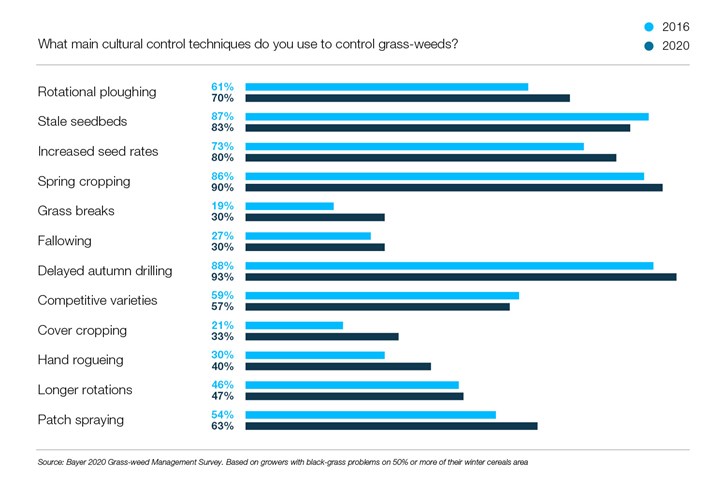
Bayer’s 2020 Grass-weed Management Survey showed that spring cropping and patch spraying have grown in importance for growers tackling black-grass. Discover what can be done to maximise control with these techniques.
|
|
Spring cereals are a valuable tool to help manage grass-weeds, but are vulnerable to competition during the establishment phase, particularly where cold ground or poor seedbed quality hampers early growth. Here are five tips to help get the best results:
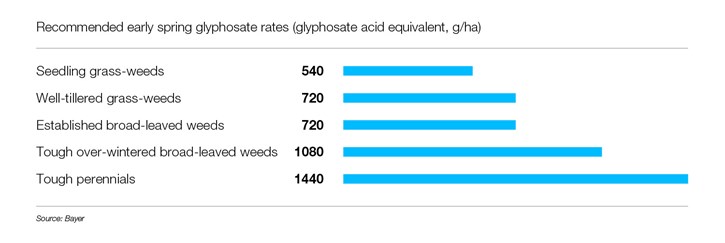
An effective glyphosate application is essential to kill off weeds before drilling. Check weed type and growth stage carefully to select the best rate to give crops a clean start. Modern Roundup formulations perform well even in challenging conditions such as low temperatures, which we can expect to see in early spring.
|
|
It is worth waiting for seedbeds to warm up for better crop establishment to provide effective competition against weeds.
An application of 0.3 L/ ha of Liberator is approved for use in spring wheat and spring barley. It should be applied within 48 hours of drilling to give crops the vital extra protection to get ahead of weeds.
All herbicides rely on good application to perform. Whether it is Roundup pre-drilling or Liberator just after, go to cropscience.bayer.co.uk for how-to videos and other application advice.
A large gap between spraying-off stale seedbeds and drilling can allow another flush of weeds to develop. Including Roundup at the true pre-em timing can eliminate any additional weeds in the seedbed, but care is obviously needed to ensure it is only applied pre-emergence when there is no crop growth.
Removing patches of blackgrass, ryegrass and brome is a proven way to reduce seed return and the subsequent weed burden in future seasons. But it is essential that weeds are properly eliminated. Here is some advice on how to do it:
There is still time to eliminate large areas or entire weed infested fields and redrill with a spring crop.
The extent of many weed problems only becomes apparent in April/May when heads appear above the canopy. Avoid the temptation to spray off immediately. Glyphosate is not as effective when plants are undergoing rapid stem extension because the active cannot be translocated to the roots. Although the plant will suffer, regrowth is possible which increases the risk of resistance developing.
Apply a single spray from full ear emergence in early June until just before seeds are fully ripe. This will prevent either re-growth or viable seed production in black-grass.
Research on sterile brome has shown that seed is fertile 2-3 days after the heads appear. An application of glyphosate at this stage has limited impact on seed return or reduction in seed viability. It is not known if this is the case with the other brome species so removing patches before heads appear is a sensible precaution.
Very small patches and mild infestations can be hand rogued during spring. Pay particular attention to any patches that have survived pre- or post-em herbicides to reduce the chances of resistance developing
Delayed drilling and stale seedbeds continue to be important for weed control. Oilseed rape in particular provides a good opportunity to start weed management before harvest to get a good entry for the next crop.
There is no advantage in spraying glyphosate before rapeseed moisture levels drop below 30%. Hold-off on spraying until two-thirds of seeds in the main yield bearing part of the canopy show that classic change from green to brown.
There is a statutory minimum interval from glyphosate spraying to combining of 14 days for OSR and seven days for cereals, but the time taken for crops to dry down very much depends on the weather. This means they should only be combined when they are fit, which may be up to three weeks after spraying in some cases for oilseed rape.
***
This blog post is based on an article from the spring 2021 issue of Crop Focus magazine. The magazine is packed full of insight, advice and research from the world of arable farming to help you grow the most profitable crops possible. Over 90% of readers find Crop Focus an interesting read – it’s free to subscribe so sign-up today!