Abbot’s Ripton – continuing the cover crop experiment

Posted 6 years ago
21/07/2020
Summer 2020 sees changes at the farm hosting the Task Force in Action project in Cambridgeshire. Long-time agronomist and farm manager Paul Drinkwater retired in June, his replacement Rupert Waters is keen to continue the work done so far.
Mr Waters in his role as Farms Manager for the Abbot’s Ripton Farming Company Ltd & Lavenham Fen Farms Ltd is responsible for 3,600ha growing combinables, potatoes and sugar beet.
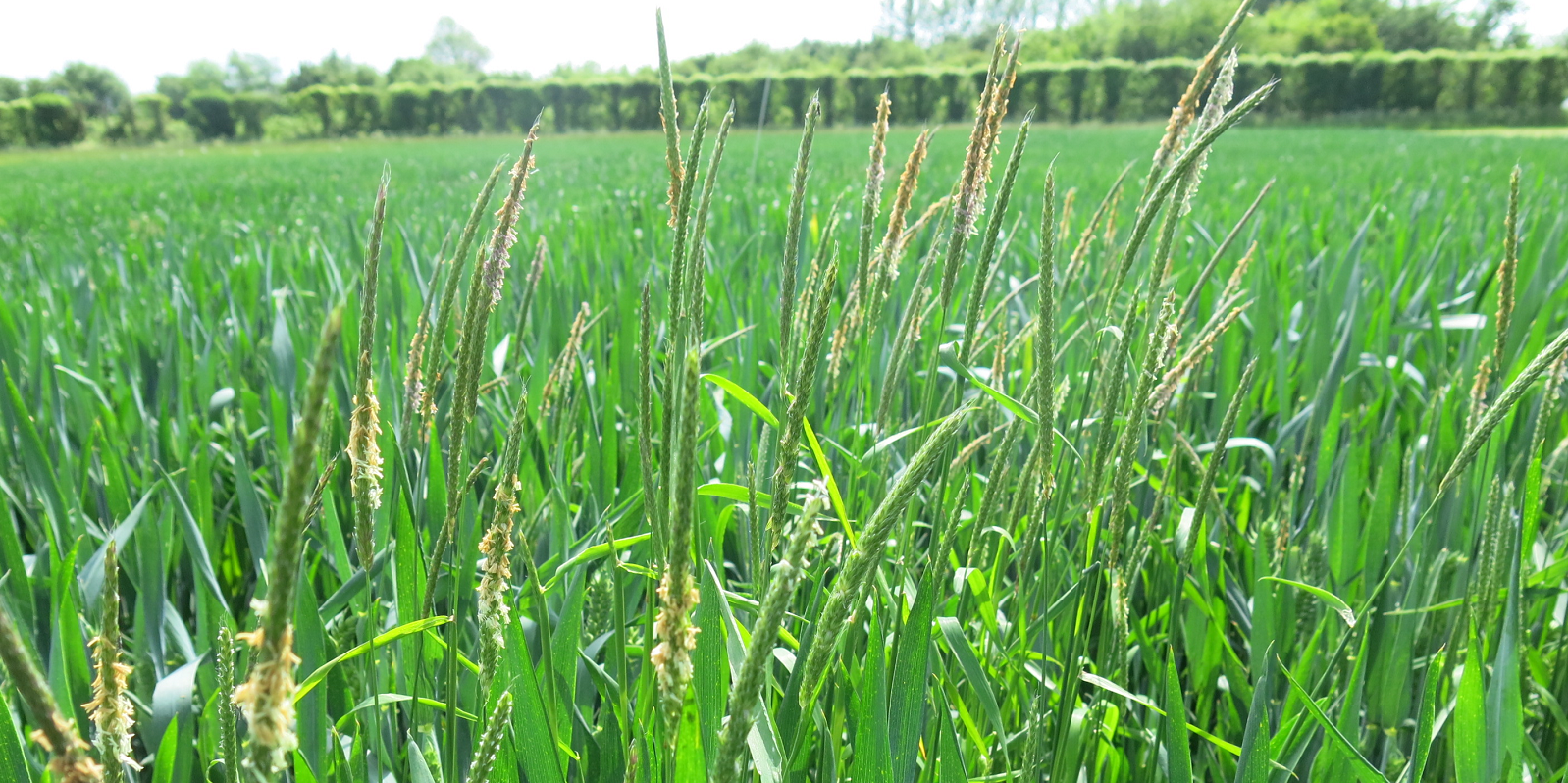
“Our aim is to get a sustainable rotation that doesn’t let black-grass get out of hand and is profitable,” he says. Mr Waters is keen to continue the progress Mr Drinkwater made in tackling black-grass but knows there is a long way to go.
Seedbank analysis carried out by NIAB bears this out. “There are 1150 black-grass seeds per square metre in the focus field,” says John Cussans of NIAB. ““The reality is, even after two years spring cropping, the seedbank will still be enormous.” The research also showed that Mr Drinkwater was right to introduce low disturbance coulters on the drill.
“We took the samples in the 2018/19 season. By using an untreated strip in a herbicide trial we could show what percentage of the seedbank germinated, the figure for this site was 13%. For context, the other Task Force site in Shropshire uses a low disturbance drill and had 5% germination. These findings are consistent with the research NIAB has done at Hardwick too.”
Since then, low disturbance coulters have been fitted to the Horsch drill. Although there is no hard data, the team at Abbot’s Ripton think it has helped reduce weed germination at drilling.
Because of the black-grass burden in the focus field, the intention is to have several spring crops in the field over the next few years. According to Mr Cussans the size of the seedbank means that it shouldn’t be a question of how soon the field can grow but what is a sustainable rotation for this field.
Mr Waters agrees “This field will return to winter cropping when it is ready, we are not following a set timetable. Also, we sometimes get too obsessed with winter wheat, a good spring barley crop at 7–7.5 tonne/ha can be just as profitable if you get it right, which is something we are aiming to do consistently with the help of this project.”
After a winter wheat crop in 2018/19, the field is in Planet spring barley for 19/20. The plan is to follow it with another spring barley crop in 20/21. Ahead of this season’s barley crop they experimented with a 4ha trial strip of cover crop. The aim was to improve soil condition and build organic matter with the aim of improving barley establishment and black-grass control. The results have been mixed but Mr Waters has seen enough to continue investigating covers.
“We drilled the cover crop of phacelia, vetch and black-oats on 25 August,” says Mr Waters. “This was later than expected because it was quite a late harvest last season. The cover was slow to establish but by October, there was a decent crop with some thin patches.”
Sodden ground conditions meant that the cover wasn’t sprayed off until 6 March, barley went in 3 weeks later. “We sprayed it off at the first sensible time, we would’ve liked to do it at the start of the new year, but we couldn’t travel.”
It was obvious as soon as the barley emerged that there was poorer crop development in the cover crop area. differences were easy to spot from field walking and also showed on FieldView imagery. As a result, black-grass is more of a problem due to less competition. But the cover crop has still improved soil condition and structure.
The late spray off date was one factor in the poor barley establishment after the cover crop strip because the dying canopy retained moisture making the surface wetter than ideal. But the main issue seems to be including black-oats in the cover crop mix.
“Black-oats are a brilliant structurer, but you have to kill them early, the rooting benefit is still there but with no downside,” says soils and cultivations specialist Philip Wright. “When we dug inspection pits in the field, the soil was better in the cover crop area. There is now a very open structure with no constraints to rooting in comparison to the rest of the field which has a much tighter structure but is still in fairly good condition.
“I think less is more is the message for cultivation this season. Soils are in relatively good condition to be drilled with a cover after harvest. Any loosening work at depth should be targeted because it isn’t necessary on large parts of the field,” he says.
According to John Cussans, when black-oats decompose they produce compounds called avenocins. These suppress the development of other plants; all cereals are affected by these compounds, but barley crops seem to be the most vulnerable. To avoid problems, farmers need to spray off black-oats early, so they are fully decomposed by the time of drilling or alternatively not include them in the mix.
“We’ve seen enough benefit in the soil, to continue with the experiment, it’s just a question of getting the right species and timing of destruction,” says Mr Waters. We are not planning on growing oilseed rape on this land in the foreseeable future so perhaps a deep rooting brassica is a suitable alternative to black-oats,” says Mr Waters. Next season, the plan is to do another cover crop trial in the same strip without black-oats in the mix.